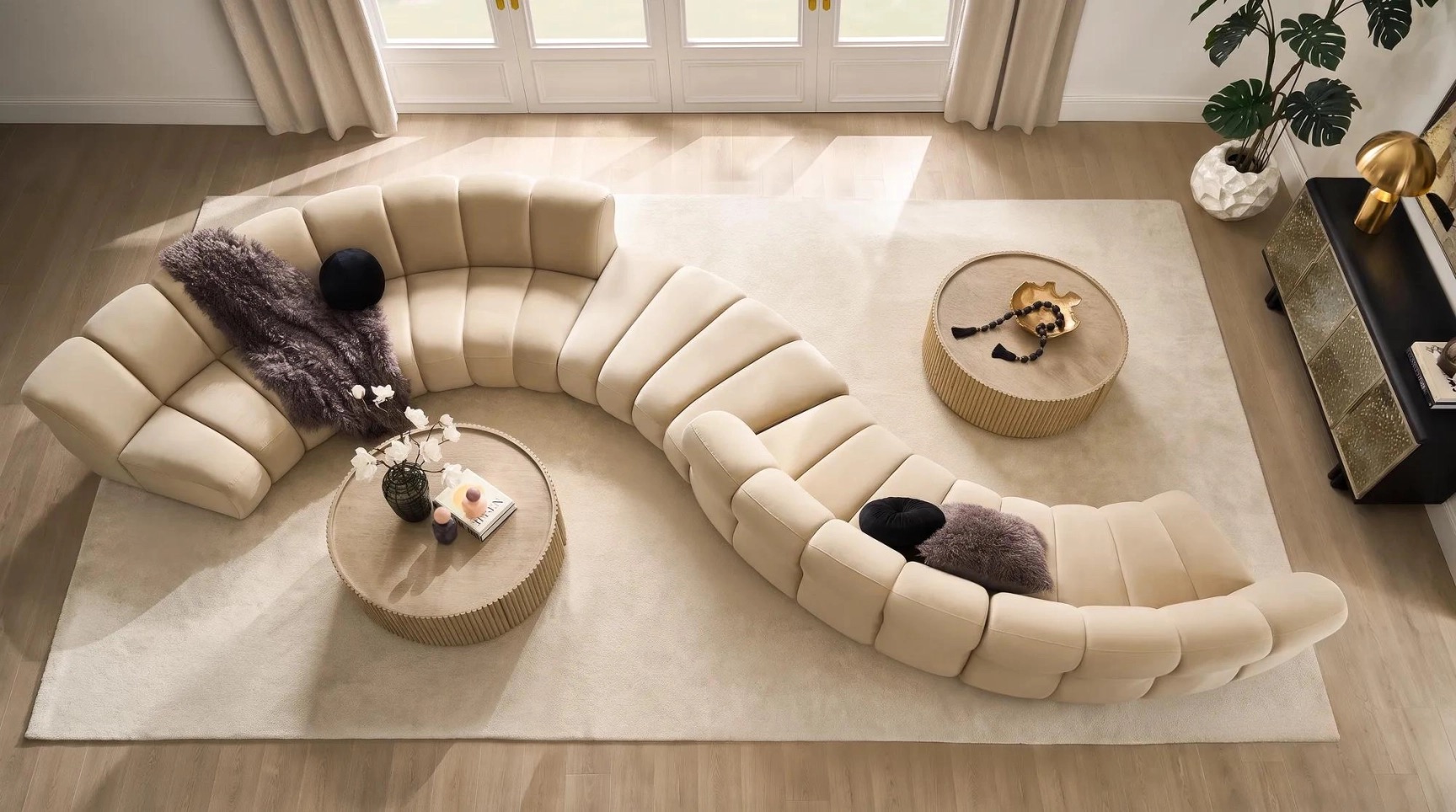
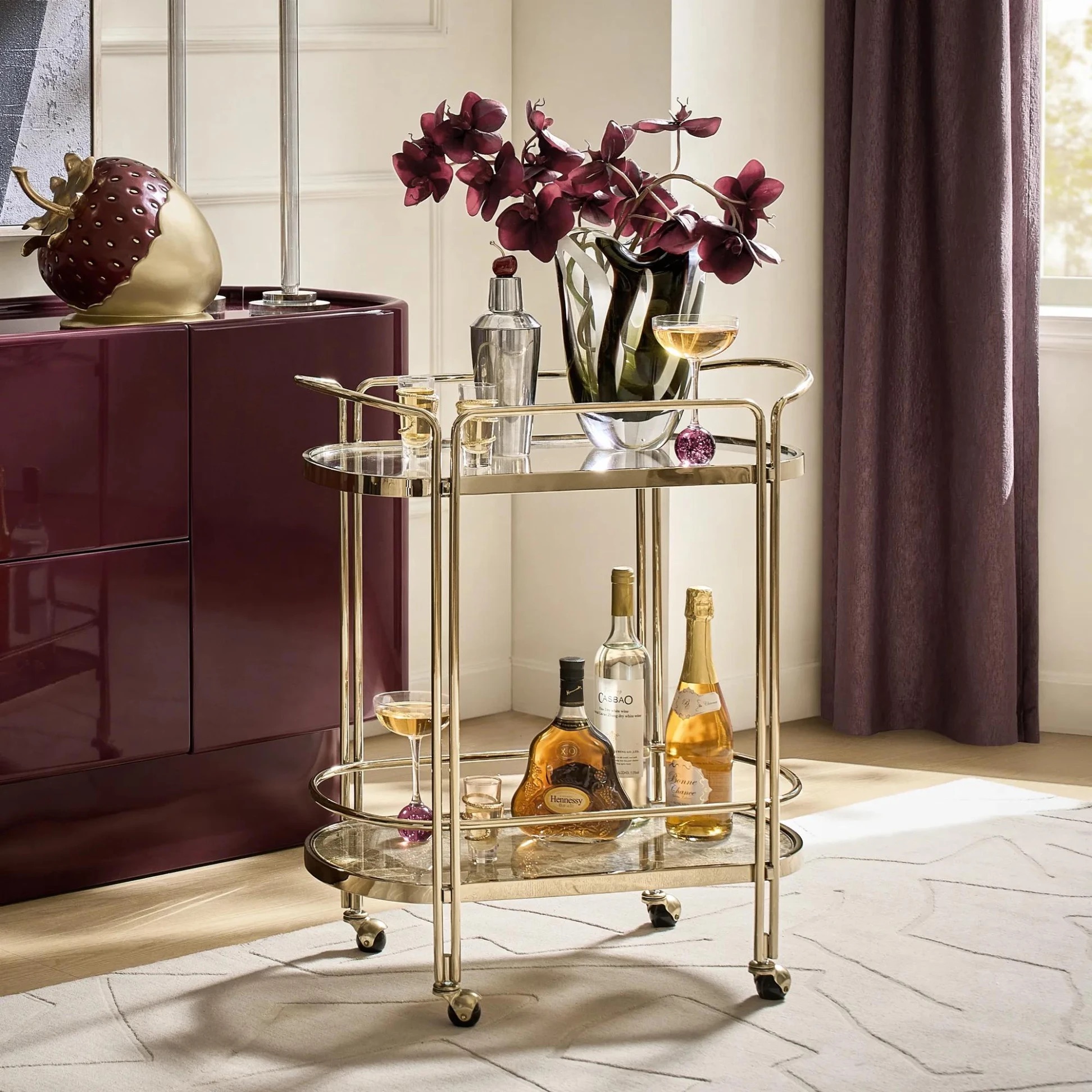
The best arrangements create a point of view, then leave enough room for the living room to live.
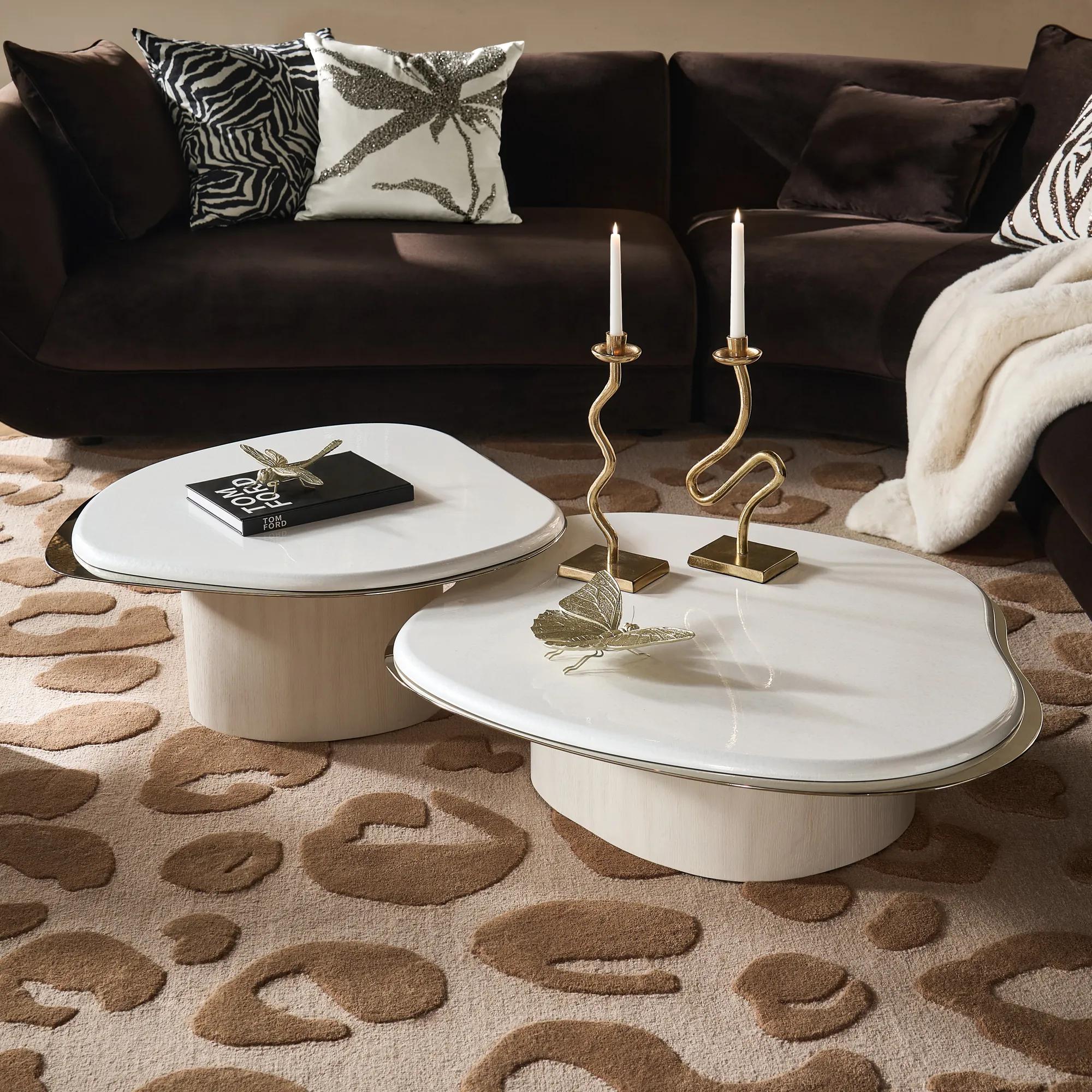
A finished coffee table has rhythm, contrast, and somewhere for the eye to rest.
A coffee table is rarely undone by the wrong object. It is undone by the last one.
The extra candle. The small bowl added because one corner still looked empty. The book no one plans to open, placed beneath an object that did not need the height. Most coffee table decor ideas improve the room up to a point. Good editing is knowing when that point has arrived.
How to decorate a coffee table is not simply a question of what to put on it. The more useful question is what the surface needs. It may need height to interrupt the long line of the sofa, texture to soften a reflective finish, or one substantial object to give a large table visual weight.
It may simply need less.
The coffee table sits at the center of the seating composition, so every object on it carries more importance than its size would suggest. A well-styled table should look considered from the doorway and remain useful from the sofa. It should be able to hold a drink without requiring a minor relocation project.
In This Story
- The Coffee Table Decor Formula That Prevents Clutter
- Start With a Composition, Not a Collection
- Let the Shape of the Table Set the Rhythm
- Let the Material Do Some of the Decorating
- Style for the Way the Room Actually Lives
- The Curated Coffee Table Edit
- Frequently Asked Questions
The Coffee Table Decor Formula That Prevents Clutter
To decorate a coffee table without making it look cluttered, choose one anchor, introduce a change in height, add one contrasting texture, and leave part of the surface open.
That is the framework. The result can be glamorous, organic, graphic, or restrained. The visual logic remains remarkably consistent.
| Styling Role | What Can Fill It | Why It Works |
|---|---|---|
| The anchor | A tray, substantial bowl, book stack, or sculptural object | Establishes the footprint of the arrangement |
| The change in height | A vase, branch, floral stem, or candleholder | Breaks the long horizontal plane of the table |
| The contrast | Glass against wood, ceramic against mirror, metal against stone | Creates depth and keeps the surface from feeling flat |
| The atmosphere | A candle, personal object, or small floral | Makes the styling feel lived in rather than purely arranged |
| The breathing room | One deliberately open section | Preserves function and allows the table itself to remain visible |
The eye counts groupings before it counts objects. Five small pieces gathered inside one tray read more calmly than five pieces scattered across the surface. Two books topped with a small sculpture register as one gesture, not three separate things.
Three is not a law. It is merely a useful place to stop.
Match the Arrangement to the Table
The shape and material of the coffee table should influence how the decor moves across it. A round table wants a composition that can be read from every seat. A long rectangle needs more than one visual zone. A glass top should reveal the structure beneath it, which rather defeats the purpose of covering every inch.
| Coffee Table Type | Strongest Styling Approach | What to Leave Visible |
| Round | A loose triangle or three uneven zones | A clear arc around the edge |
| Rectangular | Two or three groupings with varied heights | One usable end or corner |
| Oval | A low, elongated arrangement placed slightly off center | The curved outline at both ends |
| Square | One offset cluster or three active quadrants | At least one open quadrant |
| Glass | Two low objects positioned away from the center | The base and floor beneath |
| Mirrored | Matte books, ceramic, stone, or one warm candle | Enough reflection to let the surface read |
| Nesting or multi-level | One clear gesture on each active level | At least one quiet surface |
| Upholstered or storage | A firm tray that can be lifted away easily | The surrounding fabric or reversible top |
Start With a Composition, Not a Collection
A coffee table should not become the retirement home for every decorative object that has lost its place elsewhere.
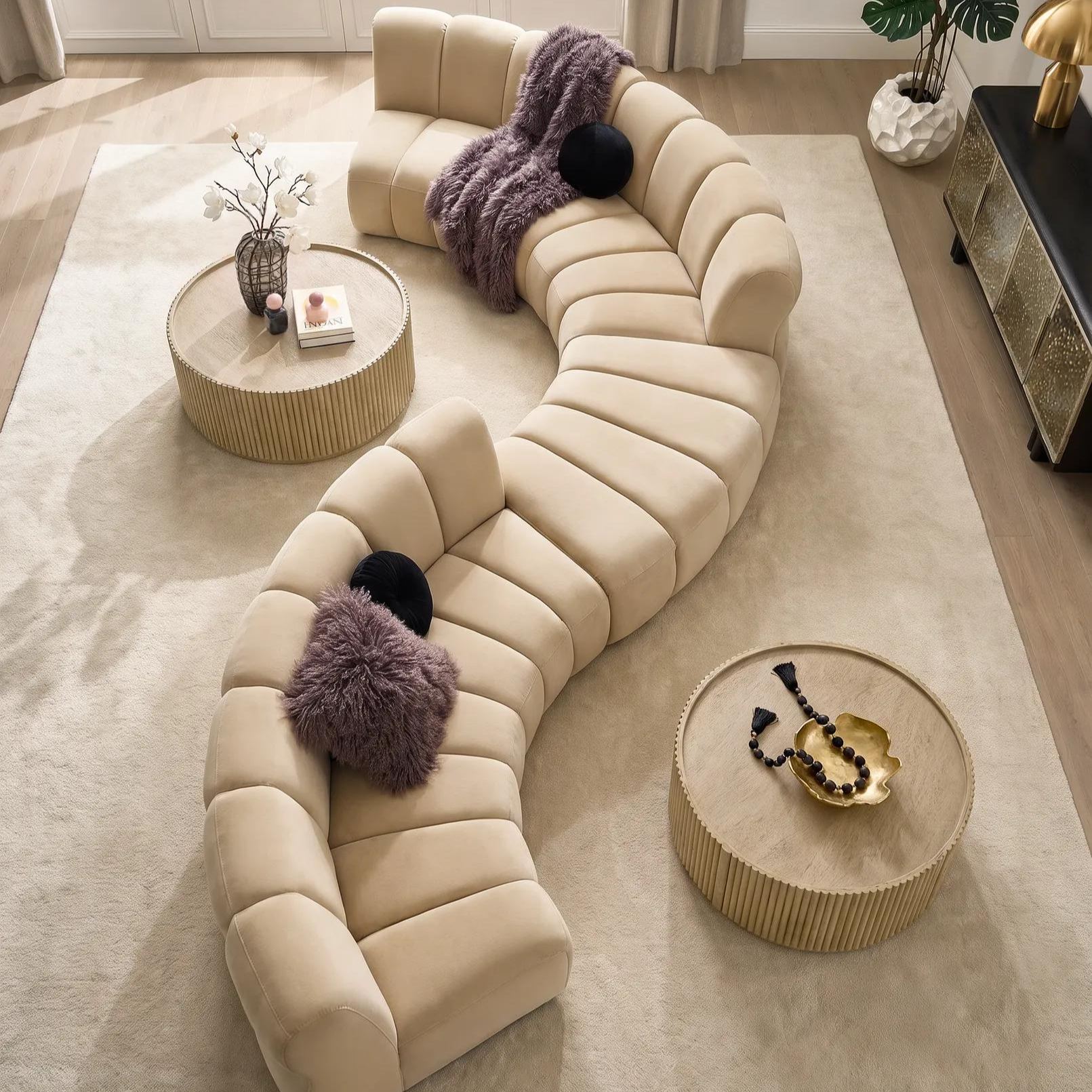
Begin with one visual idea. A sculptural grouping. A stack of books. A dramatic bowl. Once that idea is clear, the rest of the arrangement becomes easier to judge.
1. The Sculptural Trio
Place a vase slightly off center, add a horizontal stack of two or three books, then finish with one smaller object that sits between their heights. The three pieces create a loose triangle without looking as though they have been measured into position.
The objects should differ in silhouette as well as scale. A rounded vase, rectangular books, and an irregular sculpture give the eye three distinct forms to read. Three cylindrical objects at three similar heights tend to merge into one decorative column.
Explore vases and canisters with enough presence to hold their own beside the sofa, then choose a smaller piece from the decorative objects collection to complete the grouping.
2. The One-Object Statement
A table with a highly figured surface, sculptural base, or graphic pattern may need only one object.
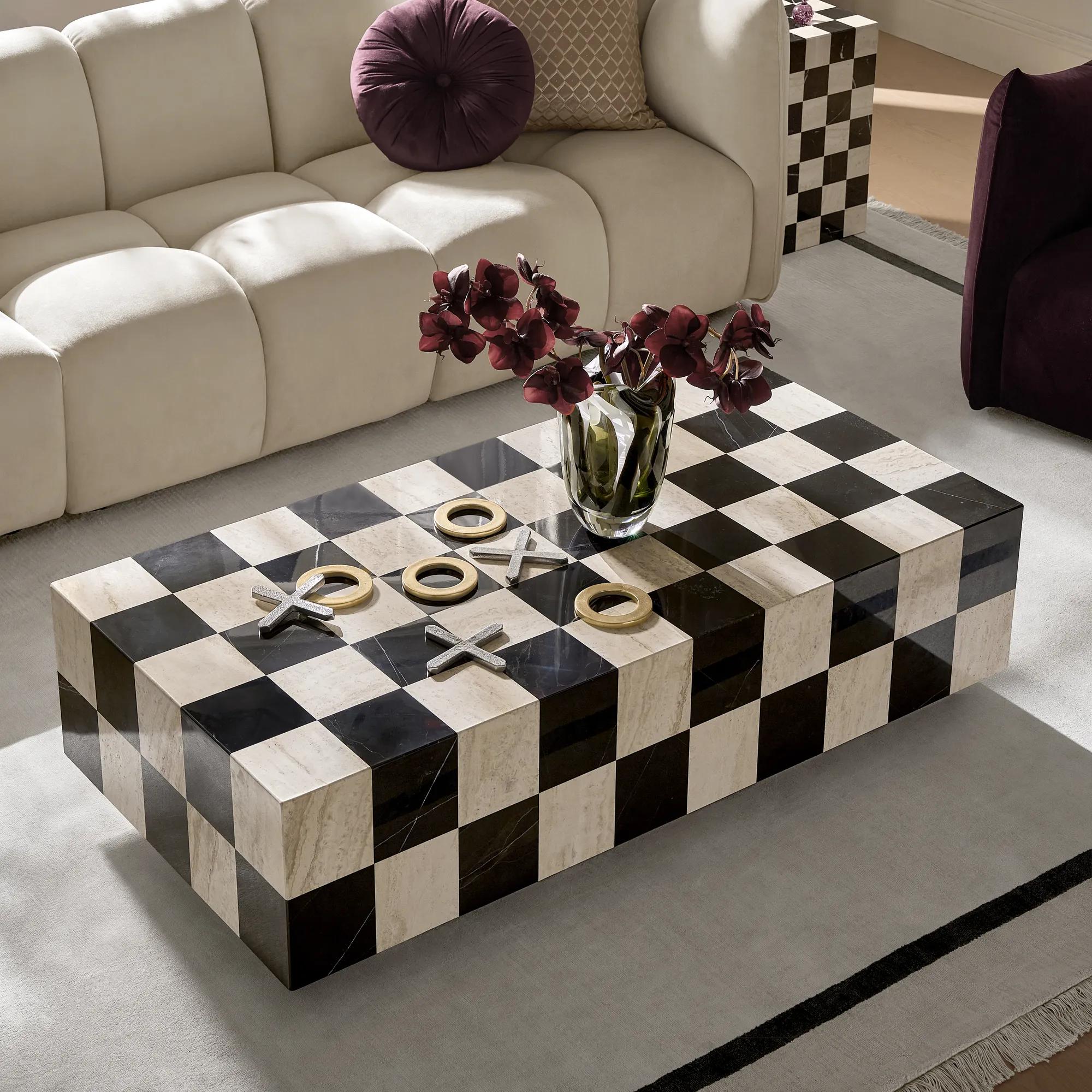
The Chessa Rectangular Chequered Marble Coffee Table is a useful example. Its black marble and travertine checkerboard already creates movement across the top. A single low bowl, placed away from the exact center, gives the room a focal point without obscuring the material.
Choose an object with enough scale to look intentional. A tiny ornament on a large table reads as something temporarily set down.
One strong gesture can finish the surface.
3. Books With Breathing Room
Coffee table books introduce color, subject, and personality while creating a stable platform for a smaller object. Build one substantial stack or two uneven stacks, but do not make every pile the same height.
If using two groups, leave one bare and place a small bowl, box, or sculpture on the lower stack. That small imbalance keeps the arrangement relaxed.
Let the Top Book Say Something
Choose books someone in the room might genuinely open. Art, photography, interiors, fashion, architecture, and travel all work because they bring a point of view to the surface. A stack selected only because every spine is beige tends to look beautifully obedient and not especially alive.
4. The Tray, Edited
A tray is useful when several small pieces need to behave like one. It creates a boundary for remotes, coasters, a candle, and the objects that gather in the living room despite everyone’s best intentions.
Keep the contents asymmetrical. Place the tallest object toward one side, balance it with a low bowl or box, and leave a little open space inside the tray. An overfilled tray is still clutter. It simply has a perimeter.
Browse decorative bowls and trays for a shape that relates to the table without copying it exactly. A round tray can soften a rectangular top; an elongated tray can bring order to a broad round table.
Stylist Note: Before adding something new, remove the smallest object and look again. The smallest piece is often the one creating activity without adding meaning.
Let the Shape of the Table Set the Rhythm
The best coffee table decorating ideas do not fight the outline beneath them. They use it.
A round table invites movement. A rectangle can support separate zones. An oval wants a long, easy composition rather than a tight pile in the center.
5. Style a Round Coffee Table in Thirds
Round coffee table decor works best when the surface is divided loosely into three uneven areas: one taller grouping, one lower grouping, and one open section.
The arrangement should look balanced from several directions because a round table is often visible from every seat. Place the tallest object slightly away from the center, then offset it with a bowl or book stack. The third area remains available for a drink or the book currently being read.
The Alexandria Round Mosaic Natural Mother-of-Pearl Coffee Table already brings a luminous pattern to the room, so a low, restrained arrangement allows the mosaic surface to continue doing its work.
Where to Leave the Open Space
Leave the clearest section facing the primary sofa. That is where the table is most likely to be used, and the arrangement will feel more welcoming from the room’s main viewpoint.
Do not divide the top like a pizza diagram. The thirds should be sensed, not announced.
6. Give a Rectangular Coffee Table Two or Three Zones
A rectangular coffee table usually needs more than one focal point. One tight grouping in the center can make the table look longer and emptier than it is.
Create a low horizontal zone with books or a tray, then place a vase, bowl, or sculptural object in a second zone. On a particularly long table, a third, quieter gesture may help carry the eye across the surface.
The groupings should not be evenly spaced. Allow one area to feel more substantial and leave the opposite end available for everyday use. Perfect symmetry can make coffee table decor feel more formal than the rest of the room.
7. Follow the Long Line of an Oval Table
An oval coffee table combines the capacity of a rectangle with the softer circulation of a curved form. The styling should acknowledge both.
Begin with an elongated tray or book stack placed just off center. Add a low bowl near one end and a slim vase closer to the middle. Leave the opposite end open so the eye can continue along the full curve.
Avoid placing two heavy objects at either end. That creates visual bookends and makes the table feel shorter. The composition should travel across the surface, not barricade it.
8. Build a Multi-Level Landscape
Nesting and multi-level coffee tables invite the decor to move horizontally as well as vertically. The mistake is treating every surface like a separate miniature room.
Choose one dominant gesture for the largest table, repeat a material or color on the second level, and allow the smallest surface to remain nearly bare. The repetition connects the pieces. The quiet area keeps the arrangement from becoming a collection of competing displays.
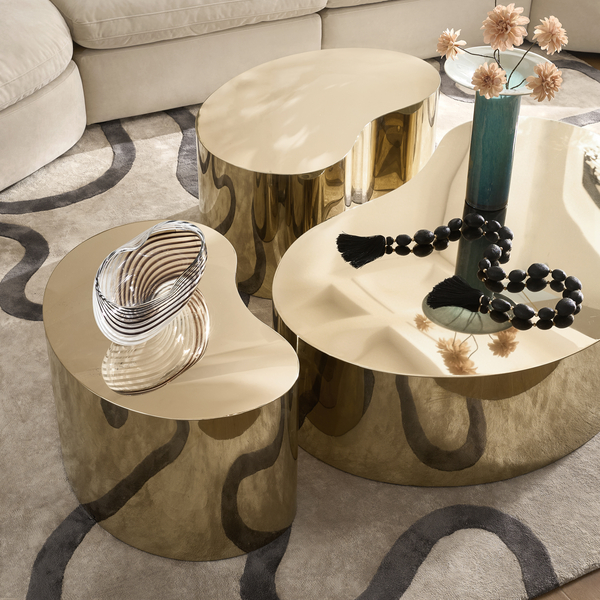
The Aurea Soft Gold Coffee Table Set of 3 offers three fluid, reflective forms at different scales. A low stone object on the largest surface and one dark book on the middle table would be enough. The tables already supply the movement.
Stylist Note: Stand at the room’s entrance before finalizing the arrangement. Coffee table styling is usually experienced from across the room before it is seen from above.
Let the Material Do Some of the Decorating
A beautiful surface is not blank space waiting to be filled. It is part of the composition.
Bronze mirror reflects every object twice. Clear glass reveals whatever sits beneath it. Travertine brings its own tonal movement. Reeded oak changes with the light as the eye moves around the room.
The decor should respond accordingly.
9. Pair Mirror With Matte
Mirrored coffee table decor should provide contrast rather than more shine. Use clothbound books, matte ceramic, a stone-like object, or a dark sculptural form to slow the reflection.
The Glimmer Bronze Mirrored Coffee Table combines bronze mirror panels with a black oak base and a low faceted silhouette. A pair of books and one softly finished vessel would bring texture without competing with the geometry.
Warm candlelight can deepen the bronze surface after dark. Choose one piece from the candleholder collection, not a small convention of them.
What to Put on a Mirrored Coffee Table
The clearest combination is one matte anchor, one tactile object, and one atmospheric detail. Keep enough of the surface exposed for the reflection to remain visible.
10. Keep Glass Clear Enough to Reveal the Base
A glass coffee table works because the eye can travel through it. Styling should preserve that transparency.
Place one or two low objects away from the center, leaving the structure beneath unobstructed. A narrow book stack and shallow bowl often provide enough visual weight without turning the clear top opaque.
The Sequoia Silver Resin Coffee Table With Glass Top uses its glass surface to reveal a cast, root-inspired base below. The base is already the sculpture. The objects above it should behave more like punctuation.
11. Soften Stone Without Hiding It
Stone gives a coffee table visual gravity. The strongest styling introduces a softer or more translucent note rather than adding another heavy material.
The Bond Nesting Coffee Table combines travertine with an ash base, creating a conversation between raw texture and warm grain. Tinted glass, a small metallic object, or an airy floral arrangement can lighten that material story without diluting it.
Avoid covering the natural variation with a tray that occupies most of the top. The surface is one of the objects in the arrangement.
12. Keep Pearl and Pale Oak Tonal
Tonal styling is not the same as matching every shade. It is about using small shifts in opacity, warmth, and texture to create depth.
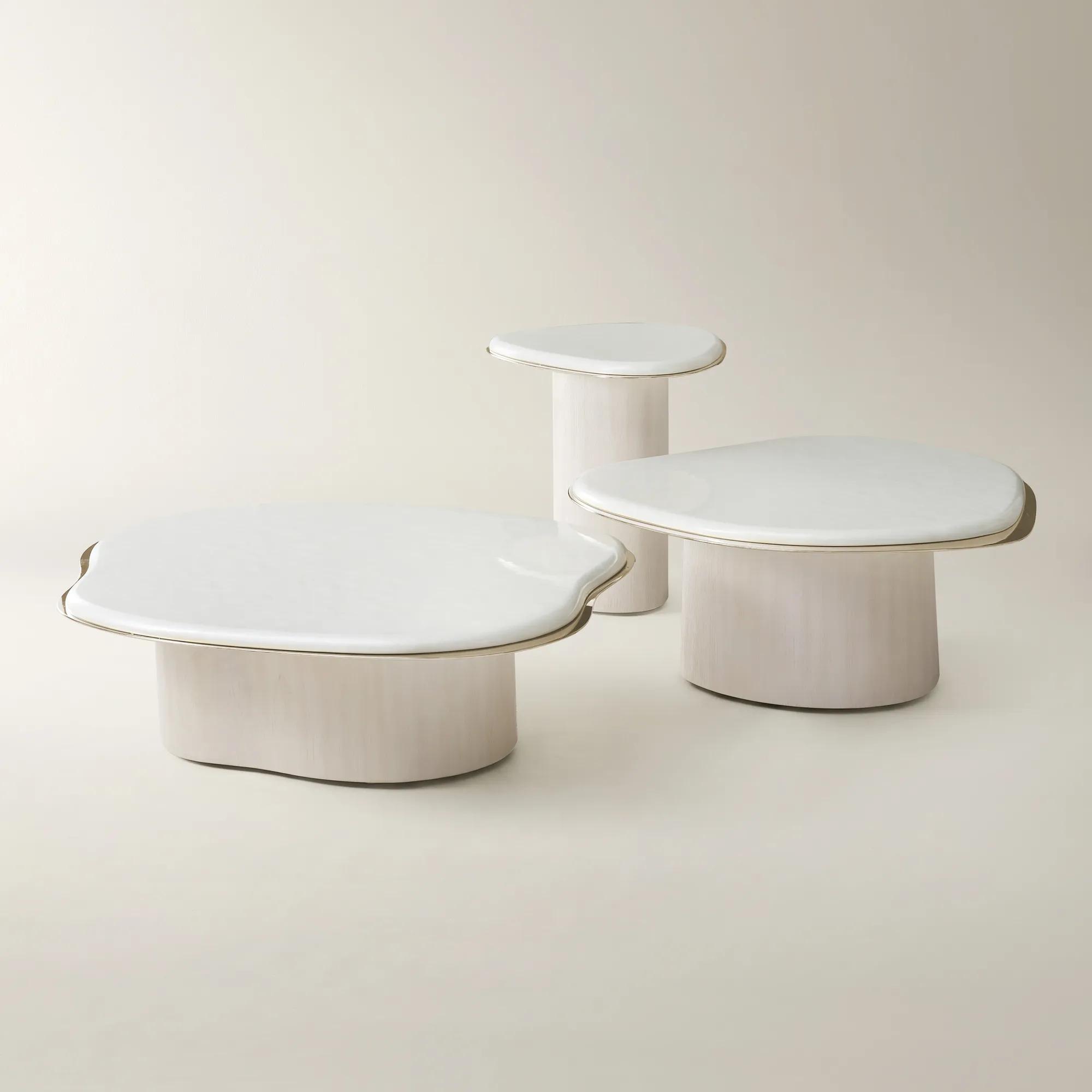
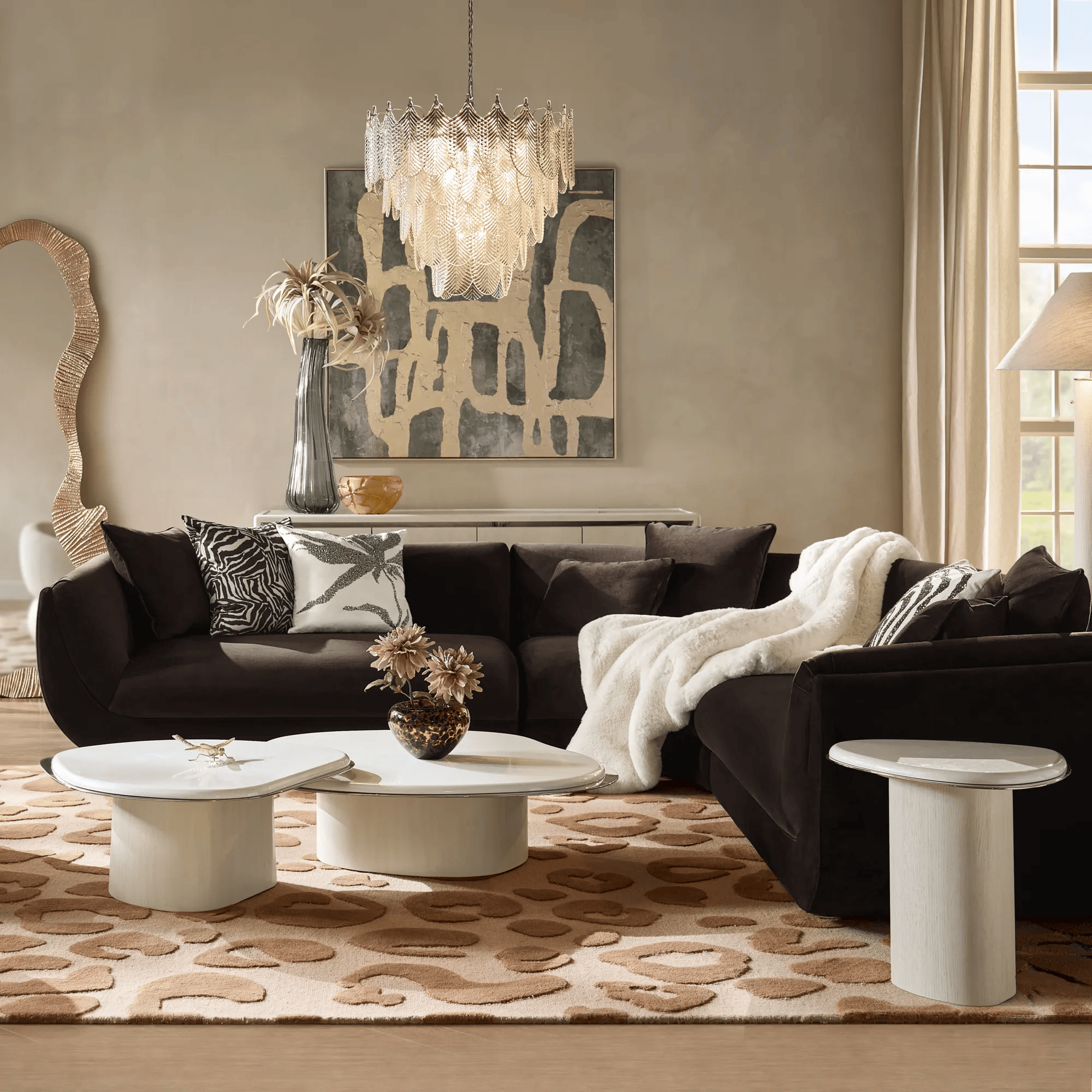
The Lumina Bleached Oak Coffee Table With Pearl Lacquered Top pairs a fluid silhouette with pearl lacquer, pale oak, and a champagne gold edge. A milky glass vase, one cream book, and a restrained metallic detail would continue the palette without flattening it.
Keep the arrangement low and slightly asymmetrical. The freeform outline deserves to remain visible.
13. Set Smooth Objects Against Reeded Wood
Texture becomes clearer when placed beside its opposite.
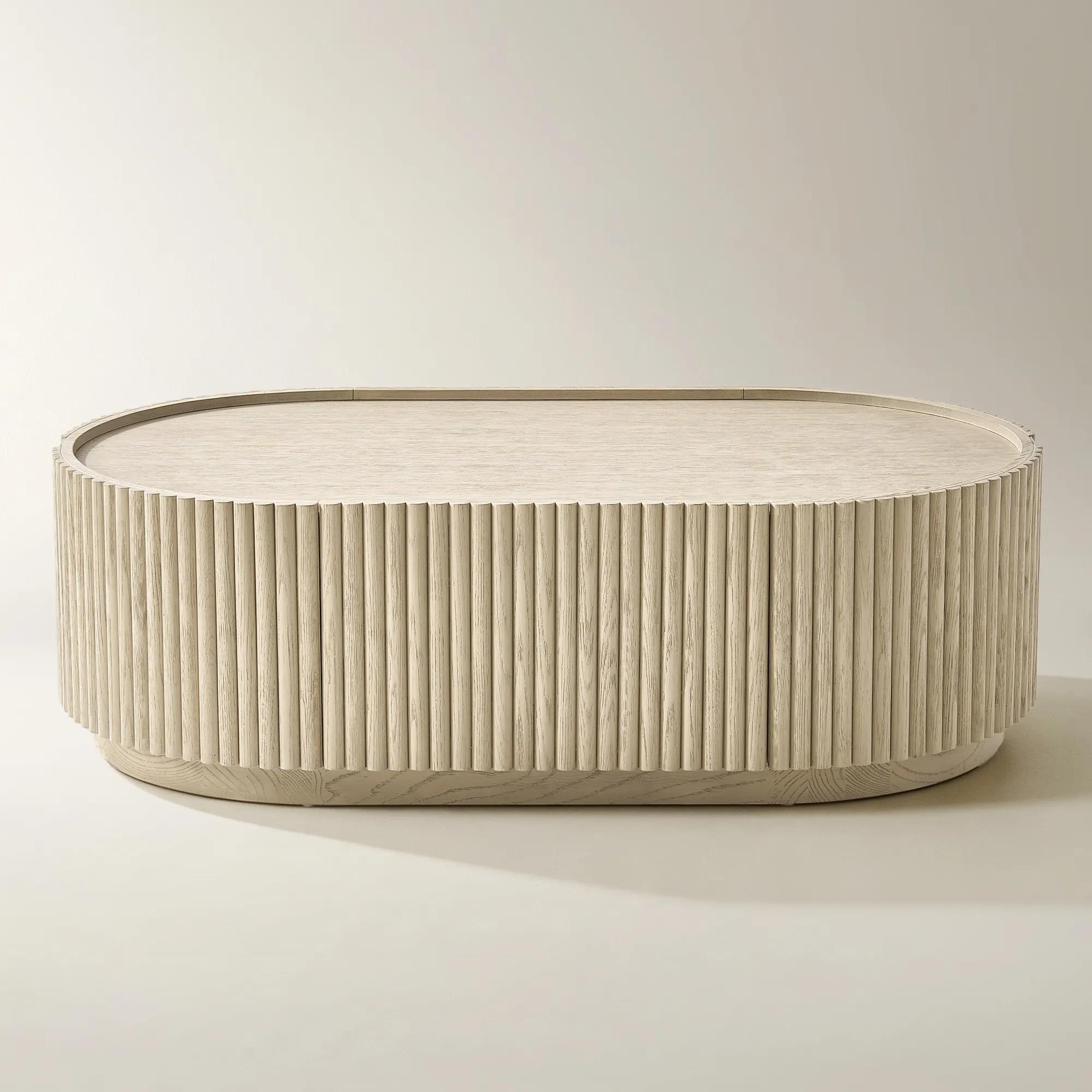
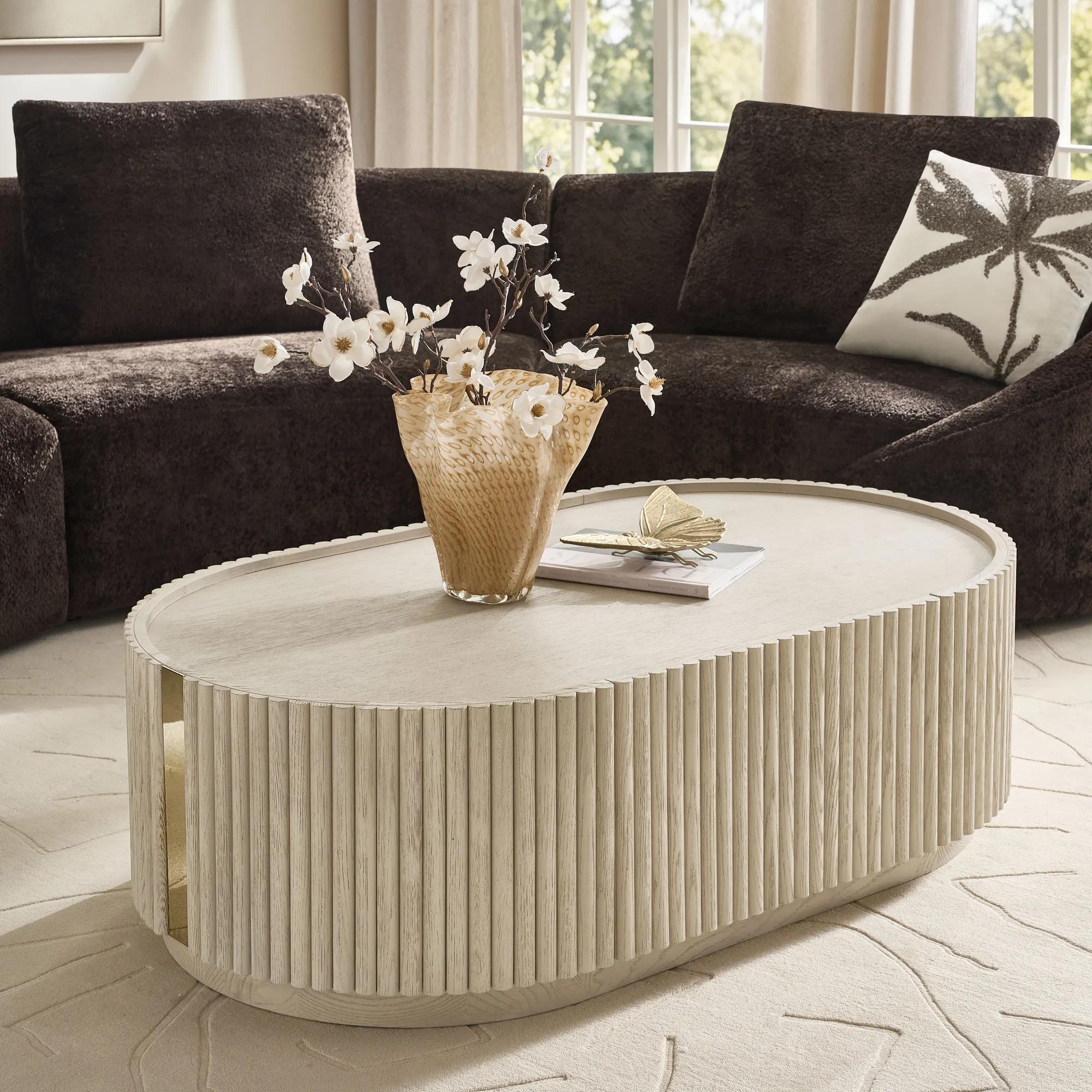
The Stria Oval Reeded White Oak Coffee Table With Drawer brings vertical rhythm through reeded oak, then sharpens it with soft gold trim and a recessed top. Smooth glass, polished ceramic, or a softly lacquered box allows that texture to register.
Avoid repeating fluting, ribbing, and heavy pattern across every object. Too much of the same texture does not create richness. It creates camouflage.
Stylist Note: When the table has a distinctive finish, repeat that material only once elsewhere in the visible room. A frame, lamp base, or small object is enough to connect the composition.
Style for the Way the Room Actually Lives
A coffee table can be photogenic and still fail the room.
The final arrangement has to account for evenings, guests, reading, television remotes, coasters, and the occasional dinner eaten where no dining table is involved. Good styling makes room for those realities without surrendering the composition.
14. Use a Living Centerpiece With Air Around It
Florals and branches soften the hard plane of a coffee table while bringing movement into the center of the room. The arrangement should feel open enough to see through or low enough to see over.
Airy branches suit broad seating areas because they create height without becoming a solid visual wall. A compact floral works better when people regularly sit opposite one another. In either case, the vessel should be part of the composition rather than a container chosen after the fact.
Explore the floral collection for a restrained stem or branch, then sit in every primary seat before deciding the height is right. Conversation should not require strategic leaning.
15. Create an Arrangement That Clears in One Move
For a coffee table used throughout the day, place the smaller decor on one firm tray. A candle, coasters, remote, and decorative object can move together when the surface is needed for serving, games, or a quiet evening with takeout.
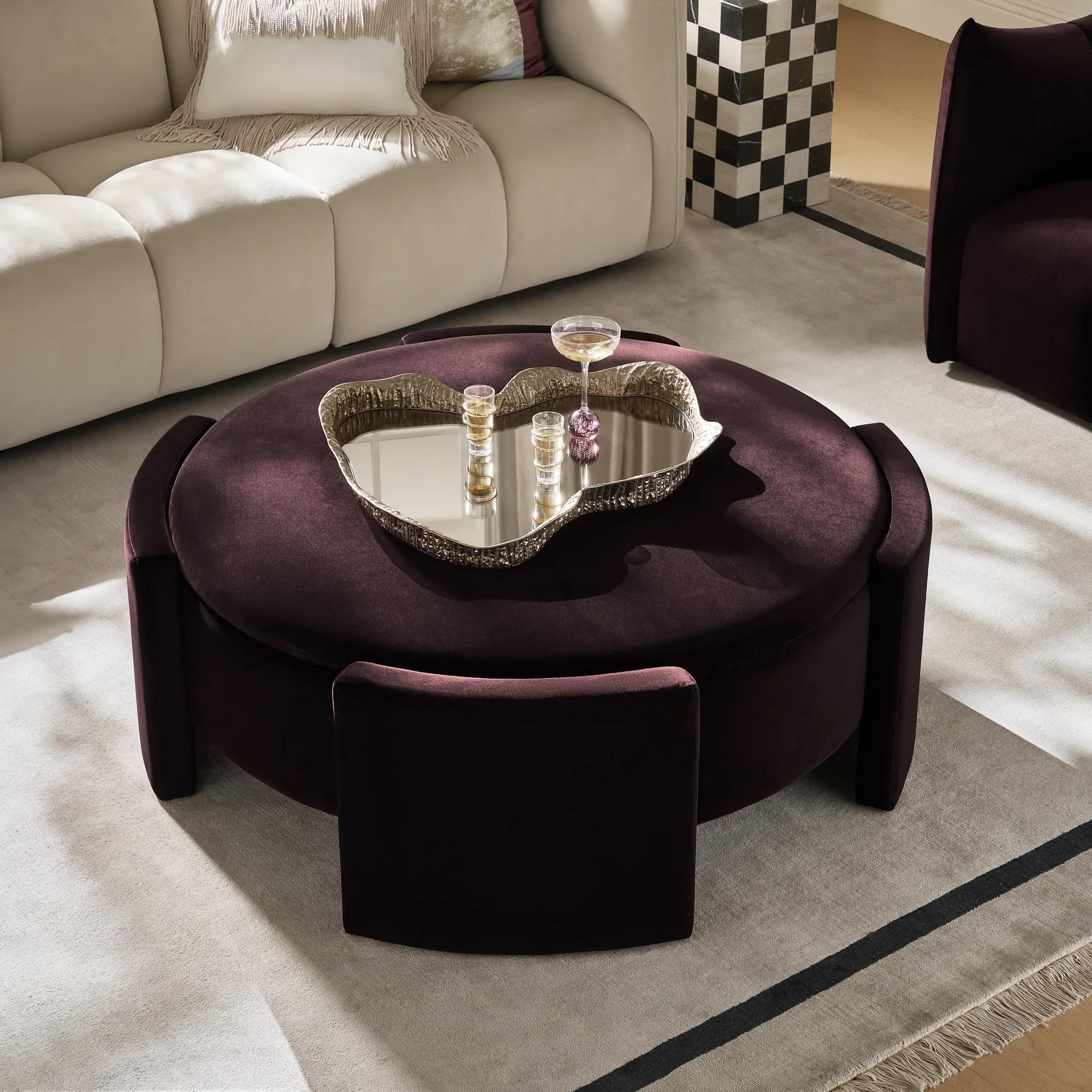
The Jora Round Fig Velvet Storage Coffee Table With Reversible Tabletop takes that adaptability further with a reversible top and concealed interior storage. Keep the visible styling contained so the table can shift functions without requiring the room to be reset.
For Storage Coffee Tables
The storage should hold the things that otherwise remain in view, not become an invitation to own more of them. Keep daily pieces near the top and edit the contents occasionally. A hidden drawer full of forgotten remotes is still clutter. It is simply more discreet.
Stylist Note: Photograph the finished table from the sofa. The seated viewpoint reveals crowded sightlines and uneven spacing more clearly than standing over the surface.
 .
.
The Curated Coffee Table Edit
The right coffee table gives the room a design direction before the first book, vase, or candle is placed on it.
This edit brings together established favorites and newer collection pieces across mother-of-pearl, travertine, bronze mirror, velvet, reeded oak, glass, marble, and pearl lacquer.
| Coffee Table | Why It Belongs | Strongest Styling Direction |
| Alexandria Round Mosaic Natural Mother-of-Pearl Coffee Table | A luminous round anchor with enough surface interest to carry restrained decor | Divide the top into thirds and keep the mosaic visible |
| Bond Nesting Coffee Table | Travertine and warm wood bring natural texture with flexible, multi-level function | Repeat one material across the levels and leave one table quiet |
| Sequoia Silver Resin Coffee Table With Glass Top | A transparent top reveals a sculptural root-inspired base beneath | Place two low objects away from the center |
| Chessa Rectangular Chequered Marble Coffee Table | Graphic marble and travertine give the surface its own strong composition | Use one substantial, low object |
| Glimmer Bronze Mirrored Coffee Table | Bronze mirror and black oak create reflective depth and a grounded silhouette | Balance the shine with matte books and ceramic |
| Lumina Bleached Oak Coffee Table With Pearl Lacquered Top | Pearl lacquer and pale oak bring soft luminosity to an organic form | Keep the styling tonal, low, and asymmetrical |
| Stria Oval Reeded White Oak Coffee Table With Drawer | Reeded oak adds rhythm while the concealed drawer keeps the surface edited | Pair the texture with smooth glass or ceramic |
| Jora Round Fig Velvet Storage Coffee Table With Reversible Tabletop | Soft upholstery, hidden storage, and a reversible top support a room that changes through the day | Contain the visible decor on one movable tray |
Frequently Asked Questions
What Should I Put on a Coffee Table?
Start with one anchor, one change in height, and one contrasting texture. A book stack, vase, and decorative bowl are a dependable combination, but a tray, candle, floral stem, or sculptural object can fill the same roles.
Leave part of the surface open so the table remains useful.
How Many Items Should Be on a Coffee Table?
Three to seven visible pieces usually provide enough variation without overwhelming the surface, but grouping matters more than the number. Several small objects placed inside one tray read as a single composition.
A large table may need two or three groupings. A small table may need only one object.
How Do You Style a Round Coffee Table?
Divide a round coffee table loosely into thirds. Use one taller element, one lower grouping, and one open section so the arrangement feels balanced from every seat.
Avoid placing everything in a straight line across the center.
How Do You Style a Rectangular Coffee Table?
Create two or three distinct zones across the length of the table. Combine a horizontal element, such as books or a tray, with a vase, bowl, or sculptural object at a different height.
Leave one end open for everyday use.
What Looks Good on a Glass Coffee Table?
Low objects that allow the base and floor beneath the glass to remain visible work best. A narrow book stack, shallow bowl, or small sculptural object can add interest without erasing the transparency.
Place the decor away from the exact center when the table has a distinctive base.
What Should You Put on a Mirrored Coffee Table?
Use matte, tactile objects to balance the reflection. Clothbound books, ceramic, stone, wood, and one warm candle create depth without adding more shine.
Keep the arrangement edited because every object will appear twice.
Should You Use a Tray on a Coffee Table?
A tray is useful when the table holds several small objects or needs to be cleared frequently. It gathers loose items into one visual unit and makes the arrangement easy to move.
Choose a tray that contrasts with the table rather than disappearing into it.
How Tall Should Coffee Table Decor Be?
The tallest decor should allow people seated across from one another to see comfortably. Dense floral arrangements should remain relatively low, while airy branches can rise higher because the eye can travel through them.
Check the height from a seated position, not while standing over the table.
How Do You Make Coffee Table Decor Look More Expensive?
Use fewer, better-scaled objects and allow the table’s material to remain visible. Vary height, shape, and texture rather than buying a matching set of accessories.
Open space often does more for a composition than one additional object.
A Coffee Table Should Still Feel Like a Table
Coffee table decor does not have to announce that it has been styled. It should simply give the center of the room a clear beginning.
The strongest arrangements have one dominant idea, a shift in height, a material contrast, and enough blank space for the eye to pause. Those principles travel easily across round, rectangular, glass, mirrored, stone, and upholstered tables. More importantly, they leave room for the remote, the glass, and the book currently being read.
That is the real test of coffee table decor ideas: the room looks finished, and no one is afraid to sit down.
Explore the complete coffee table collection, then finish the composition through decorative bowls and trays, vases and canisters, and the wider living room edit.