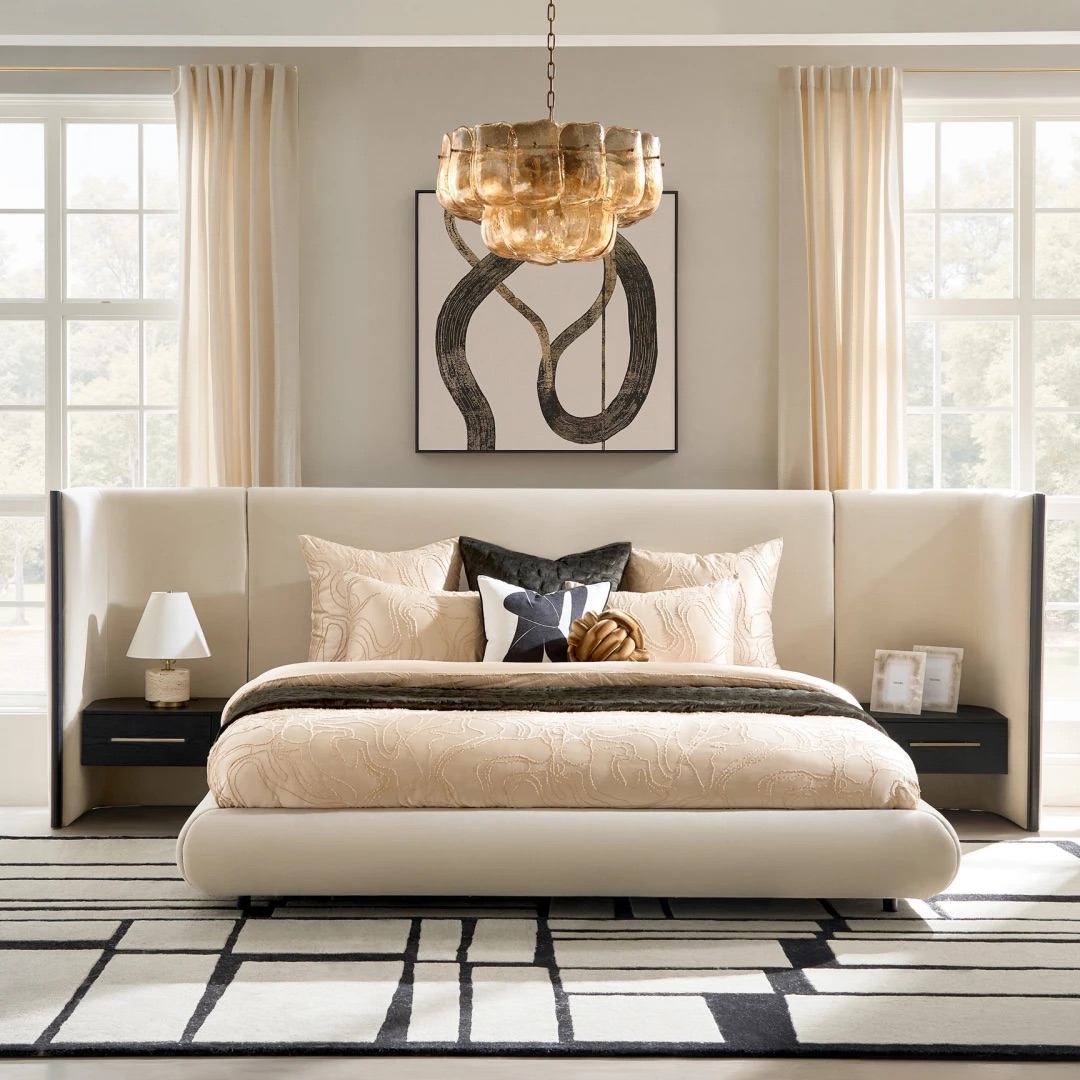
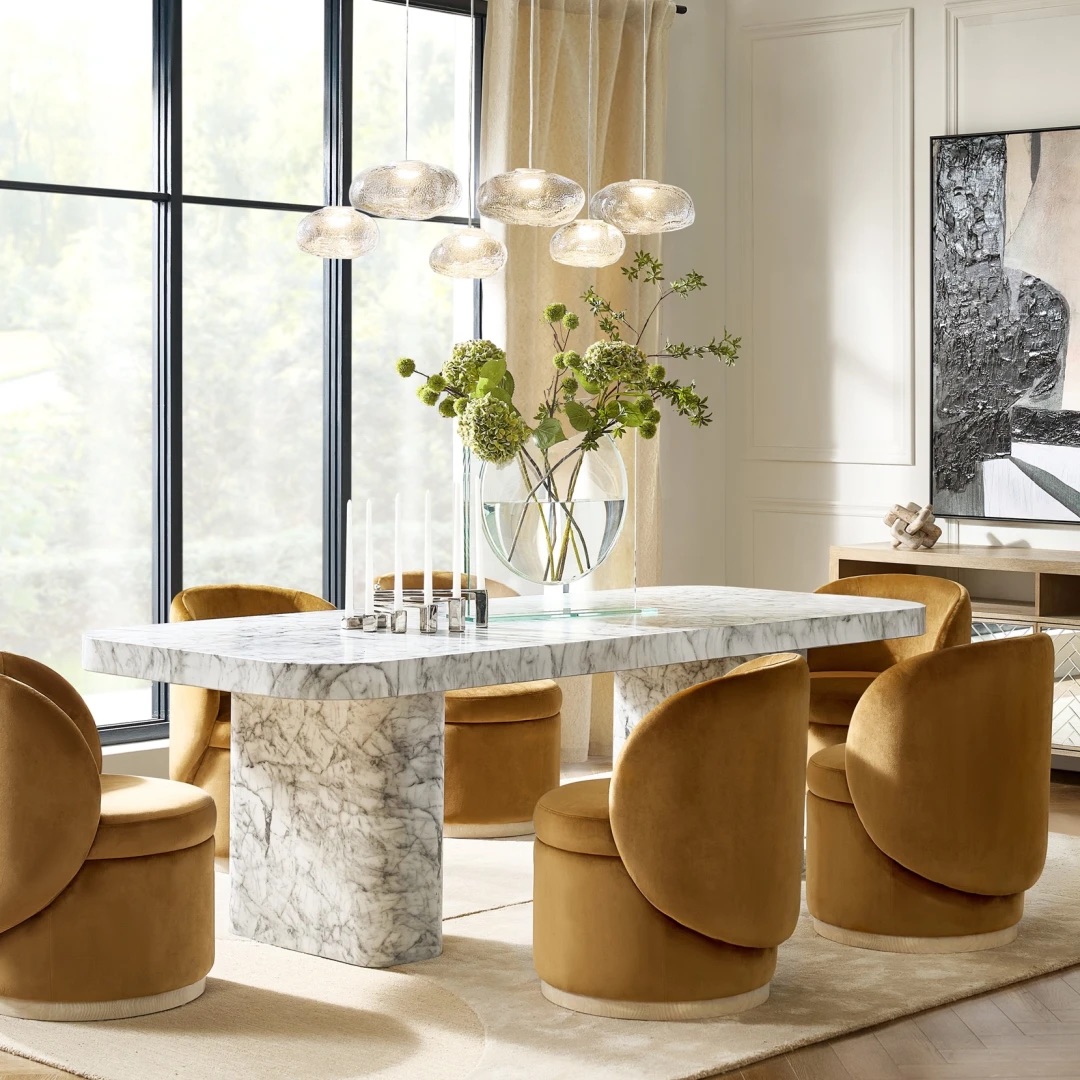
When placed with intention, a floor mirror becomes part light source, part architecture, part finishing touch.
There is a particular kind of transformation that happens when a room catches the light just right. A corner softens. A ceiling feels taller. A wall that once felt blank begins to read as deliberate. That is the quiet power of a floor mirror. It does more than reflect, it edits the atmosphere of the room.
Right now, the appeal is not simply practical. A floor mirror answers several design desires at once: more light, more depth, more visual ease, and a stronger focal point without adding heaviness. Designers often place mirrors opposite or beside a window to bounce light deeper into the room and make it feel more expansive.
Whether you are searching for floor mirror bedroom inspiration, living room mirror ideas, or elegant mirror placement ideas for a smaller home, the goal is the same: to make the room feel finished, and to make it feel seen.
In This Story
-
How a floor mirror can shift a room’s light, mood, and proportions
-
Six designer tricks that make mirror styling feel polished rather than obvious
-
A room-by-room formula for living rooms, bedrooms, dining spaces, and entryways
-
A selective edit of the pieces that give a mirror context, contrast, and glow
The Design Codes of a Floor Mirror
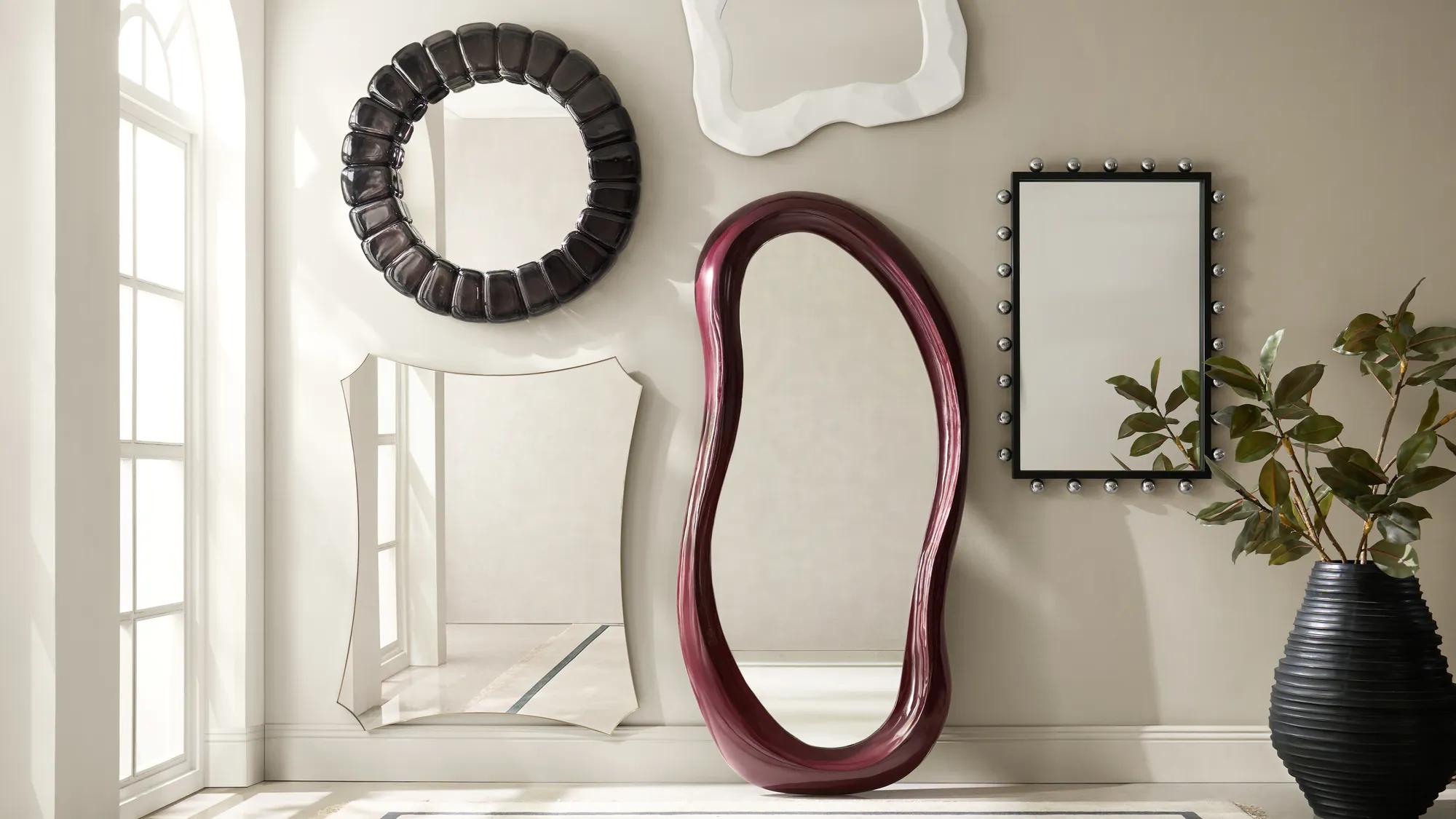
A beautiful floor mirror is never just a utility piece. In a well-composed room, it behaves like furniture, artwork, and architecture at once. The most successful versions are chosen the same way a designer chooses a chair or chandelier: by considering palette, materiality, silhouette, shine level, and texture.
Palette
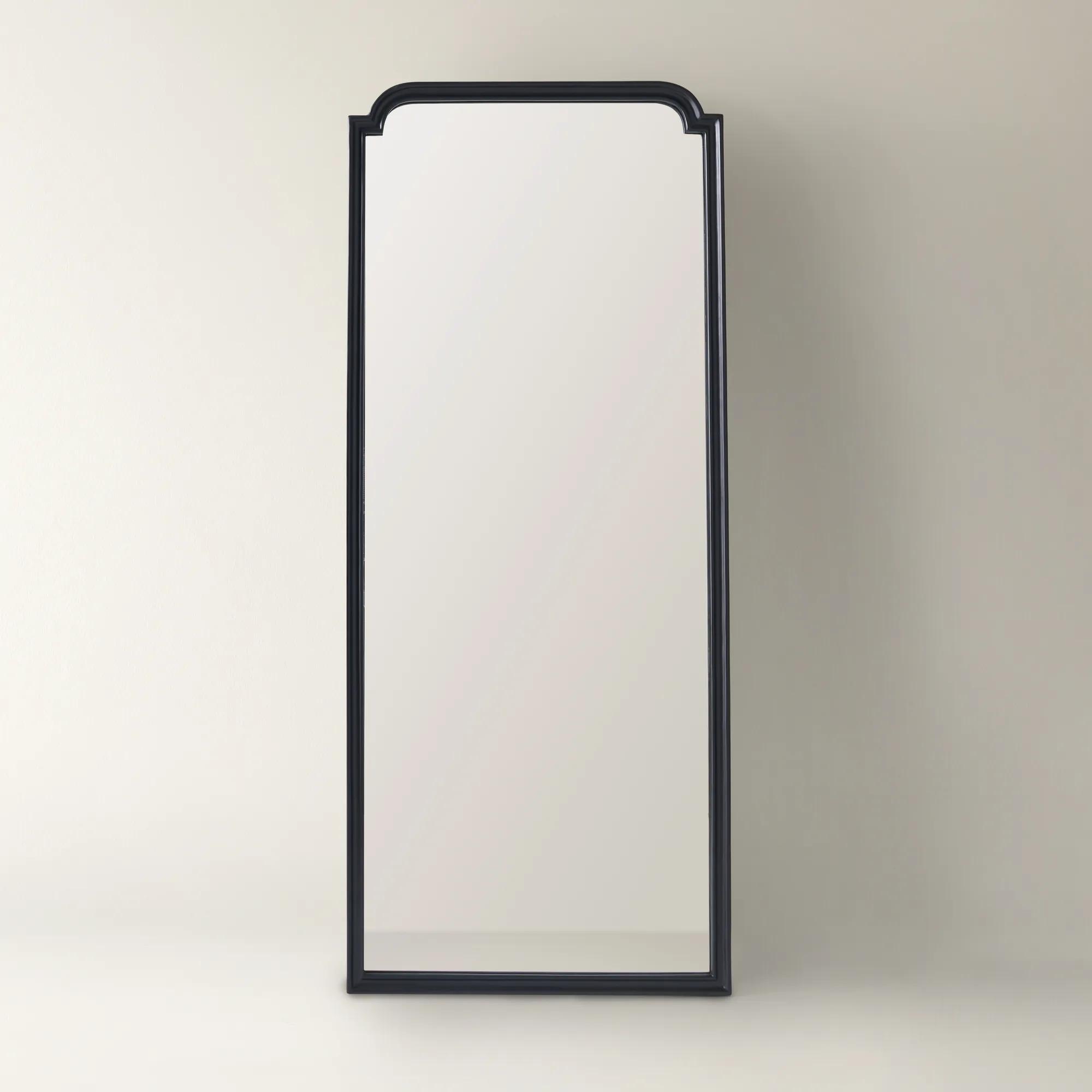
If your room is quiet and tonal, a floor mirror with a warm metallic frame, smoked finish, or antique wash adds dimension without breaking the spell. In a higher-contrast room, black lacquer, espresso wood, or polished nickel gives the reflection a sharper outline.
Materials
Material is where the mood begins. Antiqued brass feels romantic. Matte black feels tailored. Burl wood or carved oak feels sculptural and grounded. A beveled edge introduces polish, while a softened or antiqued reflection can make the room feel more atmospheric.
Silhouettes
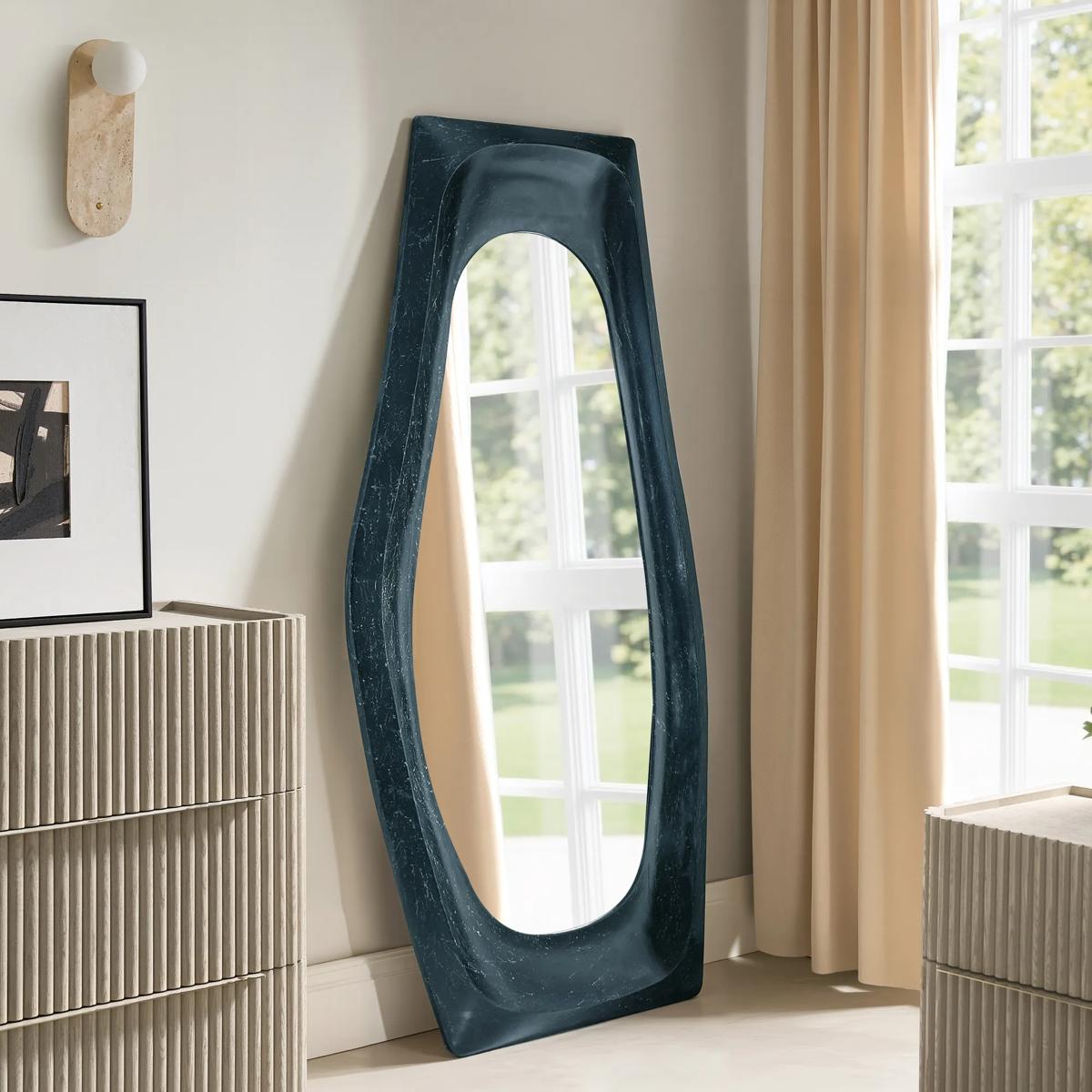
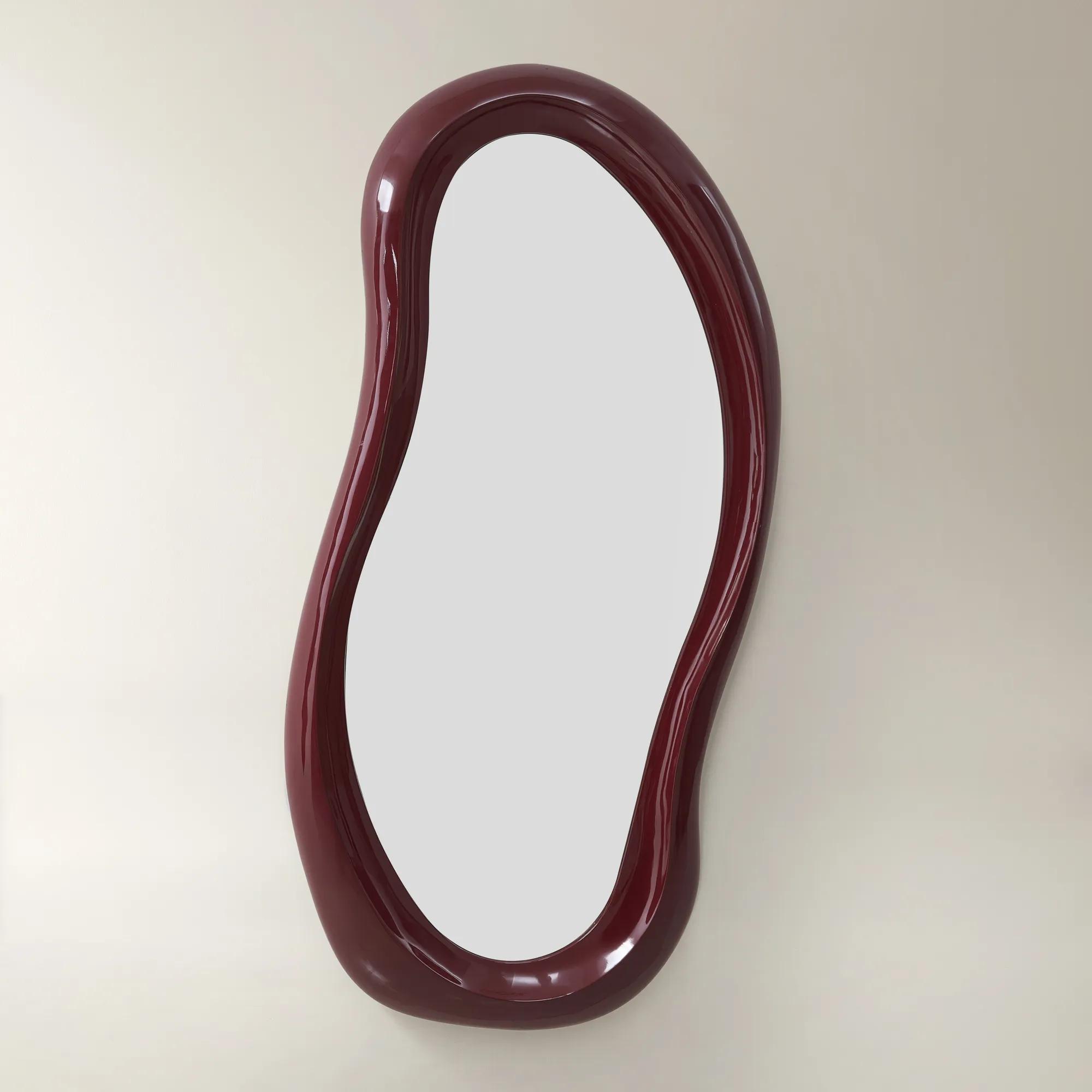
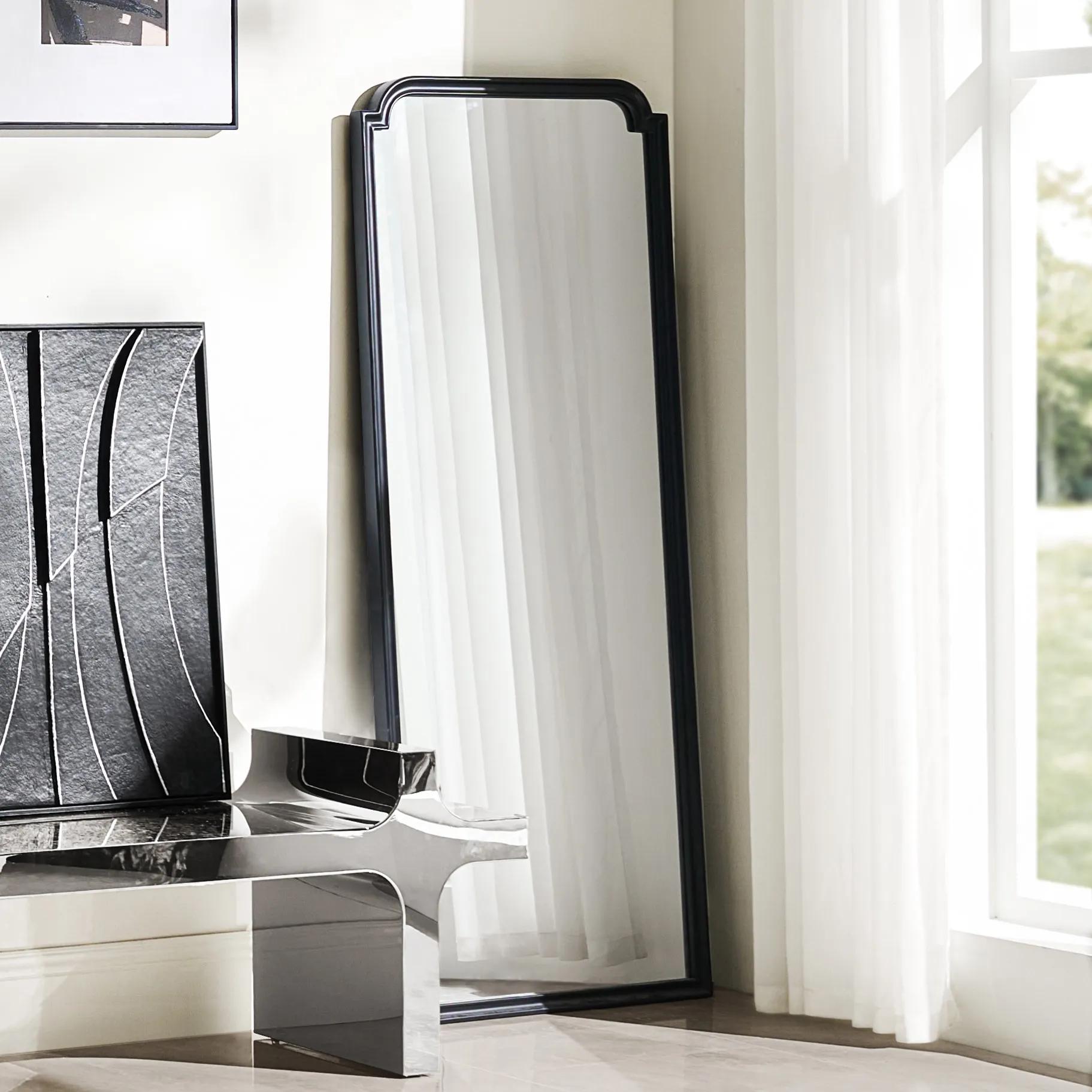
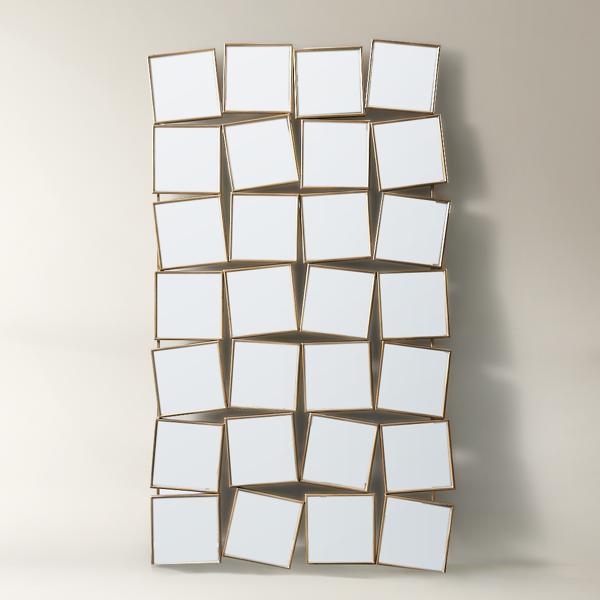
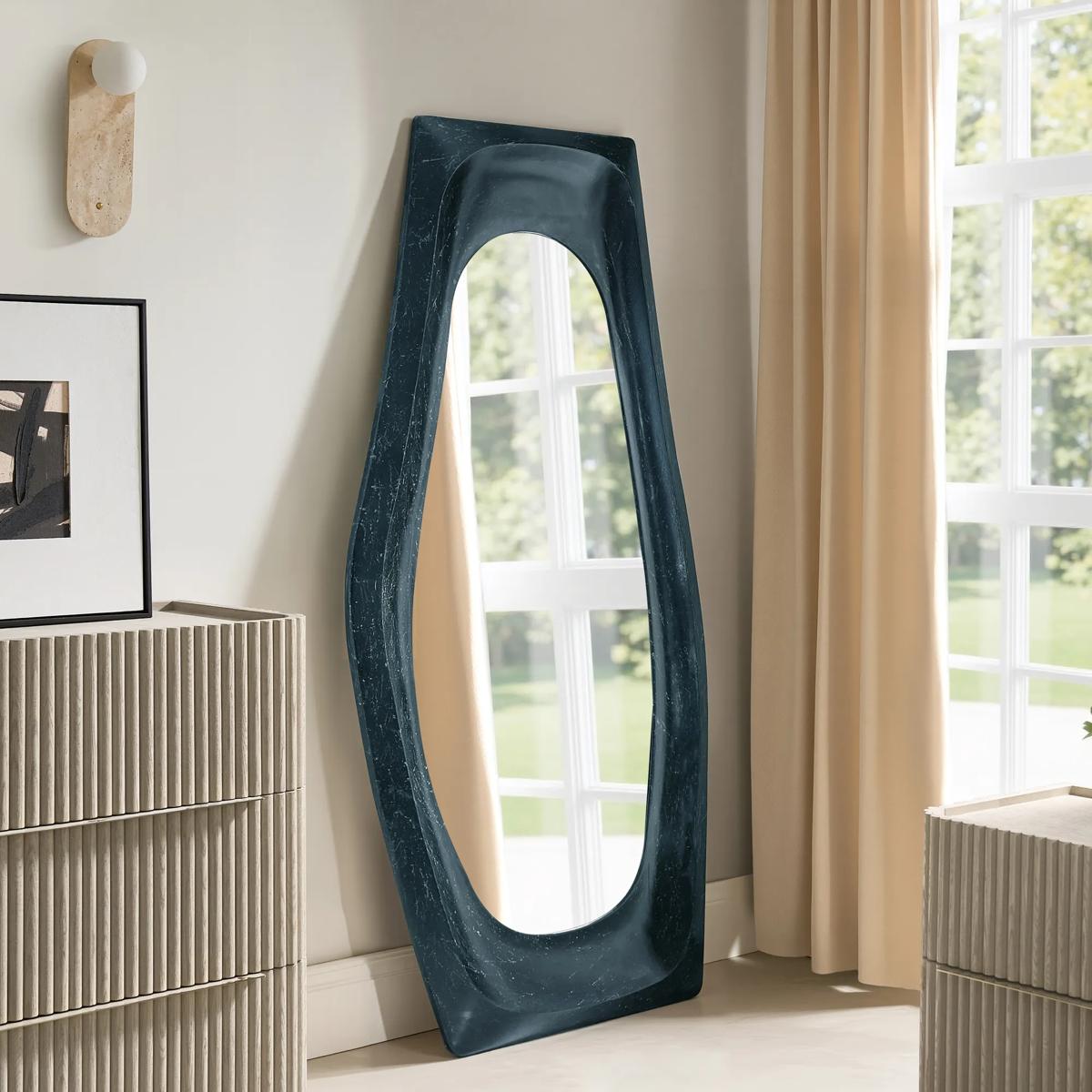
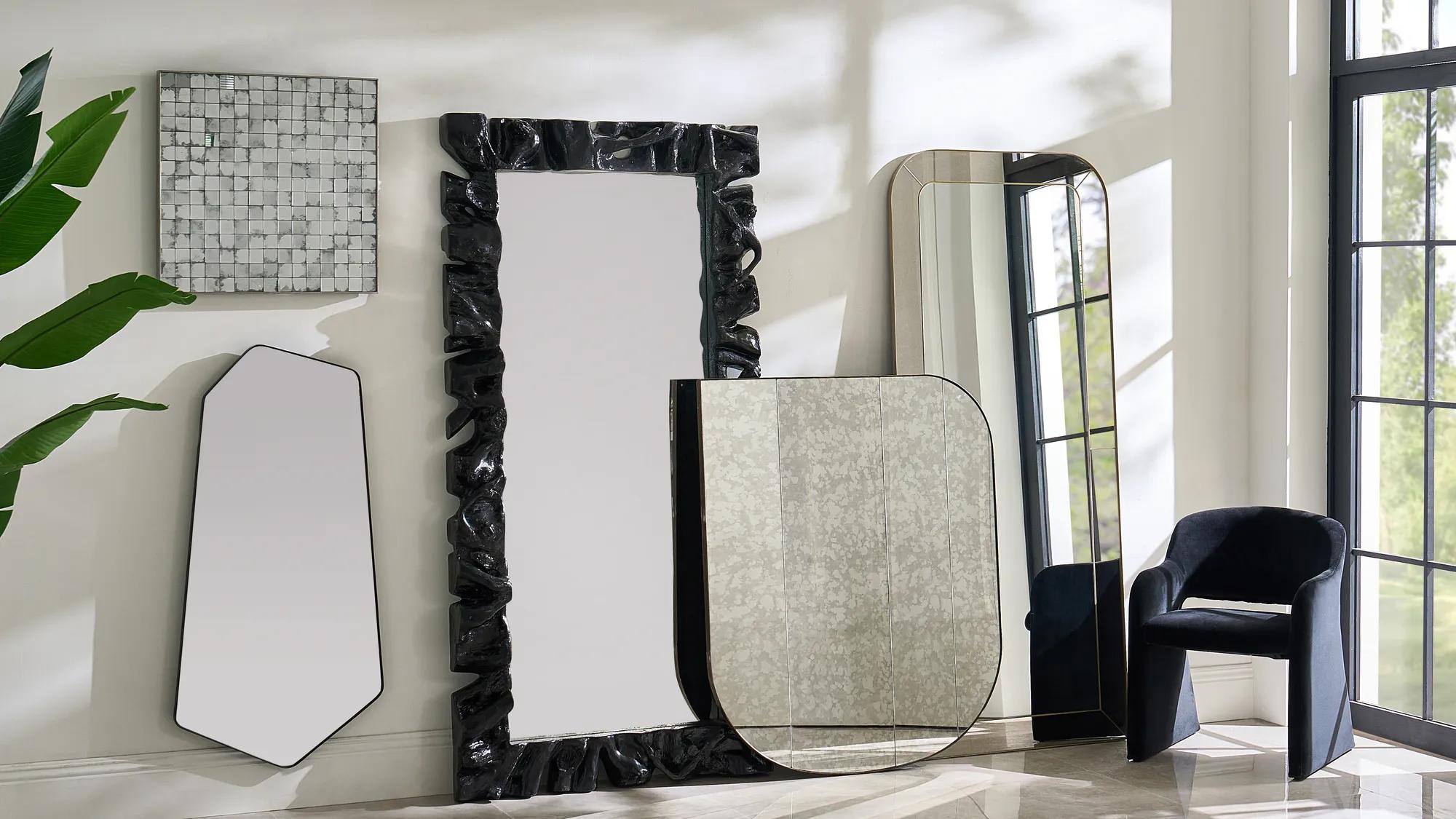
An arched floor mirror brings softness and height. A clean rectangular full-length mirror feels architectural, especially in contemporary rooms. An irregular or sculptural shape reads more like gallery decor, ideal when the mirror is meant to carry the room visually.
Shine Level
Not every room wants a high-gloss reflection. Some spaces benefit from crisp clarity, others from a slightly moodier finish. If the room already has a lot of sparkle from chandeliers, polished metals, or mirrored accents, a quieter frame can create balance.
Texture
A floor mirror needs contrast around it. Place reflective glass against boucle, velvet, raw wood, travertine, plaster, or linen, and the whole room becomes richer. Reflection is strongest when it sits beside something tactile.
Stylist Note: The most convincing mirror moments are layered. Reflection alone can feel cold. Reflection against texture feels luxurious.
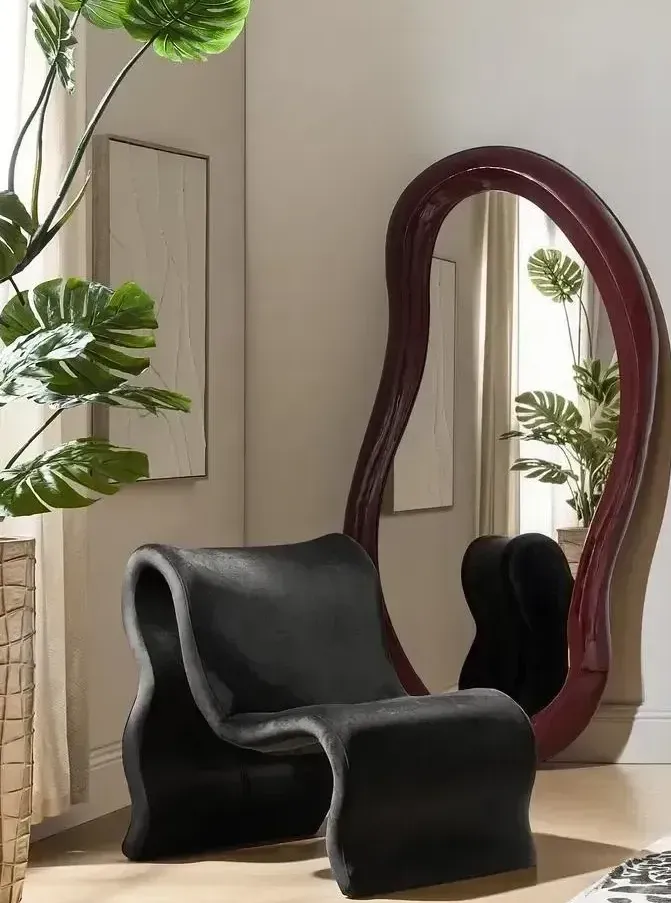
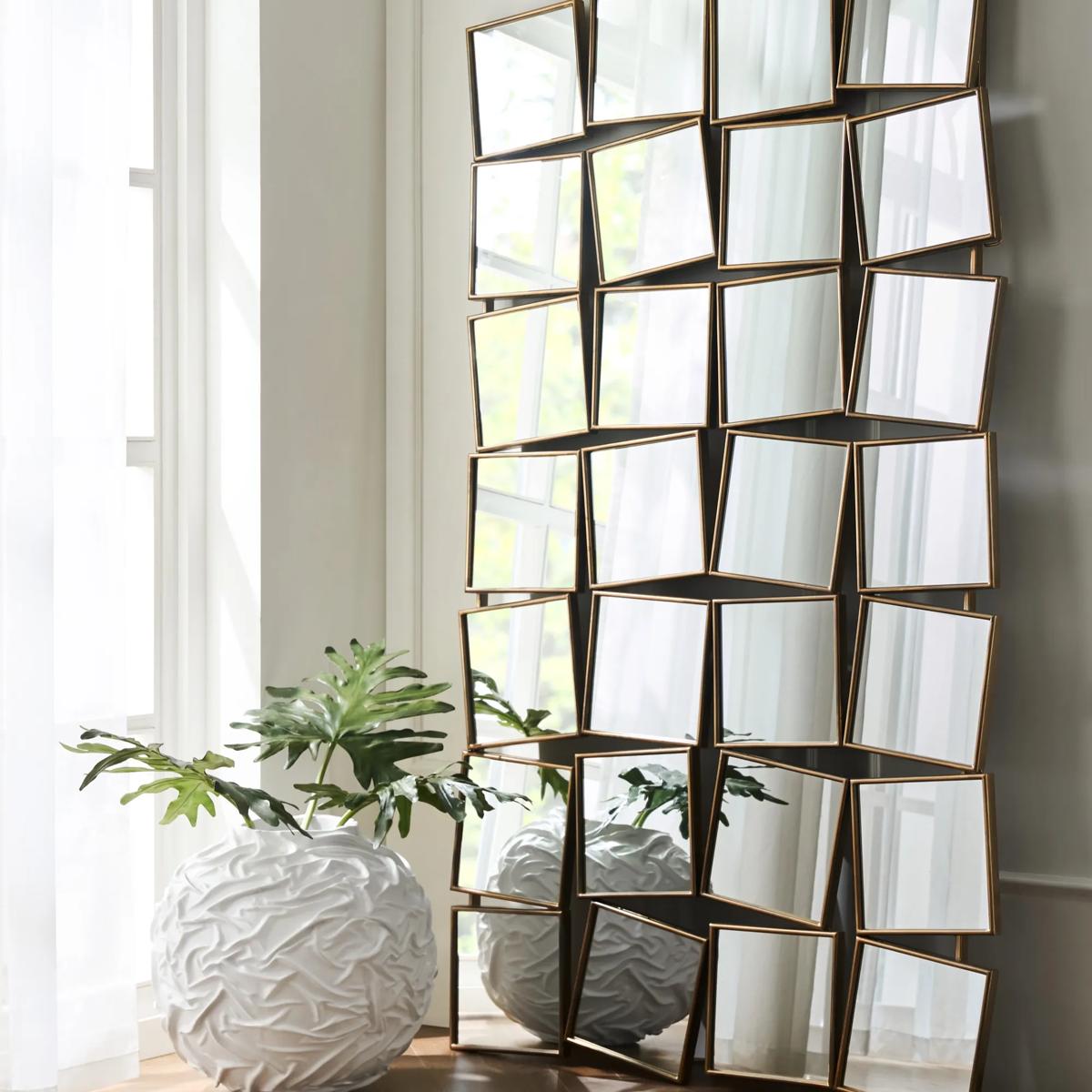
A floor mirror works hardest when it captures daylight and sits against tactile materials.
The Stylist’s Rules
A floor mirror can be transformative, but only when it is placed with discipline. These are the six designer tricks that create more light, depth, and drama without tipping into clutter.
1. Catch the daylight
The most effective placement is rarely random. Put a floor mirror where it can pull natural light across the room, ideally opposite a window or slightly adjacent to it. The result is brighter, looser, and more dimensional than simply filling an empty wall.
2. Reflect something worth seeing
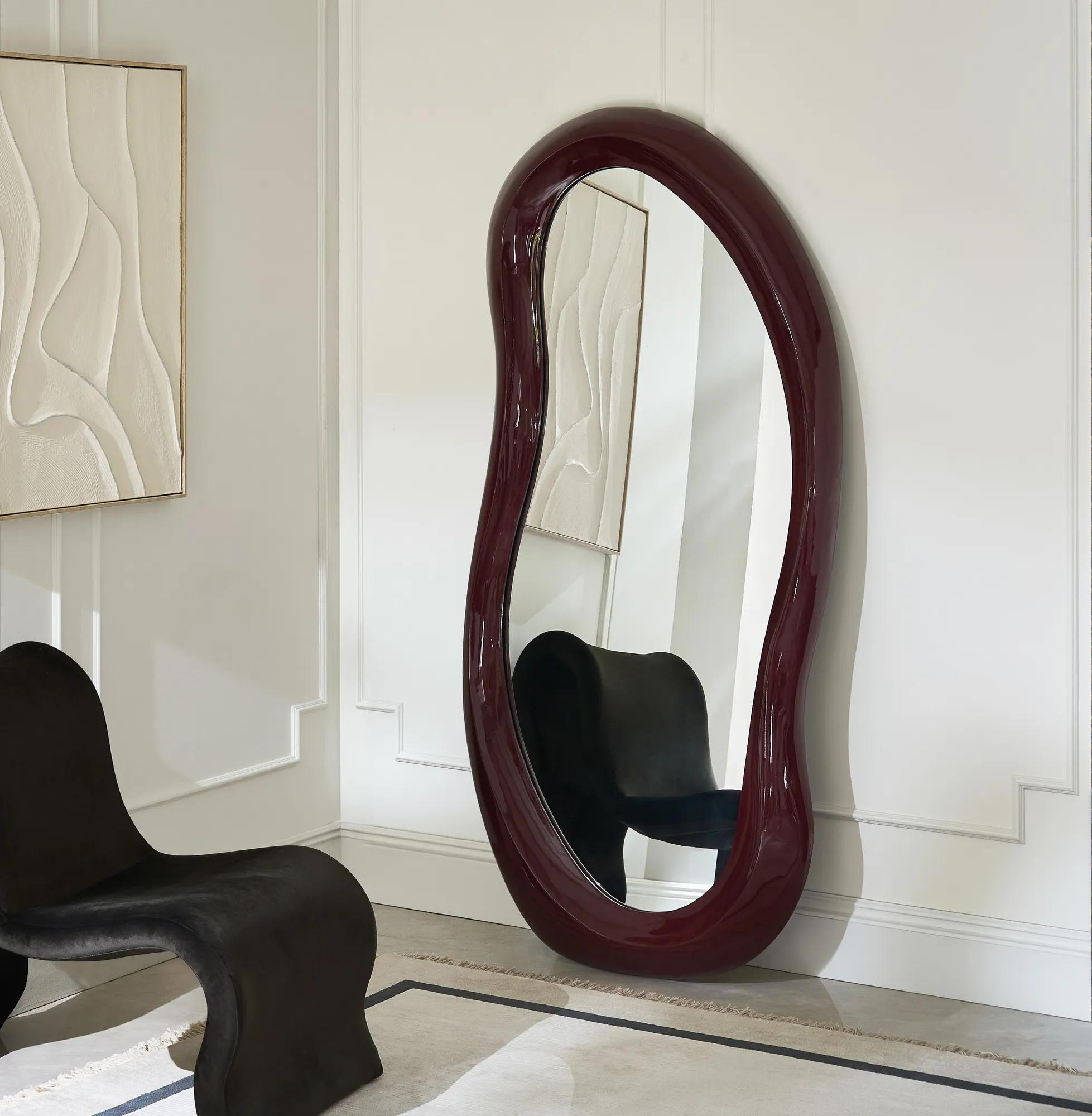
A mirror is a frame for whatever sits in front of it. That means it should reflect a chandelier, a window, a beautiful piece of art, or the curve of a sculptural chair, not visual clutter, cords, or a dead corner. Designers consistently warn that mirror placement should privilege beauty, light, and proportion, not disorder.
3. Go oversized to fake architecture
A large floor mirror can give a plain room the feeling of taller ceilings, deeper sightlines, and stronger verticality. It is one of the quickest ways to add presence without adding bulk. If the room feels flat, scale is usually the answer.
Did you know? A leaning floor mirror should be secured to the wall in high-traffic spaces, especially in an entryway or anywhere children and pets move through often.
4. Choose shape with intent
An arched floor mirror softens straight lines and boxy architecture. A rectangular floor mirror sharpens a room that already has curves and plushness. A wavy or sculptural mirror introduces movement, which is especially useful in rooms that feel rigid.
5. Layer, do not float
A floor mirror feels more sophisticated when it is in dialogue with other pieces. Try it behind a chair, near a console, beside a pedestal, or slightly overlapping a rug line. The goal is to make the mirror feel composed into the room, not parked there.
6. Let the frame do the finishing
Treat the frame the way you would treat jewelry. A slim black frame adds restraint. Gilded or antiqued finishes add glow. Carved wood introduces warmth. If the room is already rich with pattern, keep the frame quieter. If the room is spare, let the mirror be the ornament.
Stylist Note: A floor mirror should solve a problem and add poetry. If it only gives you a place to check an outfit, it is not yet working hard enough.
Oversized scale and thoughtful layering create depth before you even notice the reflection.
The Room Formula
Different rooms ask a floor mirror to do different work. In one room, it brightens. In another, it softens. In the best spaces, it also helps direct the eye.
Living Room
In a living room, a floor mirror should feel like part of the architecture. Leaning one behind a sofa, beside a console, or at the end of a seating arrangement creates a layered, editorial look while amplifying light. Designers frequently use this behind-the-sofa placement because it adds depth and a sense of polish without cluttering the walls.
Best companions: a low console, sculptural lamp, textured rug, and one strong object on the floor or pedestal.
Bedroom
A floor mirror in the bedroom should do two things: elongate the room and flatter the light. Place a full-length mirror near a window if possible, or in the corner beside a dresser to brighten the perimeter. For a softer, more romantic room, an arched floor mirror bedroom setup feels especially elegant.
Best companions: upholstered bench, nightstand glow, drapery, and one upholstered or velvet piece to soften the reflection.
Dining Room
In a dining room, mirror placement should be more atmospheric than obvious. A floor mirror near a sideboard or just off the dining table can catch candlelight, pendant light, and evening shadow beautifully. This is where antiqued finishes work especially well, because the mood matters more than getting a crystal-clear reflection.
Best companions: sideboard, table lamp, warm metal accents, and glassware or ceramics with some sculptural shape.
Entryway
An entryway floor mirror should feel crisp, welcoming, and slightly theatrical. It expands a narrow zone, catches light from the front door, and makes the first impression more intentional. Pair it with a bench or narrow console so the vignette feels anchored.
Best companions: bench, tray, lamp, umbrella stand, and a single floral or branch arrangement.
Stylist Note: In smaller homes, the floor mirror often belongs where circulation is tight and light is limited. That is precisely where it has the most impact.
In an entryway, a floor mirror can widen the feeling of the space while making the vignette more composed.
The Edit
A floor mirror is strongest when the rest of the room supports it. Think of this as a selective styling edit, not a shopping list.
-
Oversized arched floor mirror, the anchor
The piece that sets the tone. It softens the room and establishes height. -
Slim black rectangular mirror, the contrast
Ideal for rooms that need a cleaner, sharper edge. -
Antiqued brass mirror, the glow
Adds warmth and evening glamour, especially in dining rooms and bedrooms. -
Travertine or stone console, the ground
Gives the mirror weight and makes the reflection feel intentional. -
Boucle or velvet accent chair, the softness
Reflection reads more beautifully when it catches texture, not just hard surfaces. -
Sculptural table lamp, the shimmer
A lamp reflected in glass doubles the atmosphere instantly. -
Layered rug, the frame
A mirror placed near a rug edge feels integrated into the room rather than isolated. -
Ceramic vase or art object, the punctuation
A singular object in the reflection gives the mirror something elegant to hold. -
Small bench or stool, the pause
Especially useful in bedrooms and entryways, where a mirror benefits from a practical companion. -
Soft drapery, the movement
Curtains reflected in a floor mirror add fluidity and make the room feel more finished. -
One polished accent, the finish
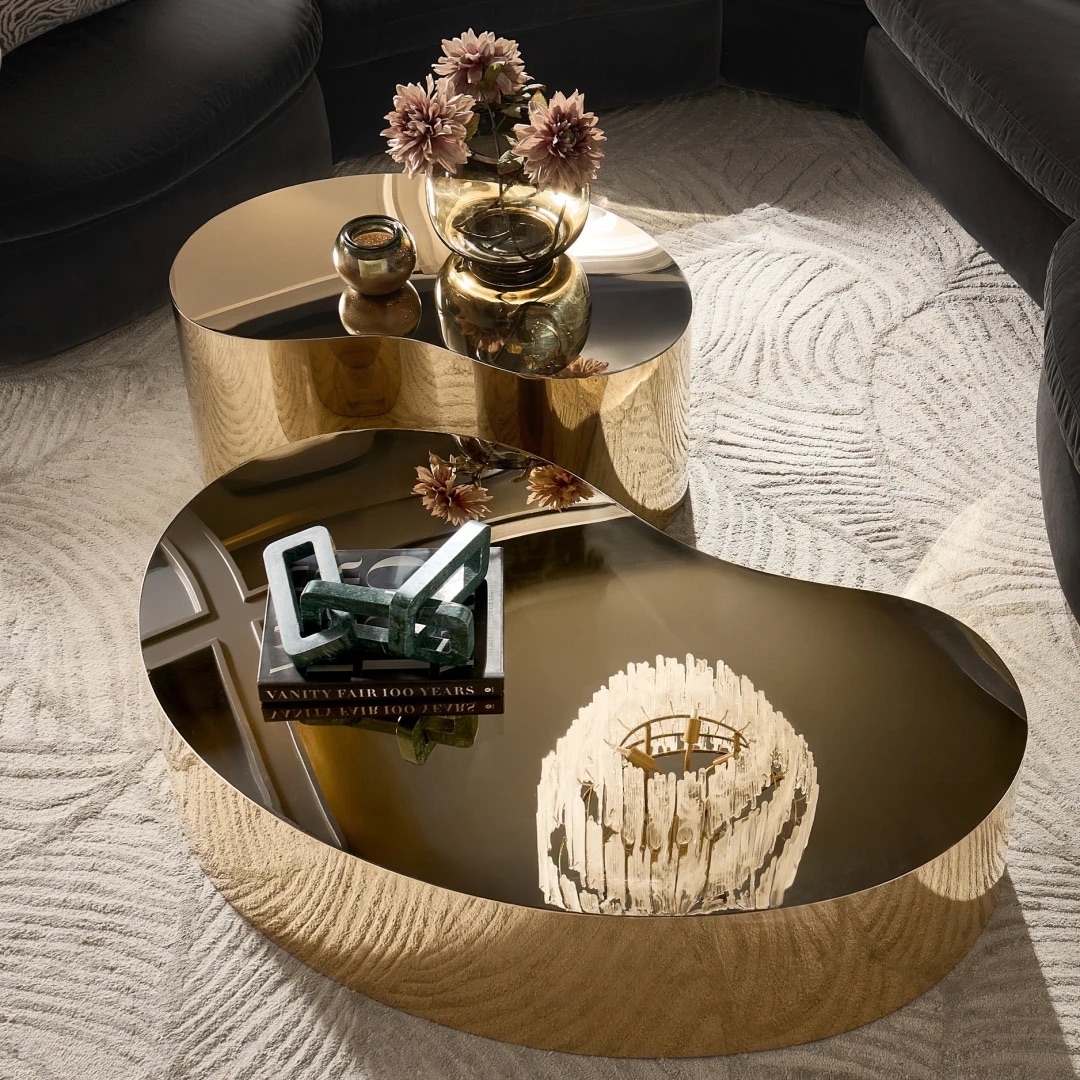
Think smoked glass, chrome, or a metallic tray, just enough shine to echo the mirror without repeating it too literally.
Frequently Asked Questions
Where should a floor mirror go to make a room look bigger?
Place a floor mirror opposite or adjacent to a window, or where it can reflect open space instead of a tight corner. The more light and visual openness it captures, the larger the room will feel.
Is it better to lean or hang a full-length mirror?
Both can work. Leaning feels more relaxed and editorial, while hanging feels more tailored and architectural. In busy households, secure installation matters either way.
What style of floor mirror works best in a small bedroom?
An arched floor mirror or a slim rectangular full-length mirror usually works best. Both add height without introducing visual heaviness.
What should a floor mirror reflect?
Ideally, natural light, a beautiful light fixture, art, drapery, or a sculptural piece of furniture. Avoid placing a mirror where it reflects clutter, cords, or awkward negative space.
Can a floor mirror replace wall art?
Yes, especially when the frame has presence and the room benefits from more light and depth. In many spaces, a well-placed floor mirror is both art and architecture.
The Last Reflection
The best floor mirror styling is not about filling a wall. It is about changing the feeling of the room. More light, more depth, more ease, and just enough drama to make the entire space feel composed.
Discover the finishing touches.
.jpeg?w=1080&h=1080)