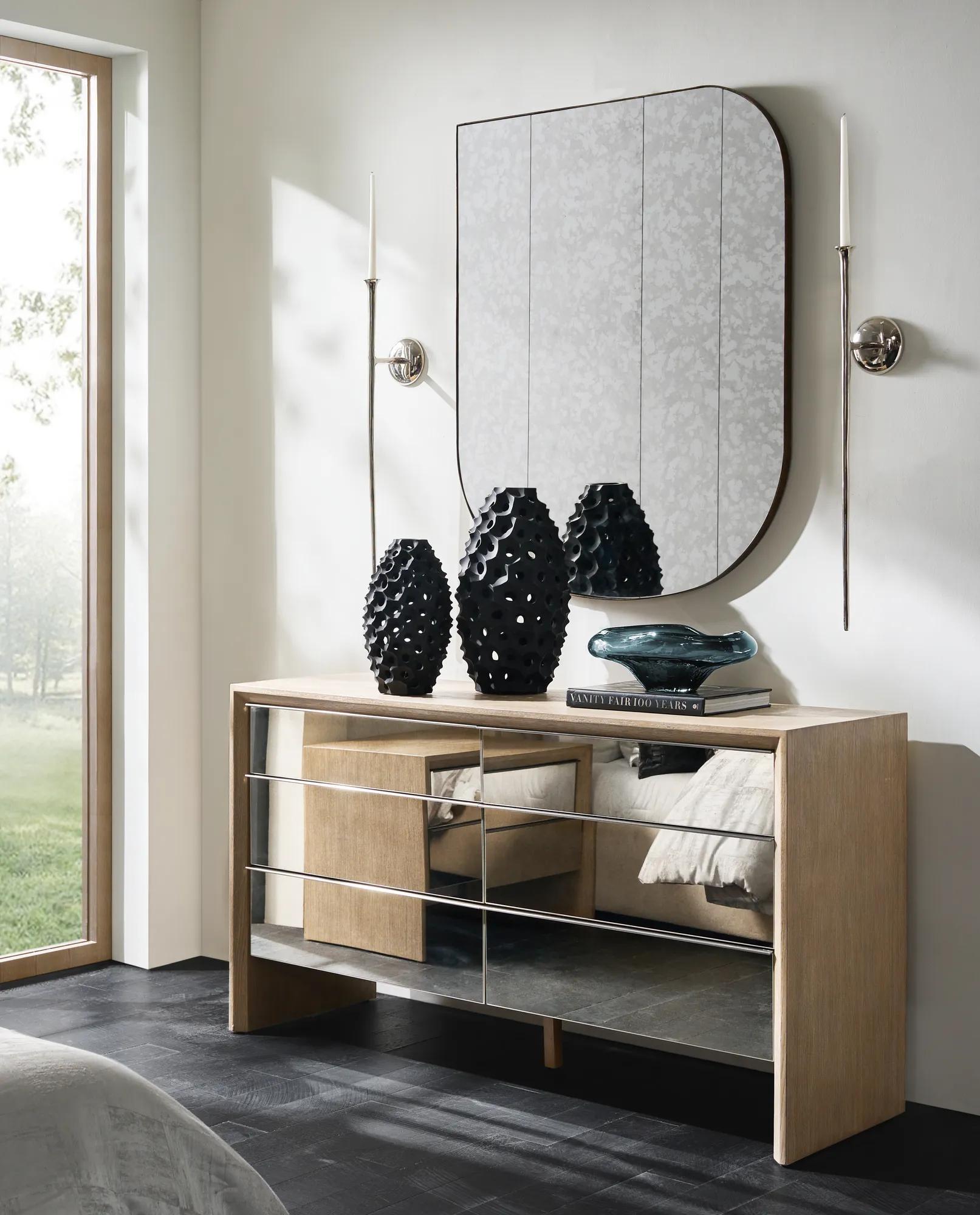
The most finished rooms are not the brightest, they are the most deliberately lit.
In the evening, a room tells the truth. Stone turns velvety, metal warms, glass catches the faintest flicker. The shift is not subtle. It is the moment a home stops looking arranged and starts feeling composed.
If you have ever chosen a beautiful fixture and still felt something was missing, the problem is rarely the piece. It is the plan. This lighting buying guide is about the design decisions that do not show up in a product photo: the glow you select, the heights you hang, and the layers that make a space feel effortlessly finished.
Lighting is atmosphere made visible. When it is layered like a stylist, even a simple layout reads intentional, flattering, and quietly luxurious.
In This Story
-
How to find your signature glow and keep it consistent throughout the room
-
The design codes that make lighting feel elevated, not overdone
-
Stylist rules for proportion, hanging height, and visual balance
-
Room formulas for living, dining, and bedroom lighting that feels complete
-
A curated edit of lighting roles, from anchor to finishing touch
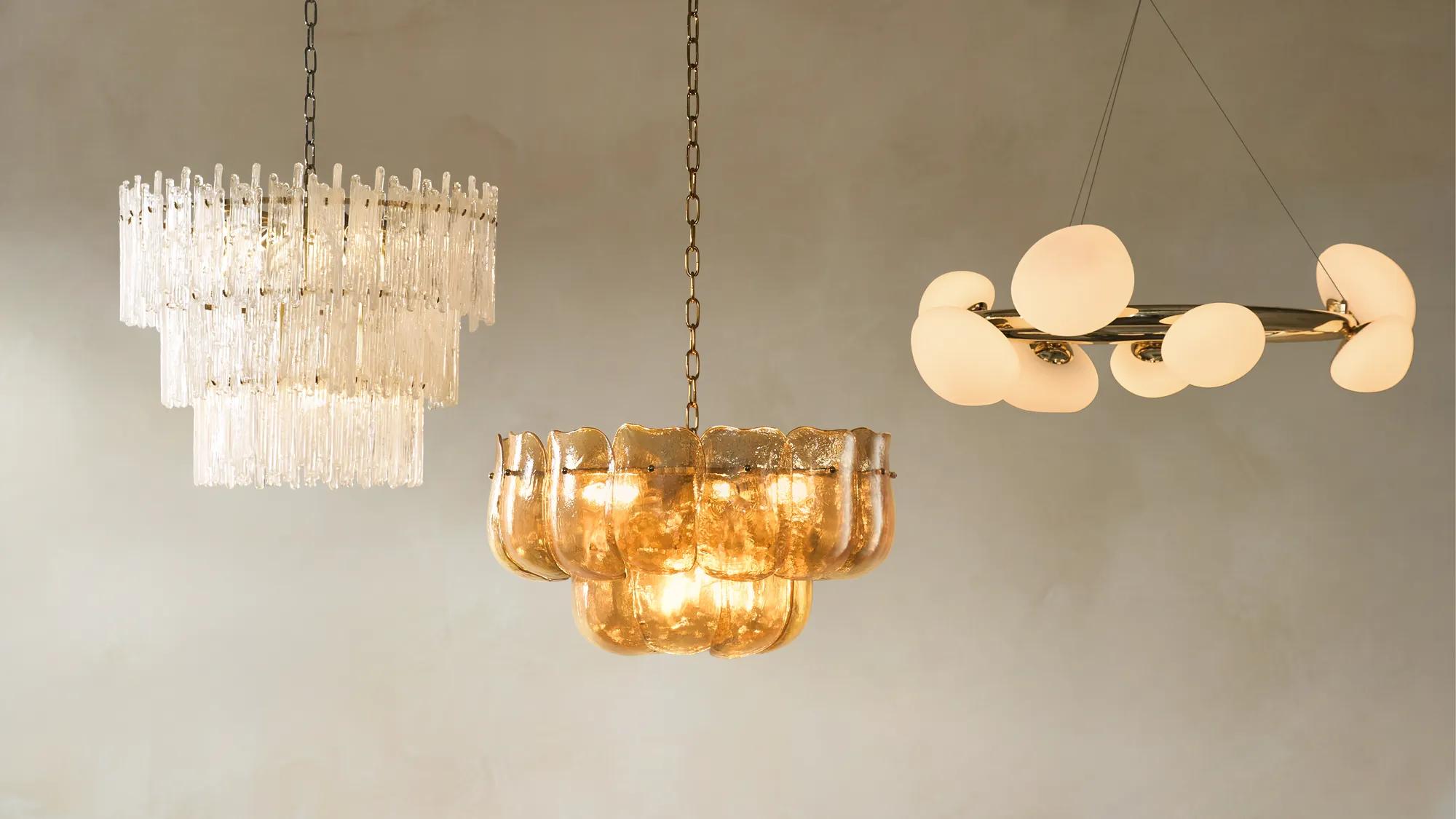
The Design Codes
A lighting plan begins with a point of view. Before you choose silhouettes, decide how you want the room to feel after sunset. That feeling becomes your design language.
Find your signature glow
Think of glow as the room’s undertone. Warm light reads golden and intimate. Daylight feels balanced and clean. Cool light looks crisp, modern, and high-definition.
The most elevated spaces make one move and commit to it: keep bulb temperatures consistent within the same sightline. When one lamp reads warm and another reads icy, reflective finishes can look mismatched and the room can feel unsettled, even when everything is “nice.”
Stylist Note: Consistency is the quiet luxury. Vary the fixtures if you want, keep the glow cohesive so the room feels seamless.
Did you know? Lumens measure brightness. Kelvin measures the color temperature of the light. Use lumens for function, Kelvin for mood.
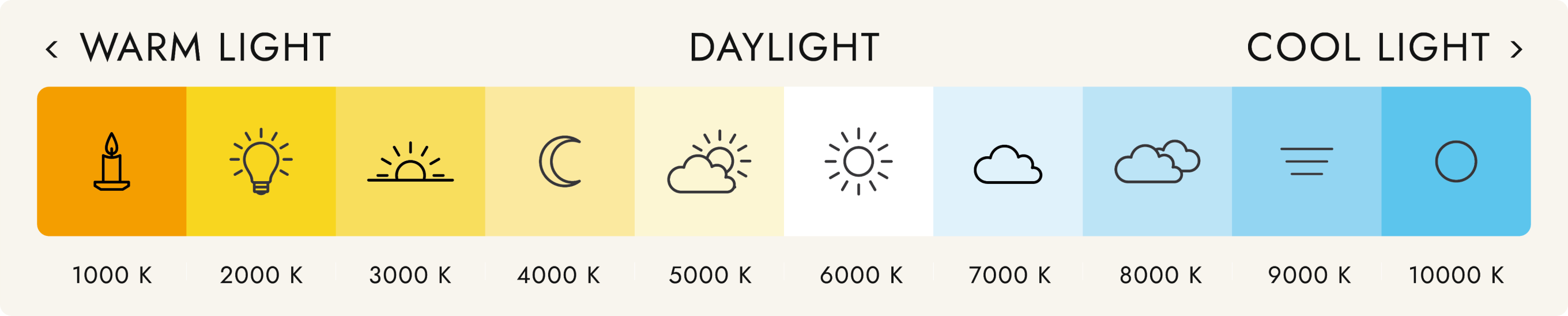
Your glow sets the mood before your fixture does. Choose warm, balanced daylight, or crisp cool light based on how you live.
Material and shine level
Lighting is not only what a fixture emits. It is what the fixture reveals.
-
Glass and crystal sharpen highlights and add sparkle. They read glamorous, especially at night, and feel refined when paired with quieter supporting finishes nearby.
-
Refined metals shift with glow. In warm light, brass and gold feel candlelit. In balanced light, polished nickel and chrome read tailored and architectural.
-
Stone bases like marble or travertine bring calm weight. They anchor a vignette and make the light feel grounded, not decorative.
-
Diffusion and texture turn brightness into atmosphere. Ribbed glass, soft shades, and bubble forms create a veil of light instead of a harsh point source.
If your home leans modern glam, shine is most beautiful when it is edited. Choose one hero sparkle, then let the rest live in glow and texture.
Stylist Note: Shine reads expensive when it is controlled. One statement, one echo, then a quiet finish that holds the room together.
Silhouette and proportion
Silhouette is how light draws in space. A sculptural globe chandelier feels soft and architectural. A linear fixture feels tailored and graphic. A petite lamp can read like a considered accent rather than an afterthought.
Proportion is where everything becomes believable. The wrong scale can make a dramatic piece feel accidental. The right scale makes the entire room feel intentional, even if the palette is quiet.
The Stylist’s Rules
Great lighting is not about adding more. It is about placing light where the eye needs it, at heights that flatter, with enough restraint that the room can breathe.
Do this, avoid that
-
Do: keep bulb temperatures consistent within the same sightline. This is the quickest way to make mixed finishes look cohesive.
-
Do: add dimmers whenever possible. The same fixture should be able to feel energizing and intimate. Dimmers are how you get both.
-
Do: layer light at different heights. Overhead for structure, eye-level for warmth, lower glow for depth.
-
Avoid: too many competing statements in one view. If the chandelier is sculptural and luminous, let the lamps be quieter. If your lamps are bold, keep the overhead more restrained.
-
Do: scale fixtures to the furniture beneath them. A table should lead the chandelier. A nightstand should lead the lamp. A seating group should lead the floor lamp placement.
-
Avoid: defaulting every surface to a lamp. A room can be over-accessorized with light. Edit for the feeling you want, not the quantity.
Chandelier scale and hanging height
Dining rooms reward precision. When the chandelier is correctly sized and hung, the whole room reads composed.
Hanging height: For an 8-foot ceiling, a classic guideline is to hang the chandelier about 30 to 36 inches from the tabletop to the bottom of the fixture. For each additional foot of ceiling height, raise the chandelier by about 3 inches so the proportions stay balanced.
Scale: Aim for a chandelier that is roughly one-half to three-quarters the length or diameter of the dining table. It should feel substantial, but not overwhelming.
This is not about strict math. It is about balance. A fixture that is too high floats. A fixture that is too low dominates. The sweet spot feels tailored.
Pendant placement that feels intentional
Pendants are a finishing touch when their placement is considered. They can be sculptural and still feel soft.
A general guideline for many rooms: with an 8-foot ceiling, pendants and chandeliers often look most intentional when they hang roughly 12 to 20 inches below the ceiling plane. If the ceiling is higher, add about 3 inches of additional drop per extra foot of ceiling height so the fixture stays visually connected to the space.
Sconces as architecture
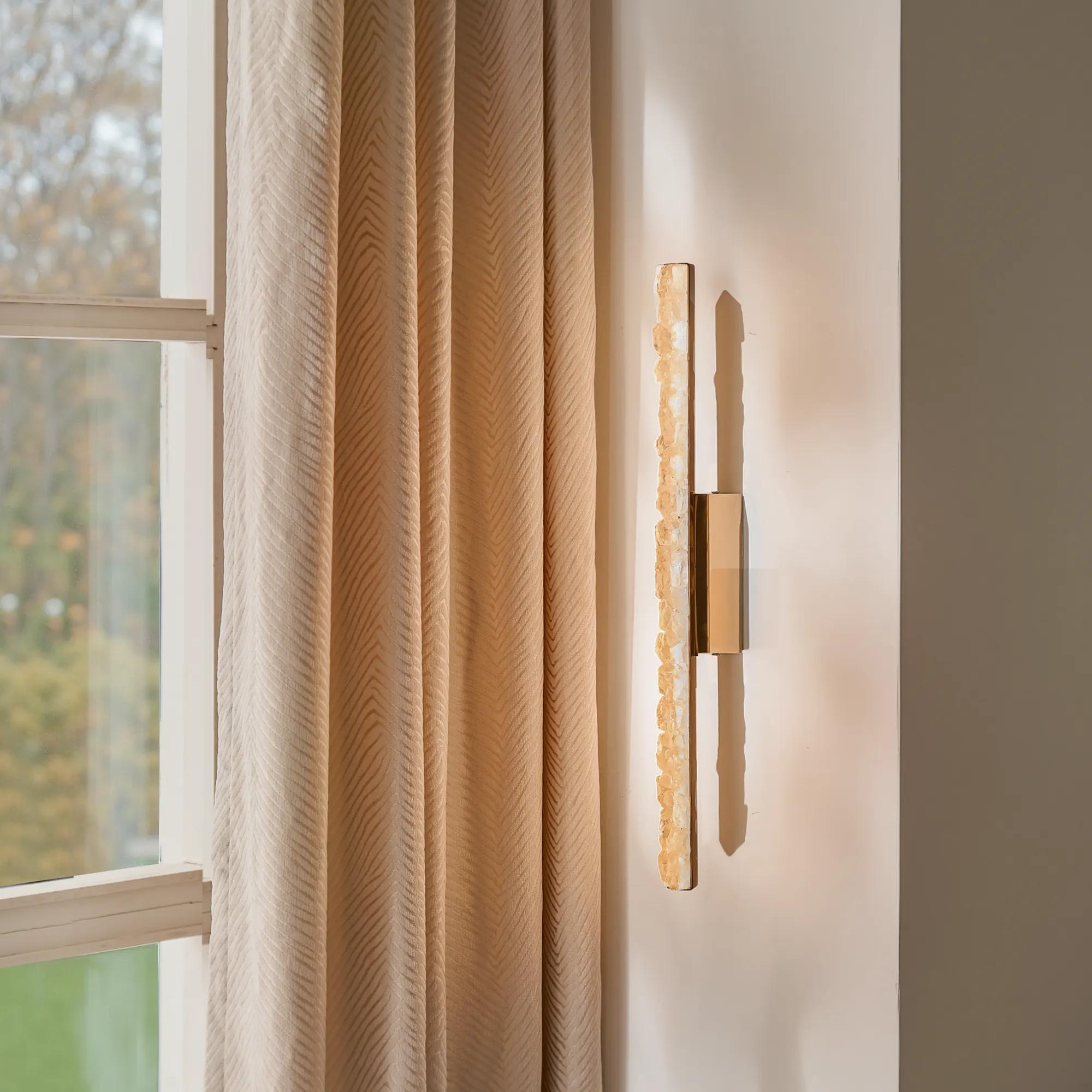
Sconces are the subtle detail with major impact. They frame mirrors, elevate an entry, and create flattering wash light that makes a room feel layered rather than top-lit.
Use them in pairs when you want symmetry and structure. Use a single sconce when you want a quiet highlight near art or a console.
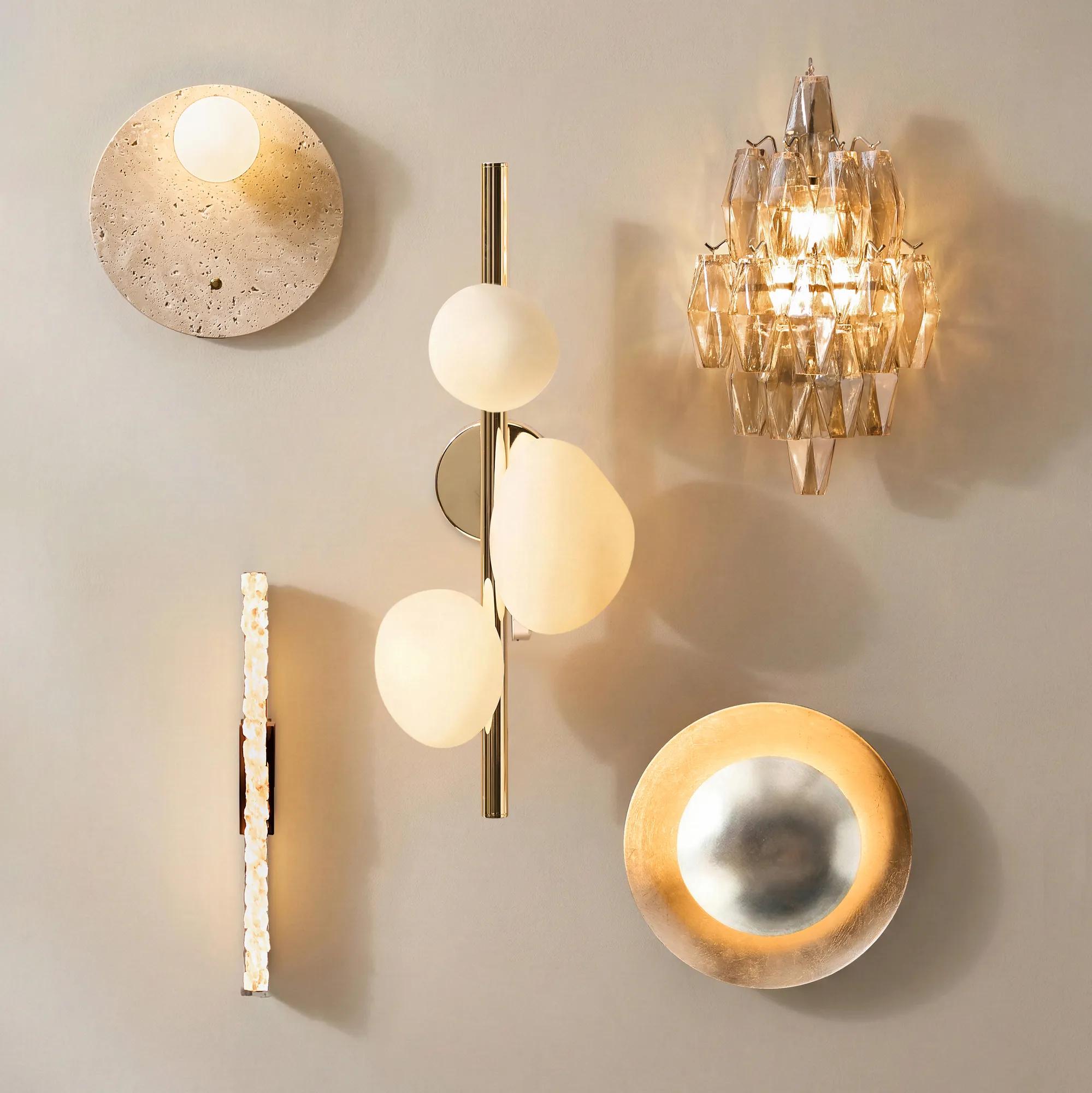
Sconces add a refined wash of light that elevates an entry, frames a mirror, and softens the room with quiet architecture.
Stylist Note: Sconces should feel integrated, like part of the architecture. When they land at the right height, the whole wall reads designed.
Lamp proportion that flatters the room
Lamps are where a room becomes livable. They create the glow you actually experience most often.
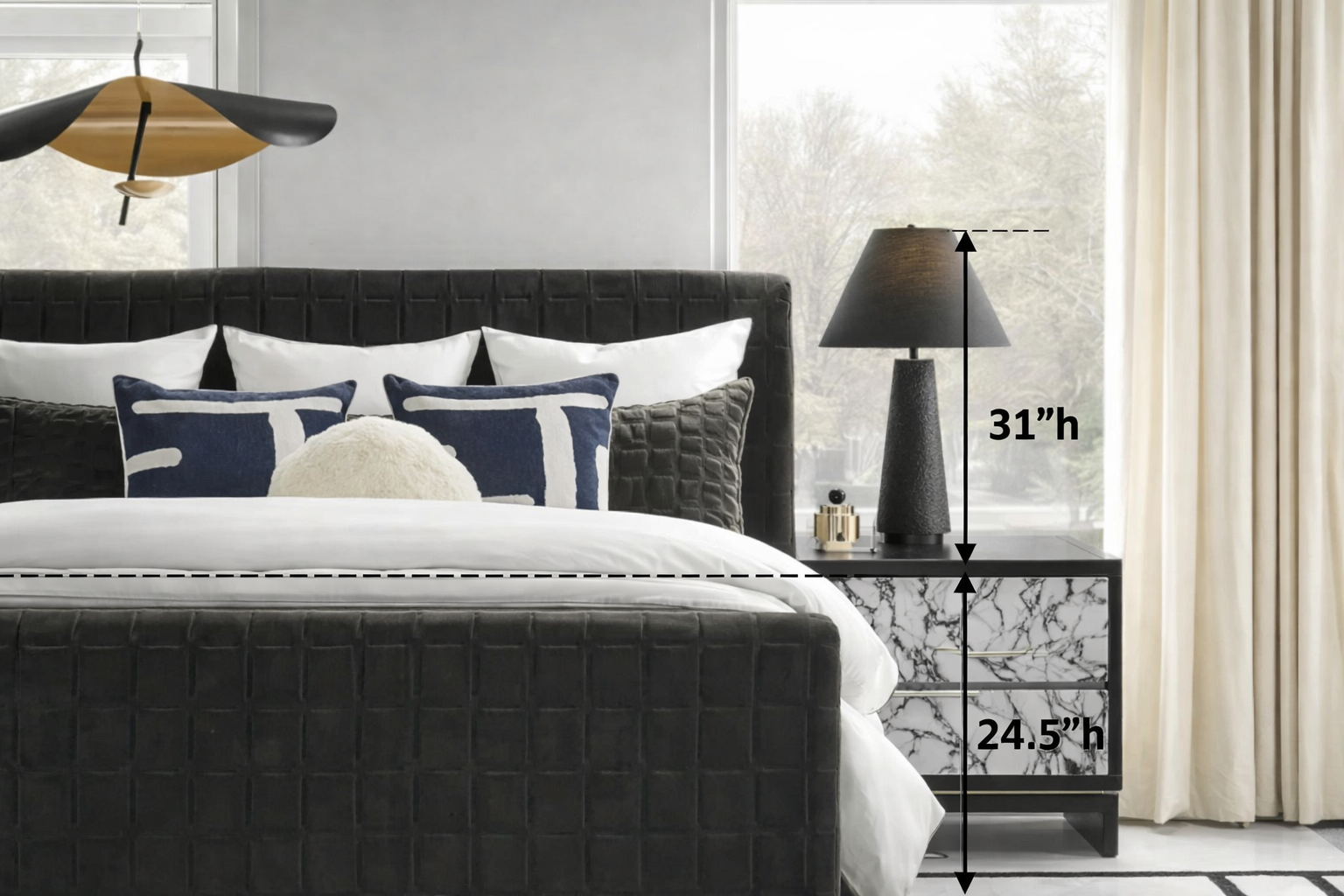
A useful proportion cue for bedrooms: if your nightstands are about 24 to 30 inches tall, a lamp around 27 to 34 inches tall typically looks balanced and feels functional for reading and winding down.
The Room Formula
Layering is the heart of any lighting buying guide, because it is what makes rooms feel complete. Think in three layers: ambient, task, and accent. Ambient sets the baseline. Task supports how you live. Accent creates mood and depth.
Living Room Formula
A living room should feel welcoming from the doorway and flattering from the seat. If the overhead light is doing all the work, the room can feel flat and harsh after dark.
-
Ambient: a chandelier, pendant, or refined flush mount that sets the tone
-
Task: a floor lamp beside a reading chair or near the sofa corner, aimed with purpose
-
Accent: a table lamp on a console or side table, for eye-level warmth and depth
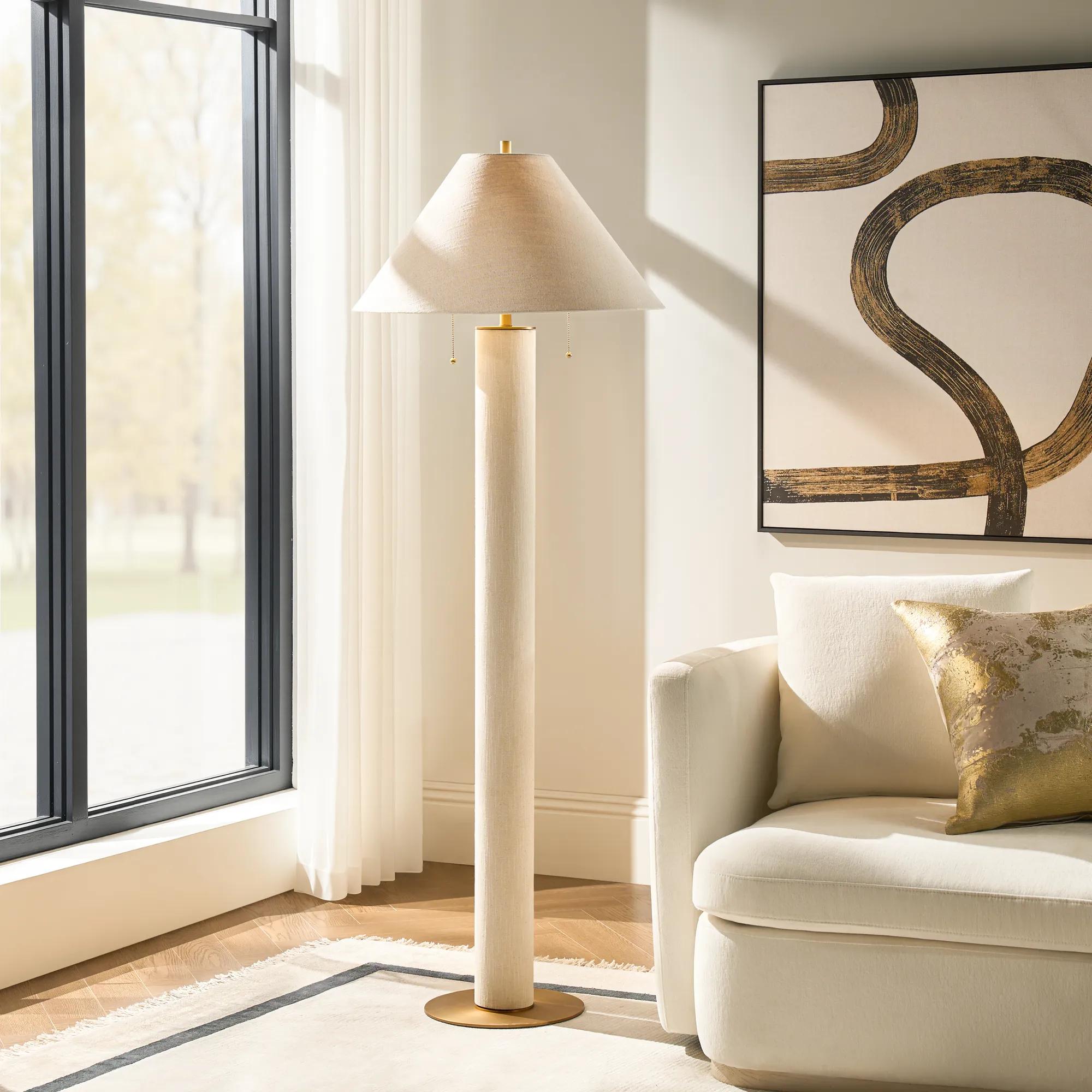
Place floor lamps so they belong to the seating group. A lamp that floats at the edge of the room reads like an afterthought. A lamp that defines a corner reads like intention.
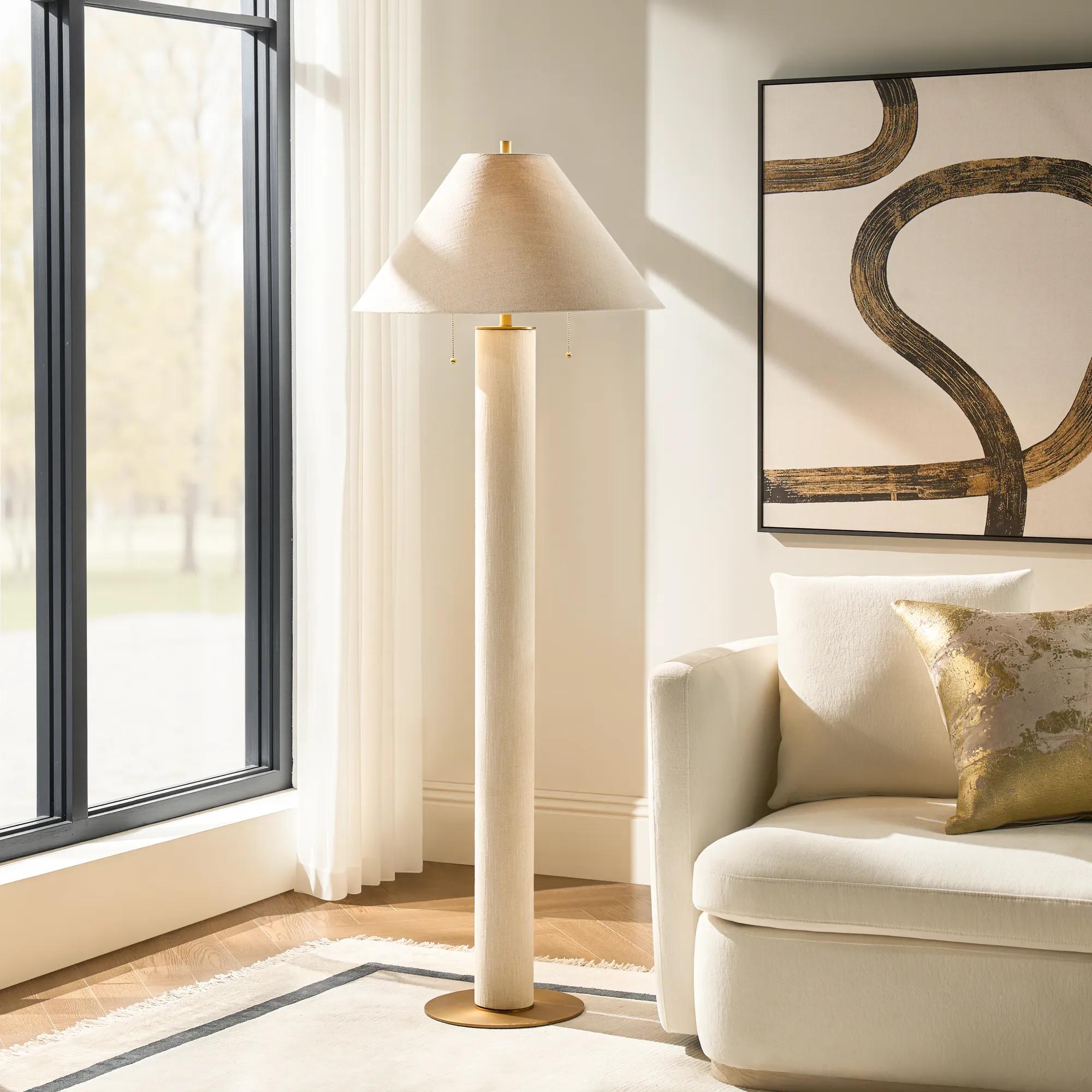
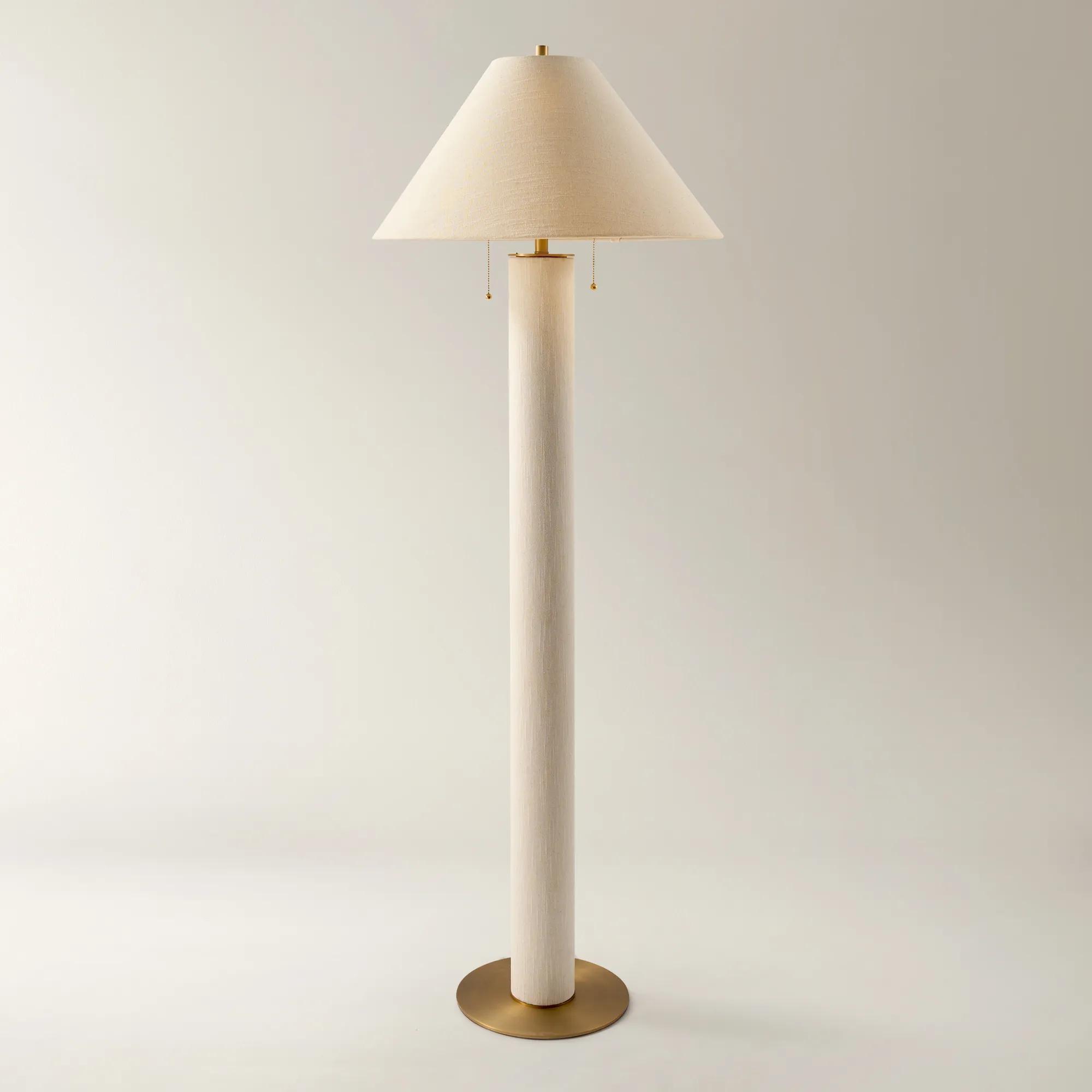
Della Linen & Brass Floor Lamp
Dining Room Formula
Dining lighting is the room’s signature piece, then its supporting glow.
-
Anchor: chandelier or linear fixture centered over the table
-
Perimeter glow: sconces or buffet lamps to soften edges and add dimension
-
Atmosphere: dimmers so the same room can host day-to-night
Quick measuring cue: for an 8-foot ceiling, the chandelier often feels best at 30 to 36 inches above the tabletop, then rises 3 inches per additional foot of ceiling height. Keep scale in mind too: a fixture around ½ to ¾ the table’s length or diameter tends to read balanced.
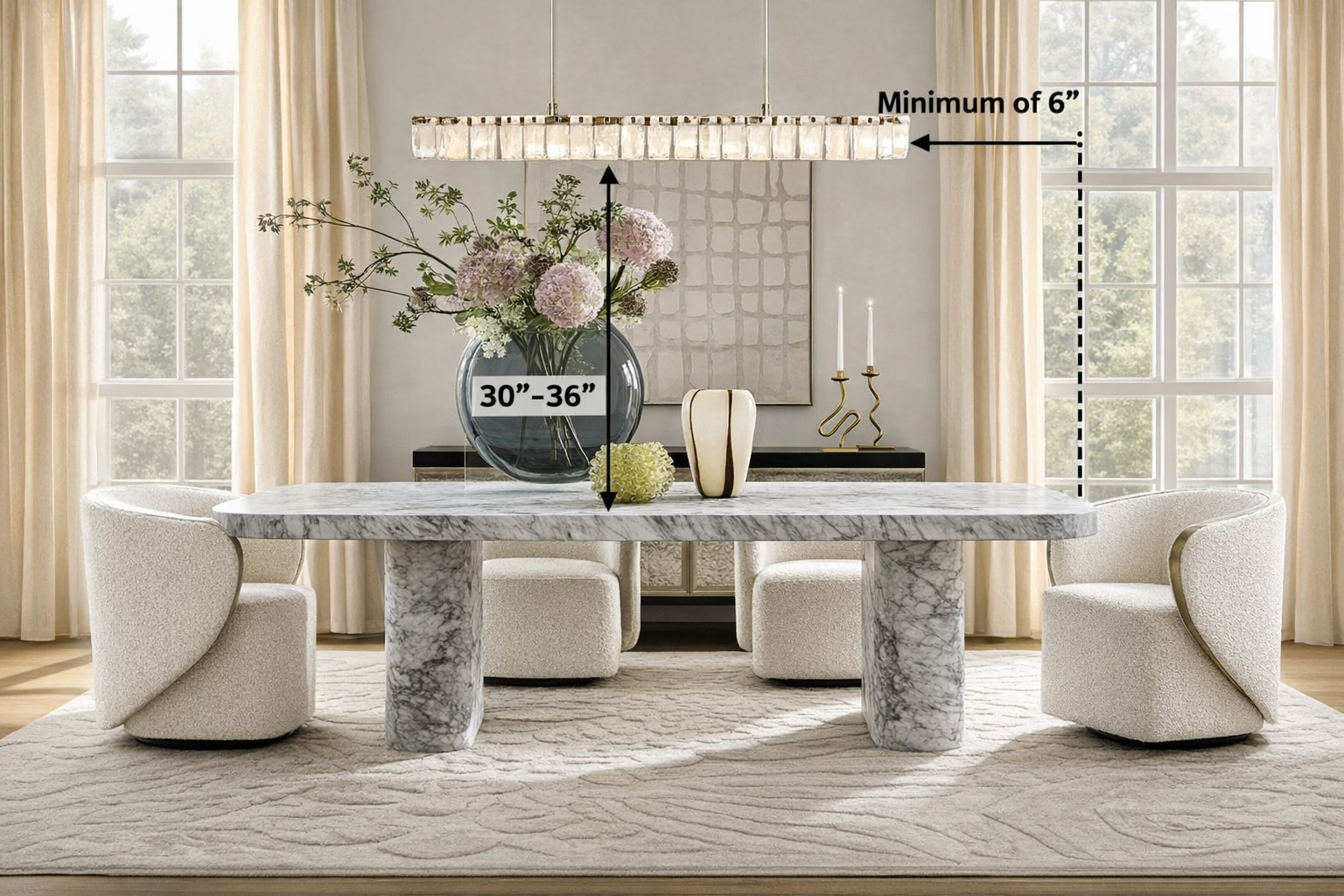
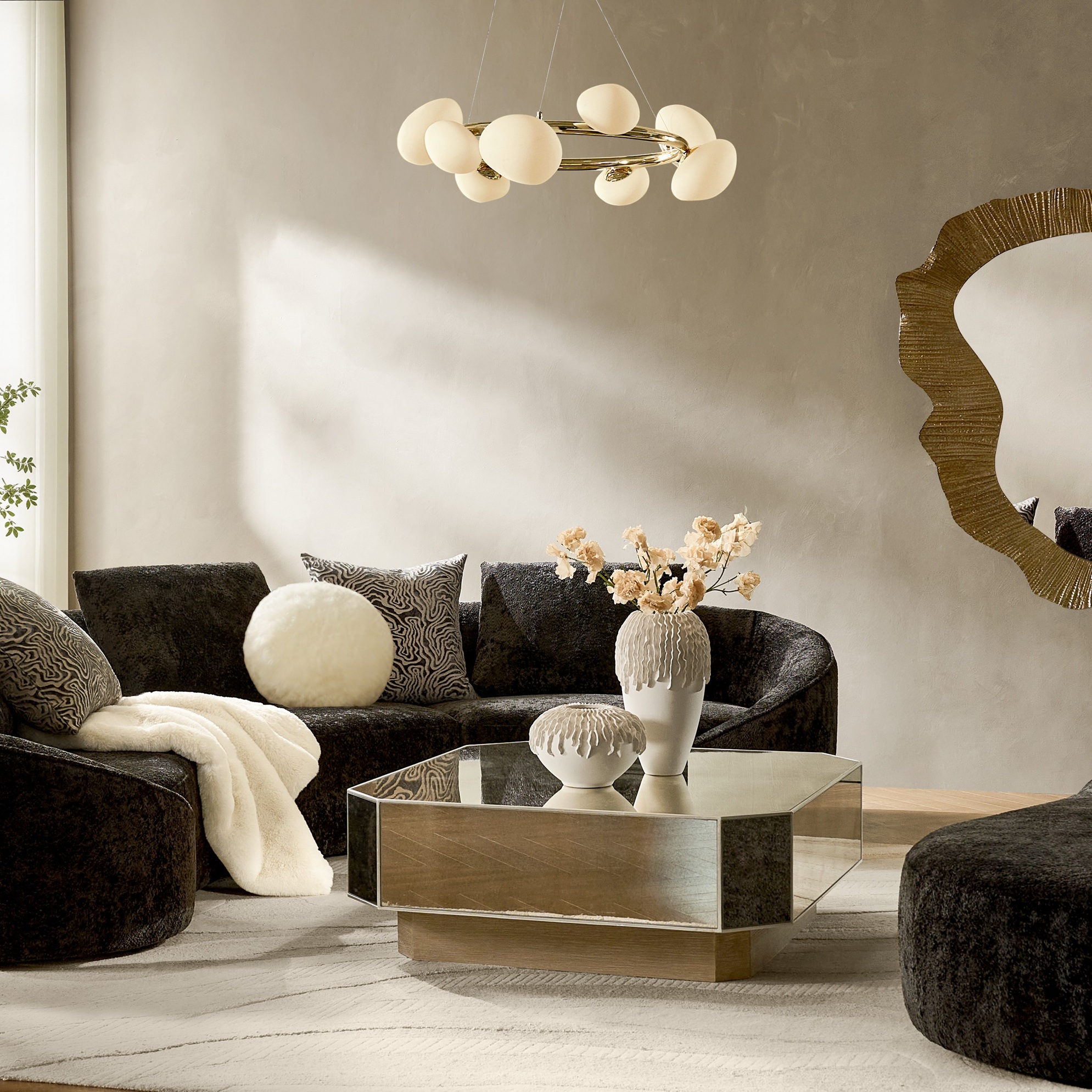
The Sculptural Softness Dining Room
Bedroom Formula
The bedroom deserves light that flatters. Think of it as calm, not clinical.
-
Ambient: overhead fixture that provides baseline illumination without glare
-
Task: bedside lamps scaled to nightstands for reading and routine
-
Accent: optional sconces to frame the bed and add hotel-level polish
For nightstand proportion, a helpful guideline is simple: nightstands in the 24 to 30-inch range often pair best with lamps around 27 to 34 inches tall. It keeps the light source at a comfortable level when you are seated, and it makes the vignette feel intentional.
Entryway Formula
Your entry is the opening scene. Even a small space benefits from a sculptural overhead light and a softer secondary glow.
-
Anchor: pendant or chandelier that sets the tone immediately
-
Amplify: a mirror or reflective art nearby to catch and multiply light
-
Finish: a small lamp on a console for evening warmth
A home that feels considered begins with the first switch you turn on.
The Edit
A stylist does not add more. They choose better. This edit is intentionally selective, built around roles. Use it as a blueprint, not a checklist.
The Anchor Chandelier
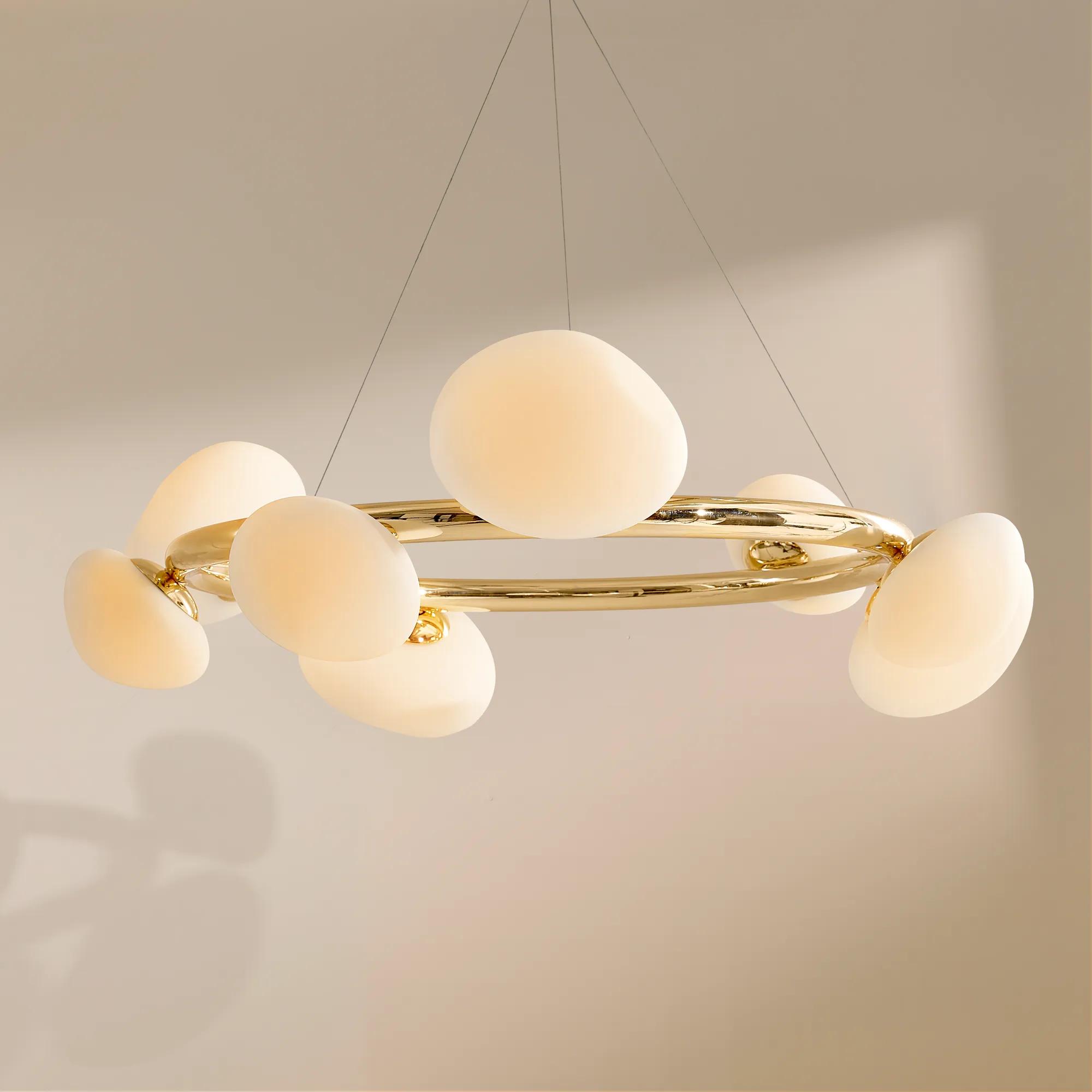
The room’s signature. It sets the tone from the ceiling down. Over dining, aim for a fixture that reads roughly ½ to ¾ the table’s length or diameter, and hang it with comfortable clearance so it feels tailored, not imposing.
The Tailored Linear
Ideal for long dining tables and rectangular layouts, where a clean line feels architectural. Keep the styling around it quieter so the shape reads intentional.
The Diffused Glow Pendant
A pendant with soft diffusion adds atmosphere without glare. It is the light that makes the room look good on an ordinary evening.
The Architectural Sconce Pair
For framing: mirrors, fireplaces, consoles, or the bedside. Sconces add structure and create flattering wash light that makes a room feel layered, not top-lit.
The Reading Ritual Floor Lamp
Not utility, a destination. A floor lamp should define a corner and invite you into it, with light aimed where you actually sit.
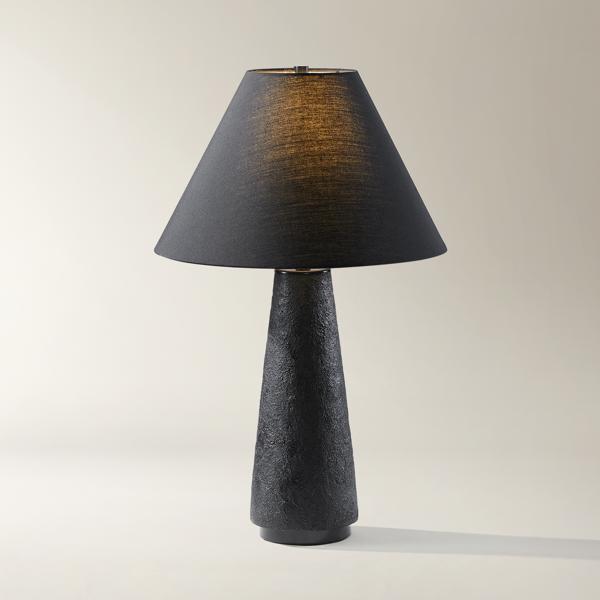
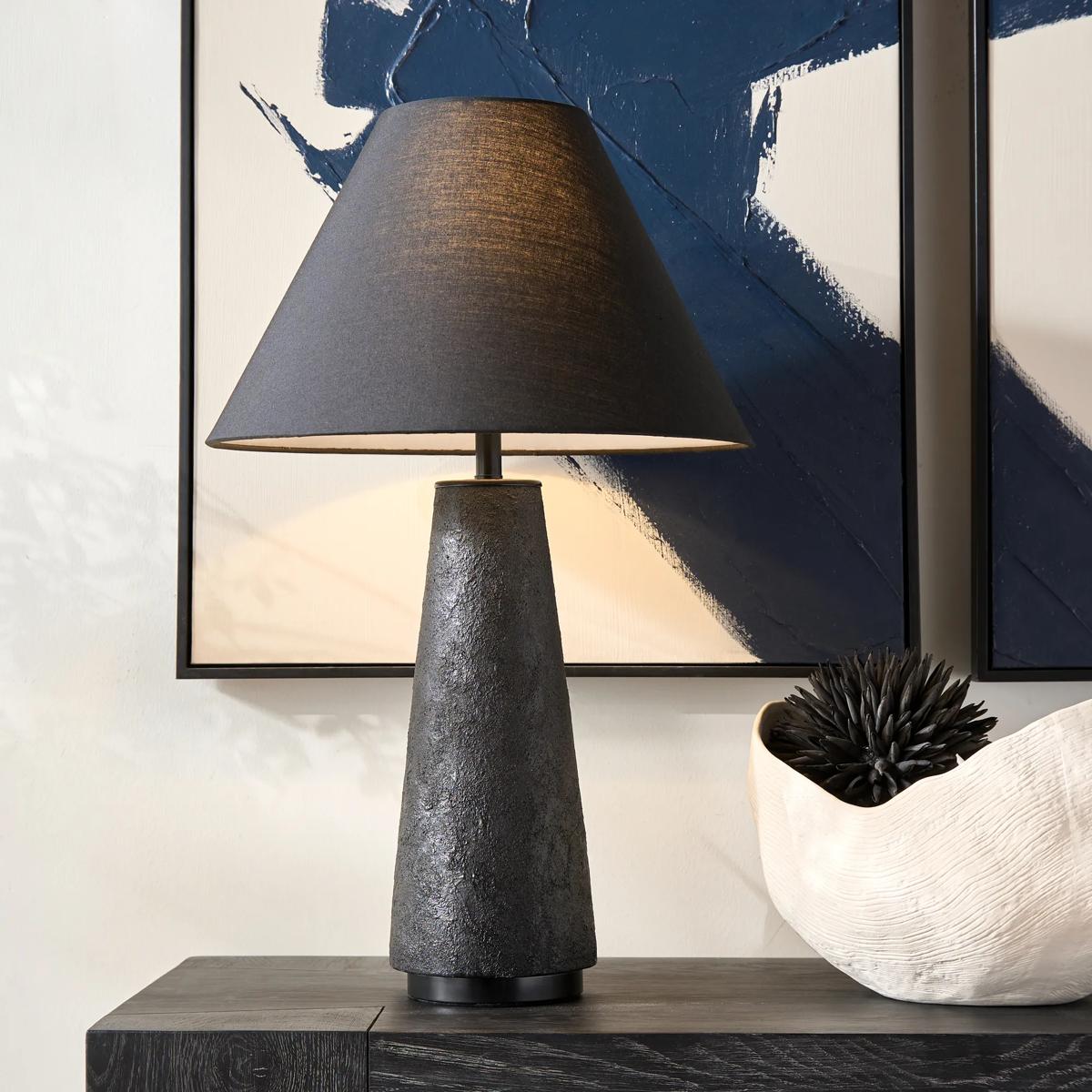
The Console Atmosphere Lamp
The lamp that makes a living room feel finished. Place it near art, books, or a sculptural object so the glow reads like a scene.
The Bedroom Proportion Lamp
Choose a bedside lamp that fits the nightstand. For nightstands around 24 to 30 inches tall, lamps around 27 to 34 inches often create the most flattering bedside height.
The Finishing Touch Accent Lamp
Small, quiet, transformative. This is the glow that turns a vignette into a moment.
The Supporting Shine
If your anchor is matte or stone, add one piece with gentle sparkle. If your chandelier is glass or crystal, let the supporting pieces be quieter, more textural, more grounded.
Stylist Note: The most elevated lighting plan has contrast. One statement, one sculptural support, one understated piece that disappears into warmth.
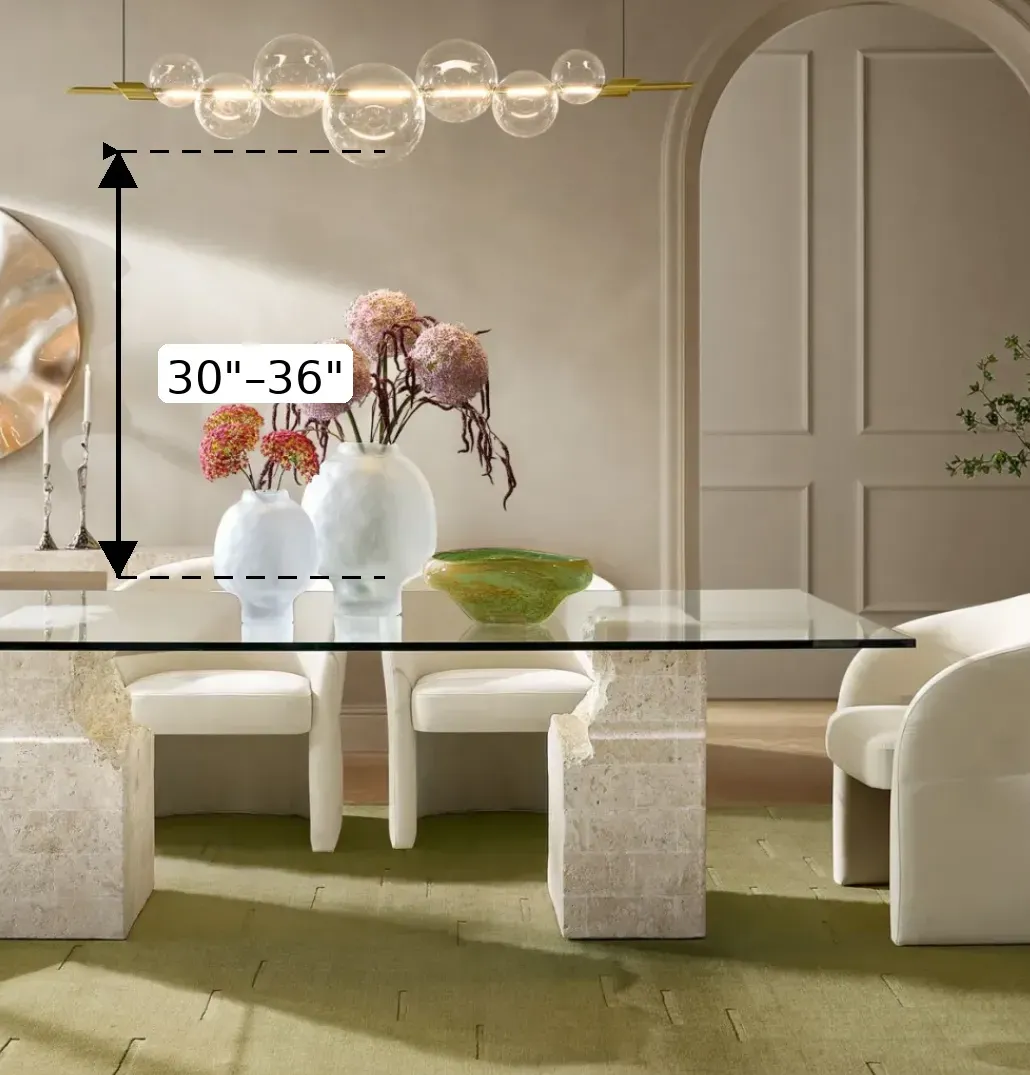
The right height and scale make a statement feel effortless, not heavy.
Frequently Asked Questions
What is the best color temperature for a living room?
Most living rooms feel most inviting with warm to balanced light, especially in the evening. Choose Kelvin for mood, then set brightness with lumens based on how you use the space. Keep temperatures consistent within the same sightline for a cohesive finish.
Warm light vs daylight: which is better for a bedroom?
Bedrooms typically benefit from warmer light because it feels softer and more flattering. If you prefer a cleaner look, use balanced daylight and rely on dimmers plus layered bedside lamps to keep the mood calm.
How high should a chandelier hang over a dining table?
A common guideline for an 8-foot ceiling is 30 to 36 inches from the tabletop to the bottom of the chandelier. For each additional foot of ceiling height, raise the chandelier by about 3 inches so the proportions remain balanced.
How do I choose the right chandelier size for my dining table?
A useful proportion rule is choosing a chandelier that is about one-half to three-quarters the length or diameter of the table. The goal is a fixture that feels substantial and centered, without overwhelming the table or the room.
What lamp height works best for a nightstand?
If your nightstand is around 24 to 30 inches tall, a lamp around 27 to 34 inches tall often looks balanced and keeps the light source comfortable when you are seated.
How do I create a layered lighting plan in an open-concept space?
Treat each zone like its own room. Start with ambient light for the area, add task lighting where you sit or work, then finish with accent lamps for eye-level warmth. A layered plan prevents the “one bright ceiling light” effect and makes the space feel designed.
After Dark, the Room Reveals Itself
A beautiful room is not defined by a single fixture. It is defined by the atmosphere it creates at night, the glow that softens stone, warms metal, and makes daily rituals feel intentional. Use this lighting buying guide as your foundation: choose your signature glow, layer light at varied heights, and let proportion do the quiet work of making everything feel finished.
Discover the finishing touches.
Explore the lighting edit.

-Duki6mEOP4.jpg?w=1130&h=580)
-0.jpg?w=800&h=597)