Gold is most elevated when it lives in furniture, where light becomes structure and the room feels finished.
Late light moves across a mirrored base, then settles. The room feels finished, calm, intentional. There is no sparkle chasing attention, only a quiet confidence that holds the eye. This is what gold furniture does best when it is treated like architecture.
The question behind the search is simple: how do you bring metallics into a space without drifting into theme or shine-for-shine’s sake. The answer is equally simple, and a little more exacting. Metallics are not decoration, they are structure.
When gold furniture becomes the hero, the room reads collected. Not styled, not sprinkled, not busy. Collected.
In This Story
-
The design perspective that makes metallics feel architectural, not flashy.
-
The material pairings that soften shine into quiet luxury.
-
The collected rule that keeps gold from feeling themed.
-
A room-by-room formula for living, dining, and bedroom spaces.
-
A selective edit of pieces that hold the light, and let the room gather around them.
Explore the edit.
The Design Codes of Gold Furniture
Gold works when it is controlled. Not restrained in spirit, but refined in execution.
Palette
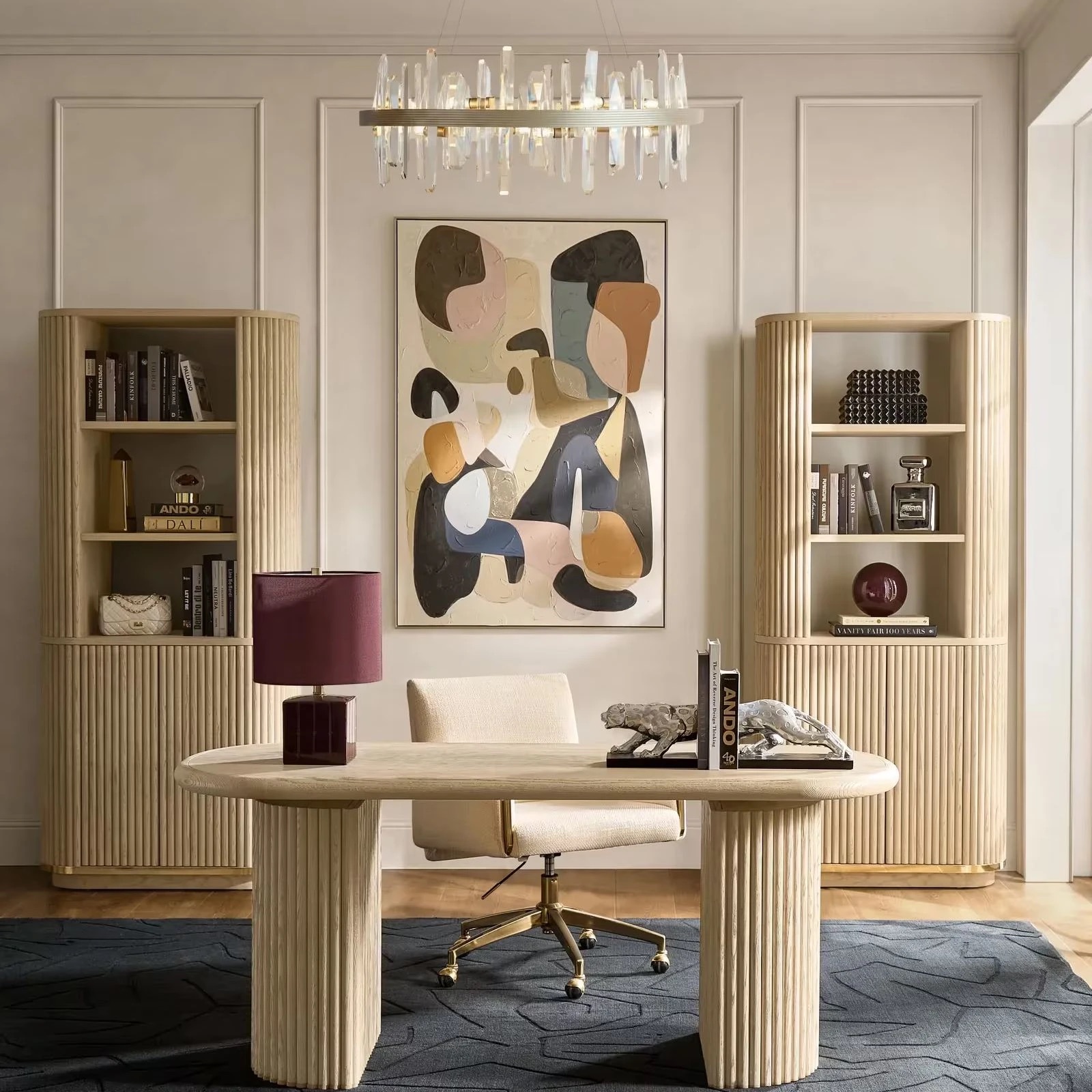
Stay tonal, stay warm. Think ivory, champagne, soft taupe, stone, and layered neutrals. A tonal interior palette makes reflective surfaces feel like depth, not contrast.
Stylist Note: If the palette is quiet, the metal can speak in a lower voice, and still be heard.
Materials
Pair shine with substance. The most sophisticated metallic furniture is tempered by quiet luxury decor materials:
-
Stone and marble: weight, permanence, calm
-
Glass: lightness, clarity, negative space
-
Velvet and bouclé: softness that absorbs glare
-
Warm woods: balance that keeps gold from feeling cold
A brushed brass base next to travertine reads collected. A mirrored console beside warm oak reads intentional. This is material proof.
Silhouettes
Choose sculptural furniture, not ornamental detailing. Look for:
-
rounded edges and curved profiles
-
geometric bases that feel architectural
-
monolithic forms with clean planes
Metallics feel most elevated when they are part of the structure, not applied as trim.
Shine level
Soft sheen wins. Brushed brass furniture and antique brass feel warmer, calmer, and more forgiving than high polish. Mirrored finishes can be stunning, but they need space around them.
Texture
Texture is the counterweight to reflection. A velvet sofa, a bouclé bench, a linen drape, a matte ceramic, each one softens the room so gold furniture reads like a finish, not a flourish.
Did you know? Brushed and antiqued metallic finishes tend to show fewer fingerprints and micro-scratches than high-polish surfaces, which helps a room feel pristine without trying.

A reflective base feels calm when it has negative space and a tonal palette around it.
The Stylist’s Rules
Gold is at its best when it is edited. Think in decisions, not additions.
Do this
-
Choose one hero: a gold coffee table, a mirrored console, or a dining table with a metallic base.
-
Give it air: leave negative space so the silhouette can read.
-
Soften the shine: surround it with stone, velvet, bouclé, glass, and warm woods.
-
Repeat with restraint: echo the metal in two smaller furniture moments, not ten accessories.
Avoid that
-
Accessory confetti: scattering gold across frames, trays, and small décor can feel busy and unanchored.
-
Over-matching: identical metals everywhere reads themed, not collected.
-
Competing reflections: too many mirrored surfaces can create visual noise, especially in smaller rooms.
Stylist Note: If your first instinct is to “add a little more gold,” pause. The collected look is usually achieved by removing one thing, not adding another.
Did you know? Mirrors and reflective surfaces placed low, like on a coffee table base, can visually expand a room because they bounce light without dominating the sightline.
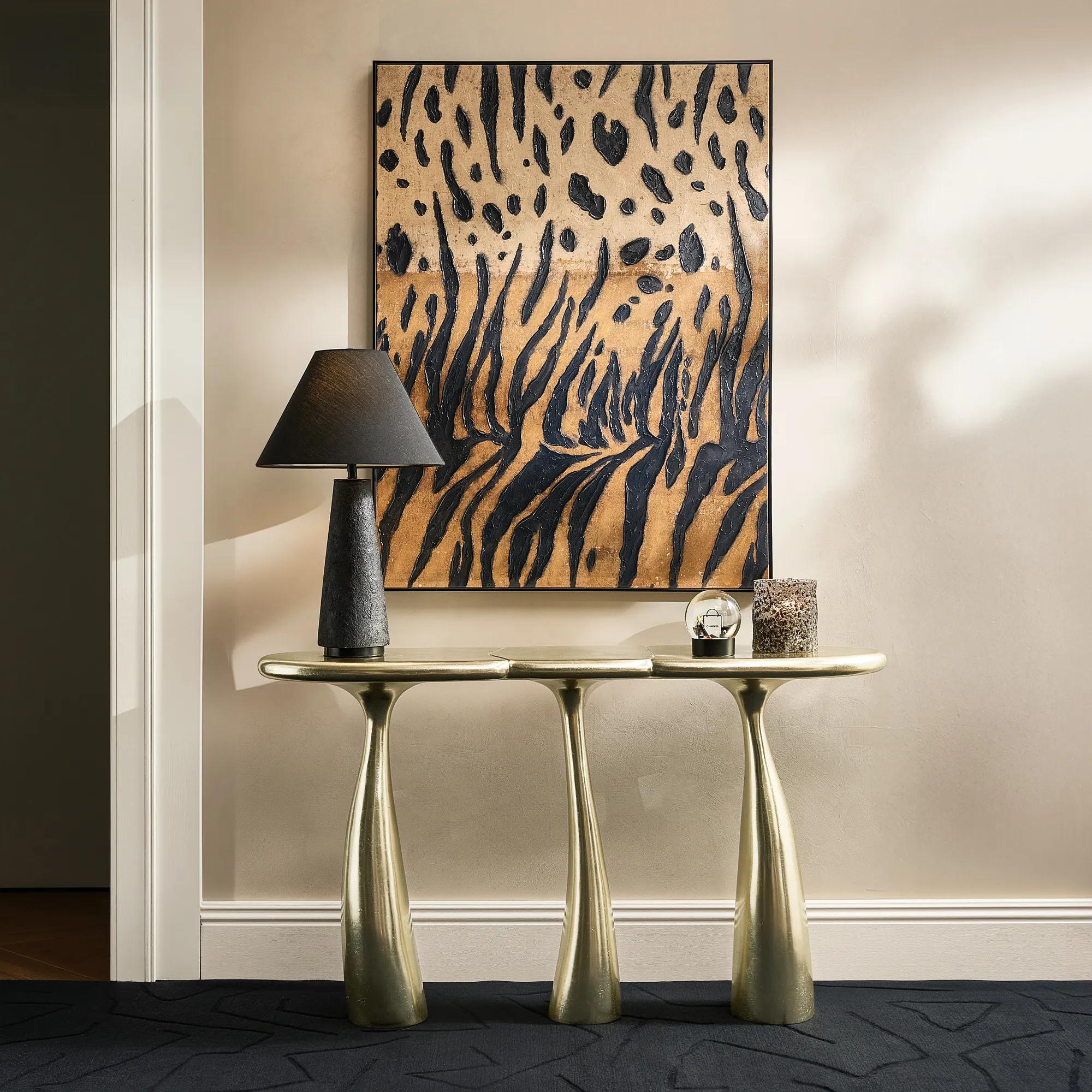
Mix reflective and matte finishes so the eye has a place to rest.
The Room Formula
A collected room follows a simple rhythm: one statement, supporting materials, subtle repetition. Apply it with intention, and gold furniture becomes a signature rather than a theme.
Living Room: The Anchor and the Echo
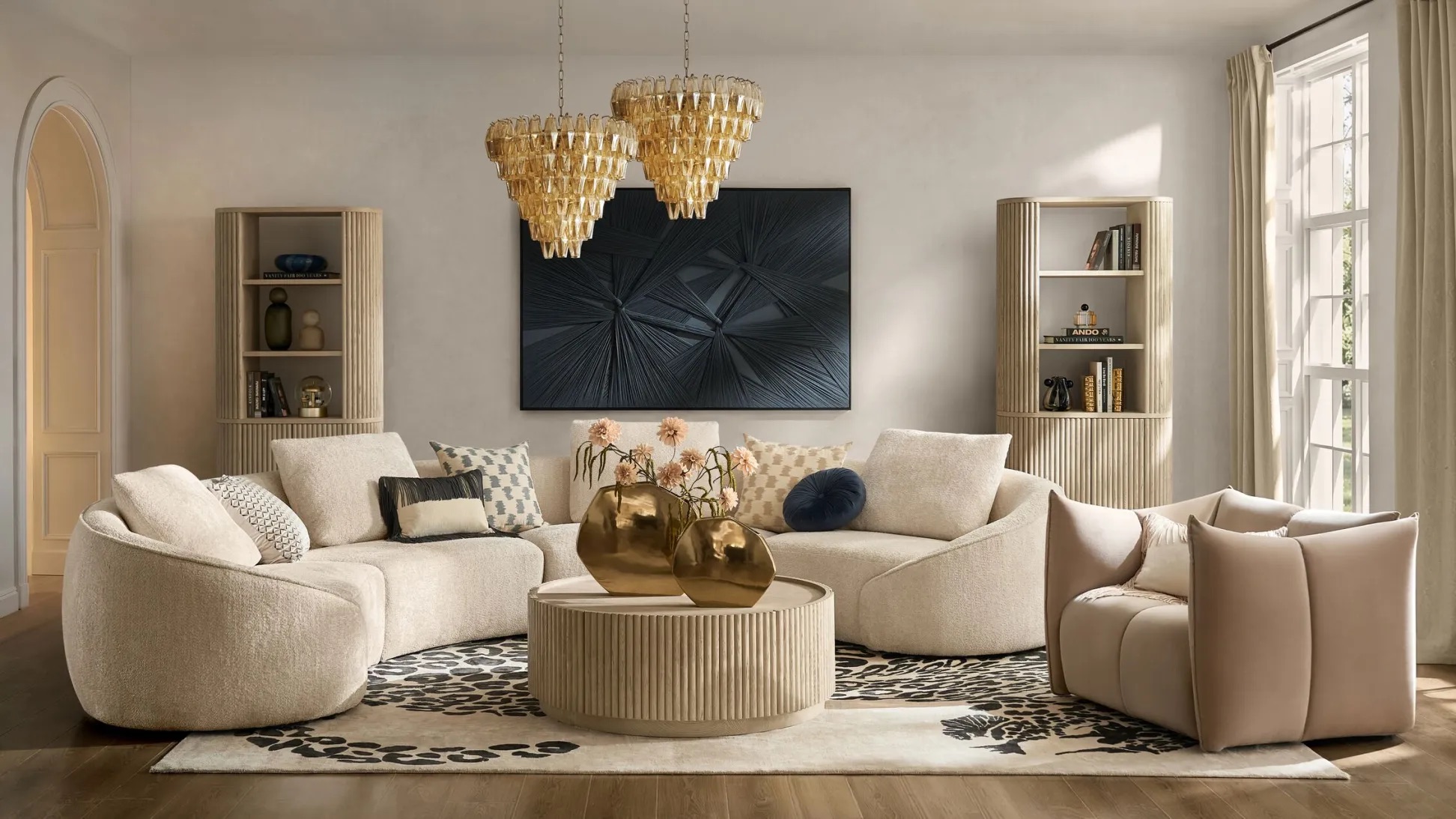
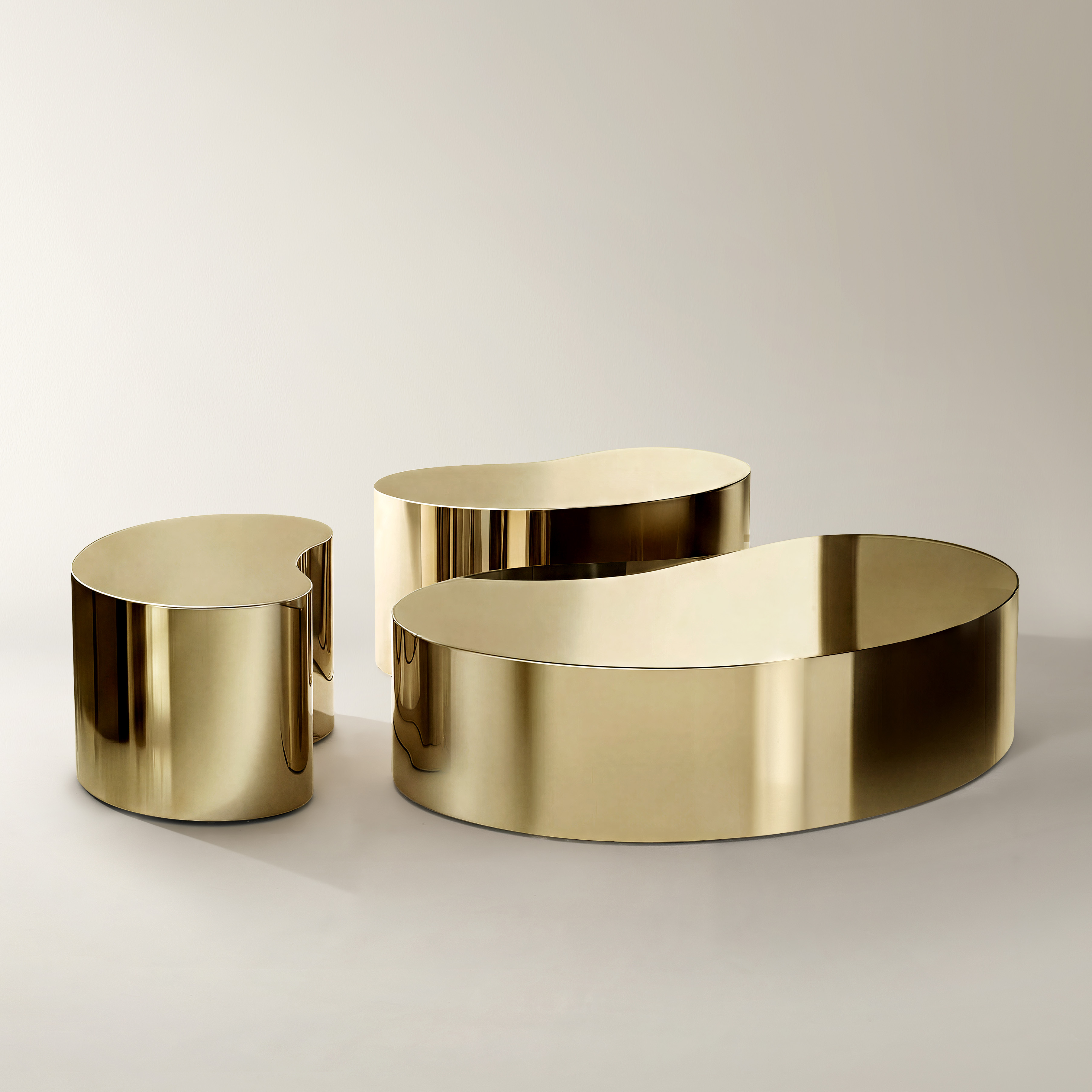
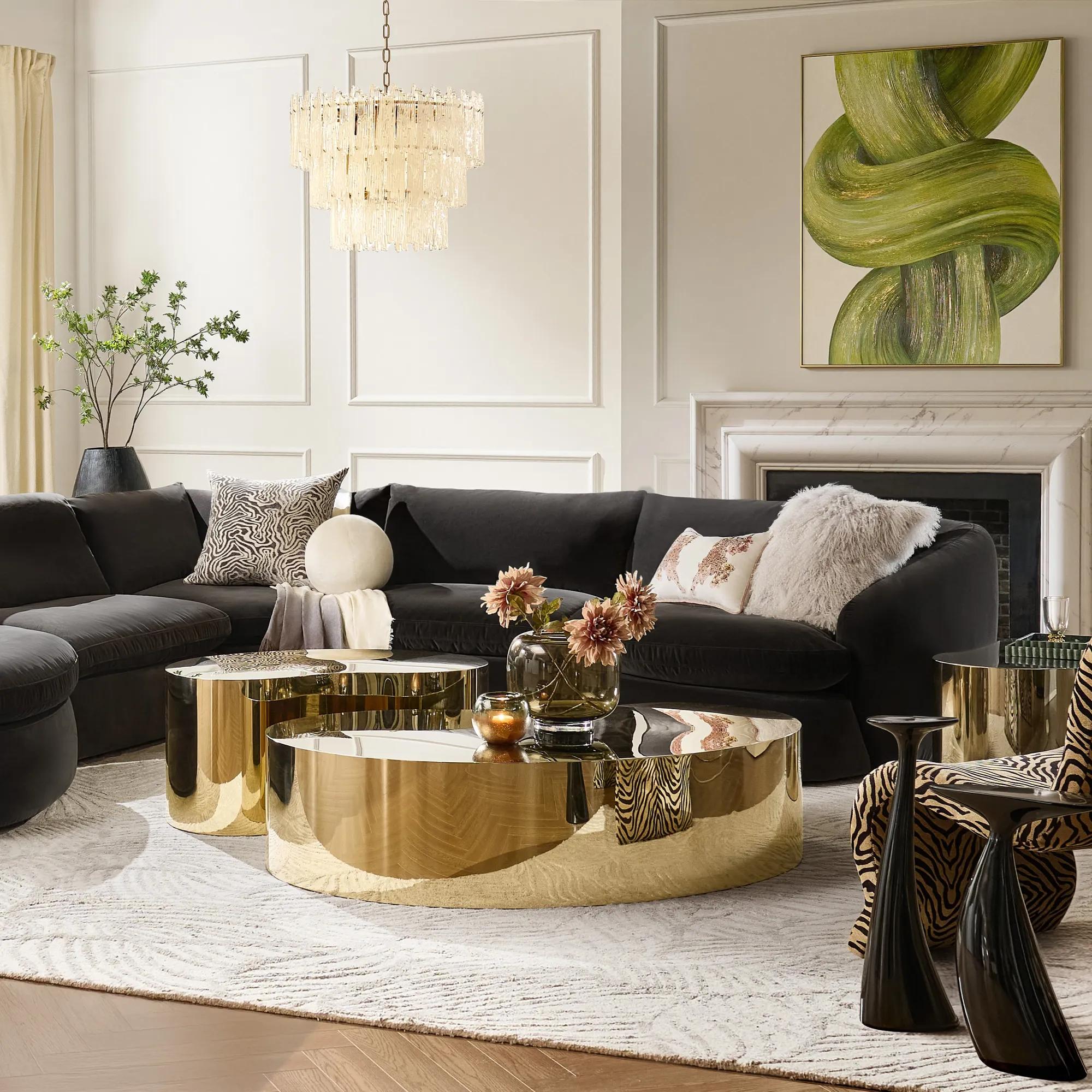
Start with a sculptural gold coffee table. This is the anchor, the piece that holds the light and defines the center.
Build around it with calm, tactile materials: a velvet or bouclé sofa, a stone side table, warm wood casegoods, and glass accents that keep the composition airy. Then repeat the metal once or twice in furniture, not accessories.
-
Anchor: gold coffee table with an architectural base
-
Softening layer: textured upholstery, matte ceramics, a woven rug
-
Echo: a brass-legged accent chair or a small metallic side table
Explore our Living Room Collection
Dining Room: Structure With Warmth
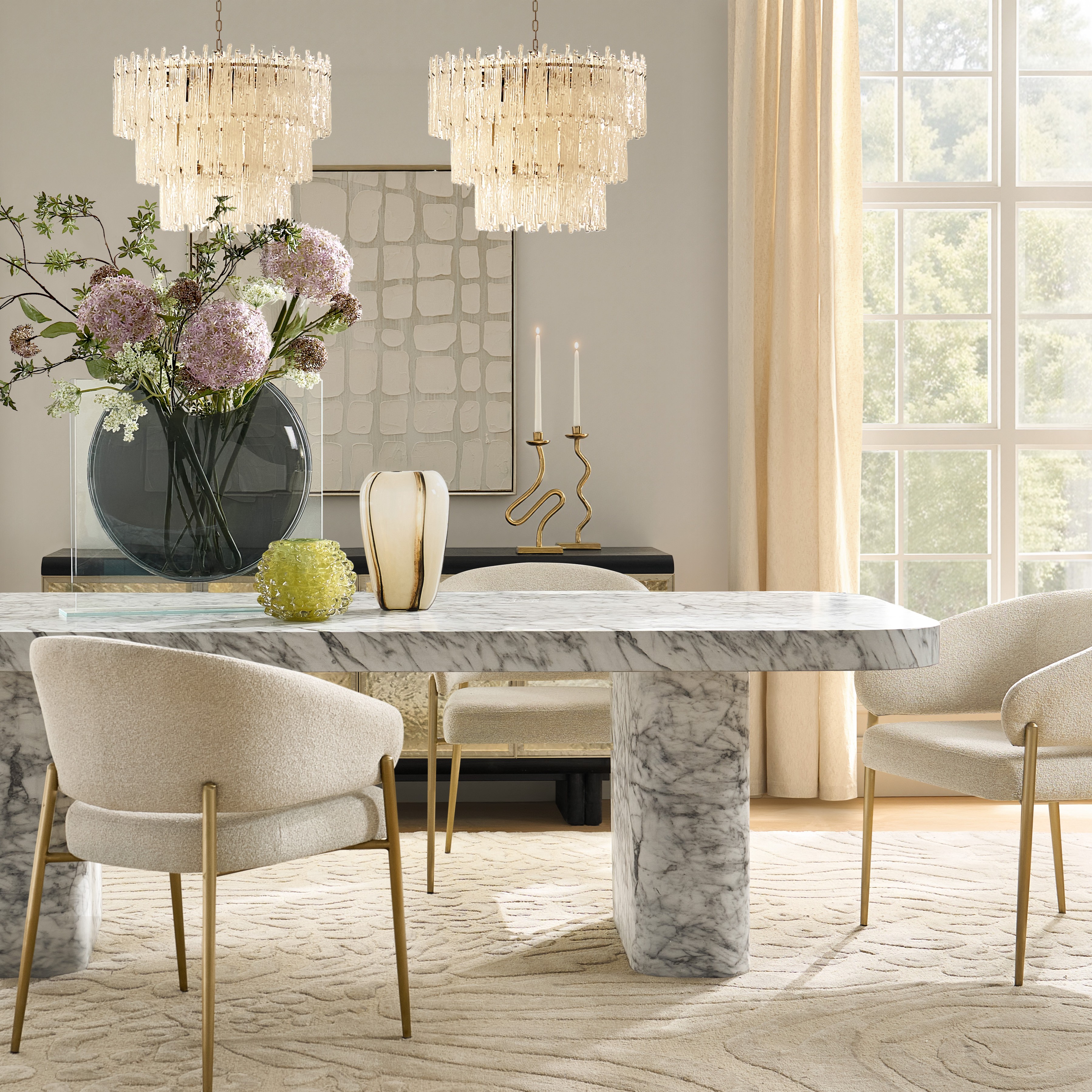
In dining spaces, a metallic base reads like architecture. A dining table with a brushed brass foundation feels grounded, especially when paired with warm woods and upholstered seating.
Keep the room tonal and let shape do the work. Curved dining chairs soften the geometry, while glass or stone elements keep the space from feeling heavy.
-
Anchor: dining table with brass or gold base
-
Contrast: upholstered chairs in neutral performance fabric
-
Finish: a sculptural chandelier that complements, not competes
Bedroom: Quiet Glam, Not Glare
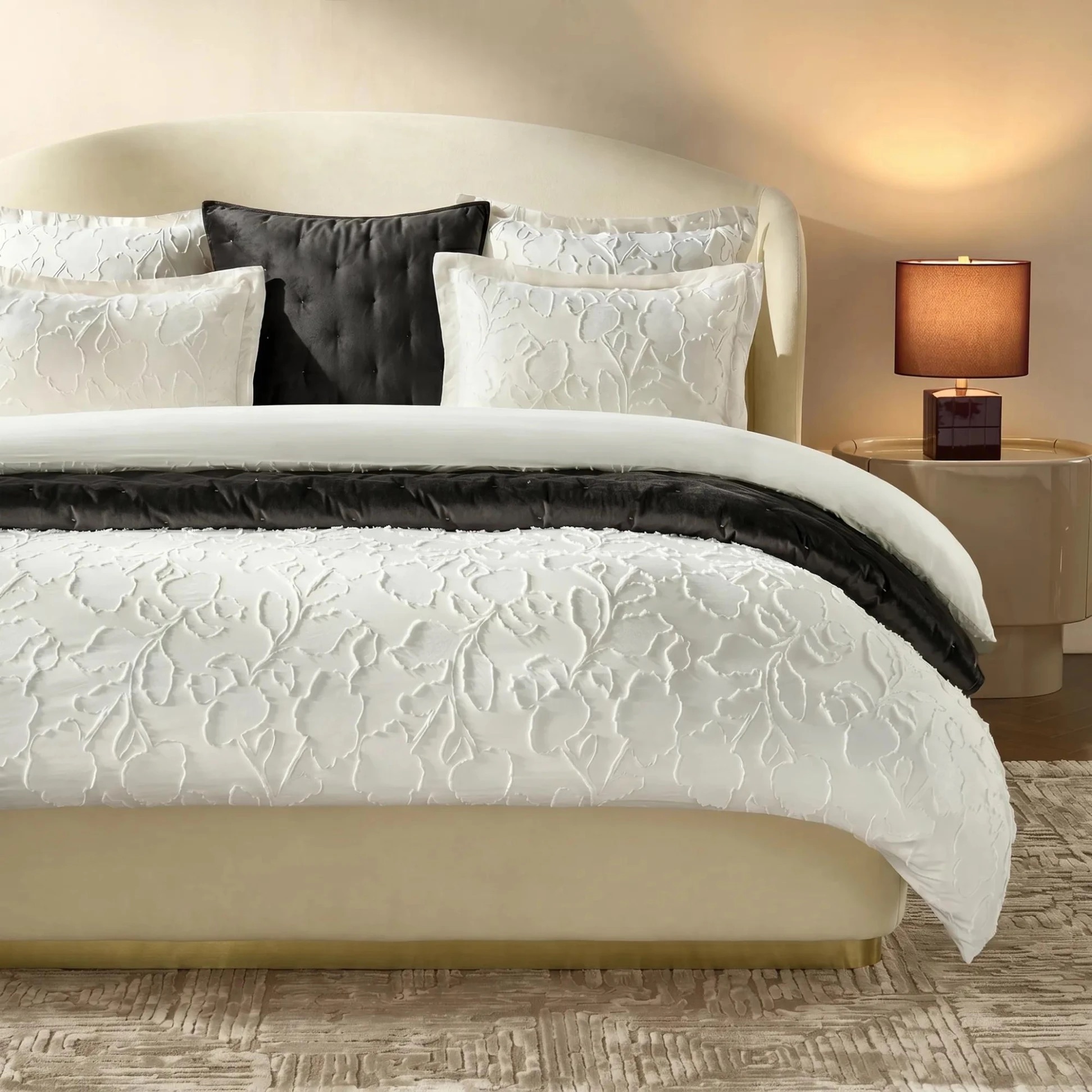
The bedroom demands softness. Here, gold furniture should feel like a whisper, not a headline. Think mirrored nightstands, a gold-accented bench, or a low-profile cabinet with subtle metallic detailing.
Balance reflective pieces with plush textiles and matte surfaces. Layer the bed in tonal bedding, add a tactile throw, and keep décor minimal.
-
Anchor: mirrored nightstand or subtle metallic storage
-
Softening layer: velvet headboard, bouclé bench, linen drapery
-
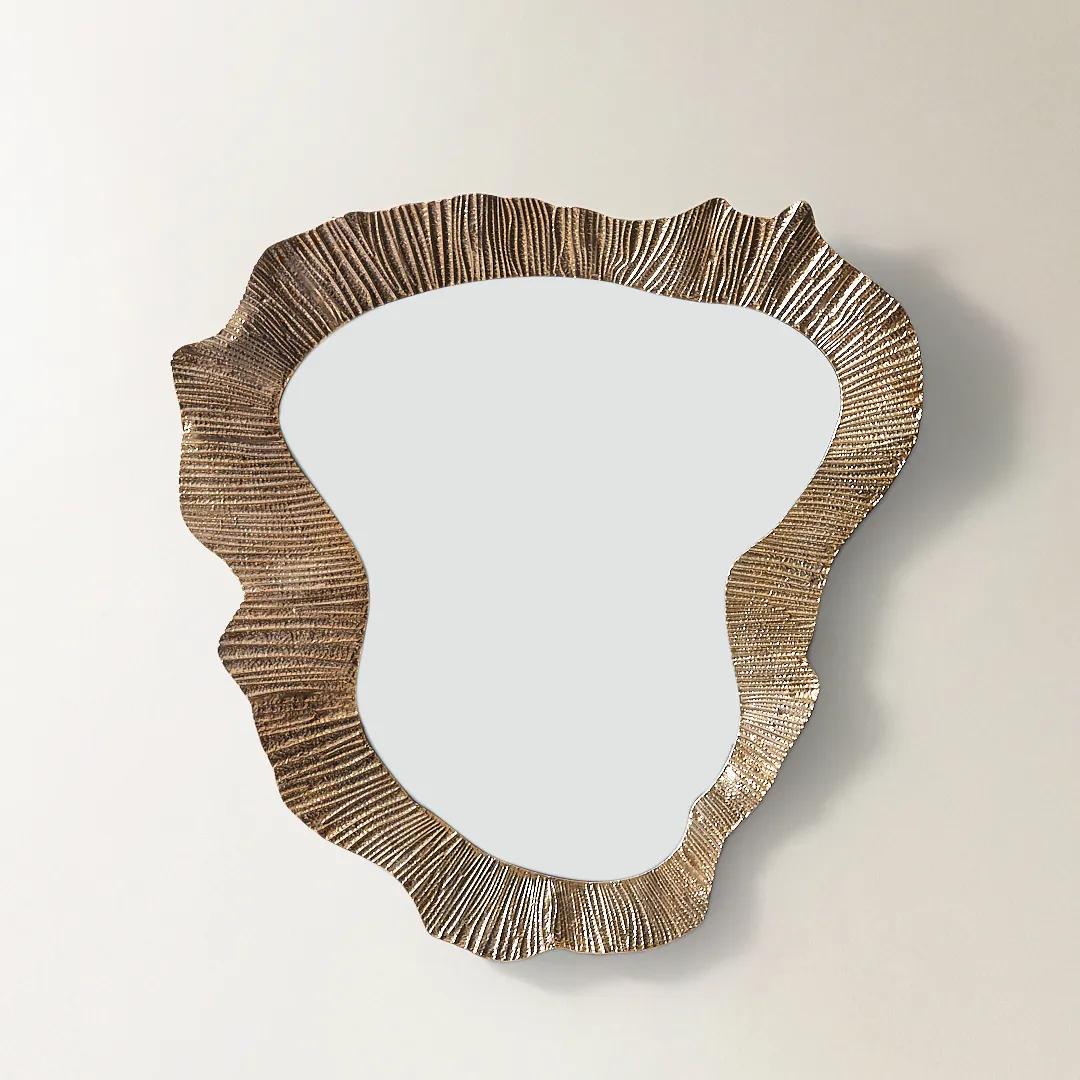
Echo: a warm brass table lamp base or a slim gold-framed mirror
Entry: The First Impression, Collected
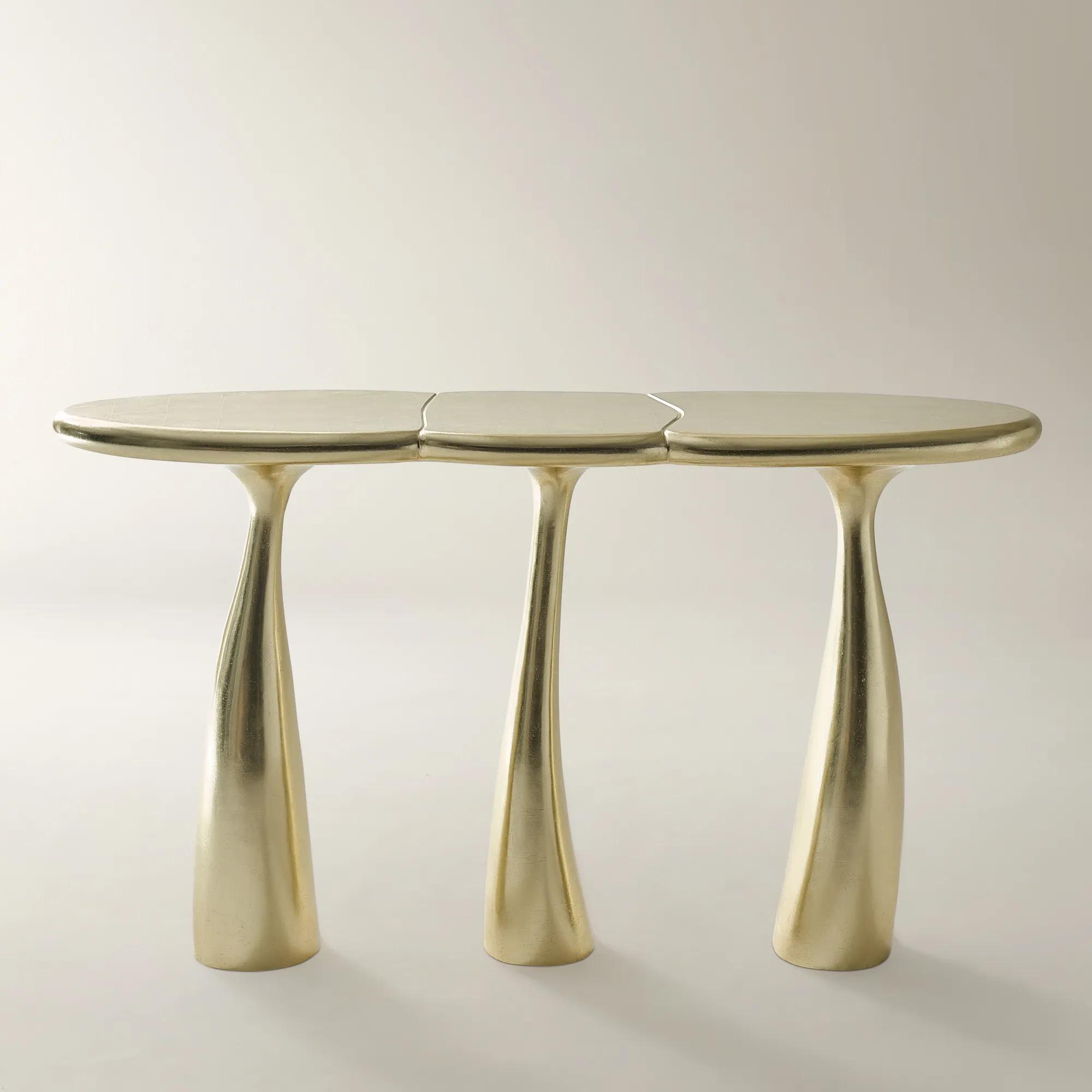
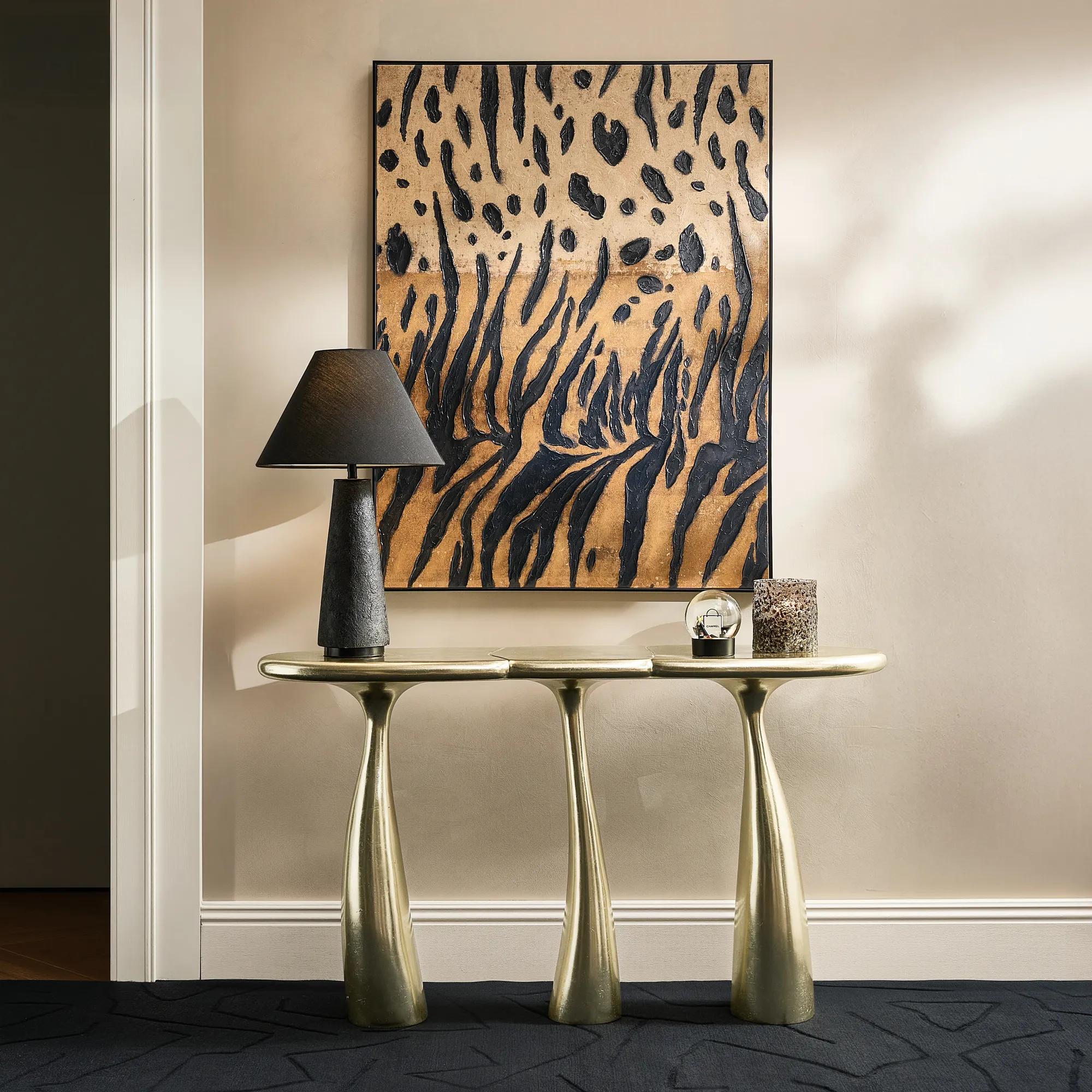
An entry is the perfect place for a mirrored console table. It reflects light, elevates the first impression, and creates instant polish.
Keep styling minimal: a stone bowl, one sculptural object, a small stack of books. Let the console itself be the moment.
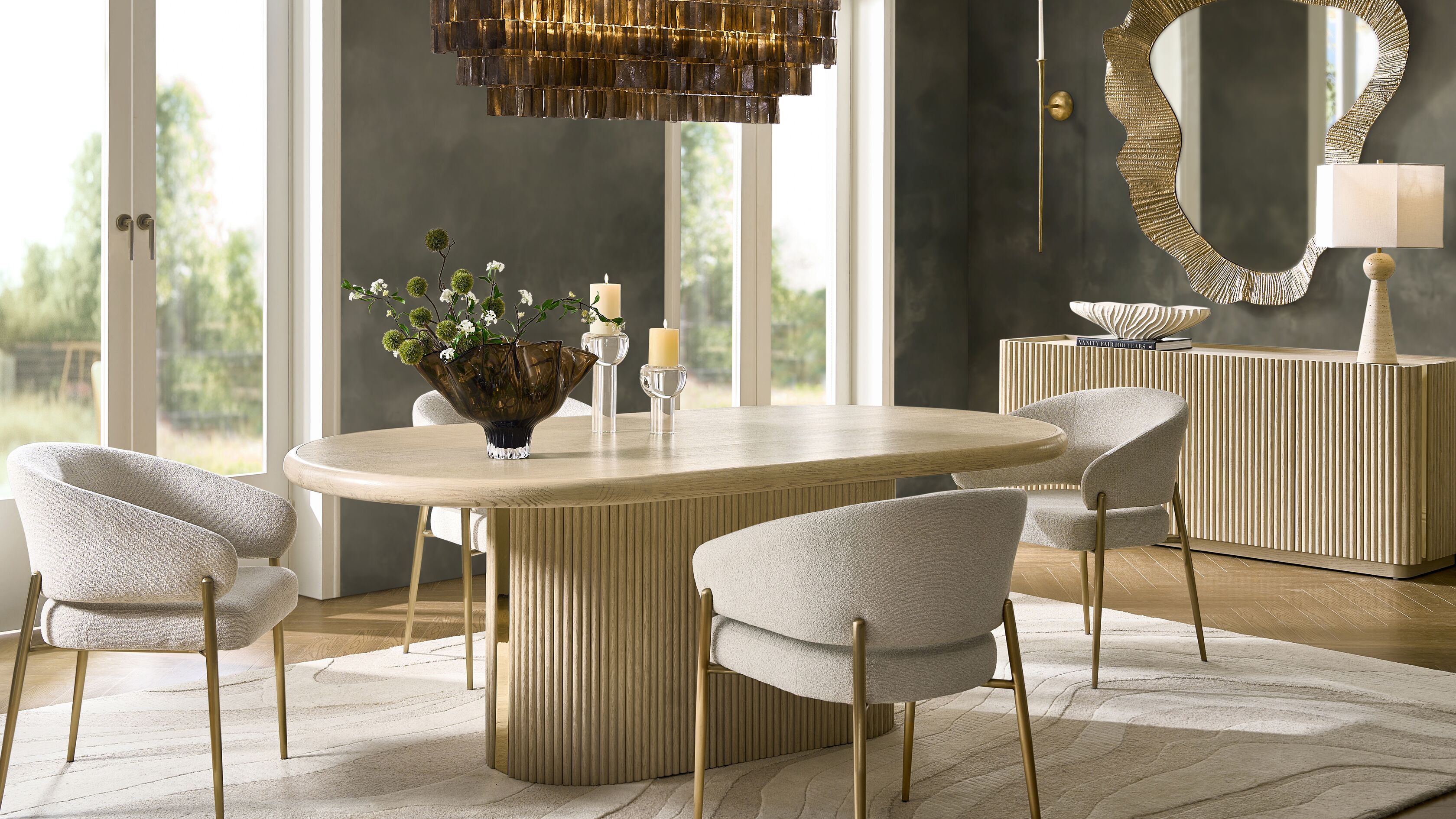
Metallic structure feels most refined when paired with texture and warmth.
The Edit
A collected room is not built from a long list. It is built from a short one, chosen well. Here is an editorial edit of pieces and roles, designed to make gold furniture feel intentional, layered, and calm.
-
Sculptural Gold Coffee Table (Anchor)
The room’s center of gravity. Look for an architectural base, a mirrored plinth, or a refined brushed finish. -
Mirrored Console Table (Glow)
A light-catcher for entry or living spaces. It adds depth without visual weight, especially against warm walls or wood tones. -
Brass-Based Dining Table (Structure)
The statement that feels like architecture. Pair with upholstered chairs to soften and modernize. -
Stone and Metal Side Table (Contrast)
Material proof in one piece. Stone calms the metal, the metal sharpens the stone. -
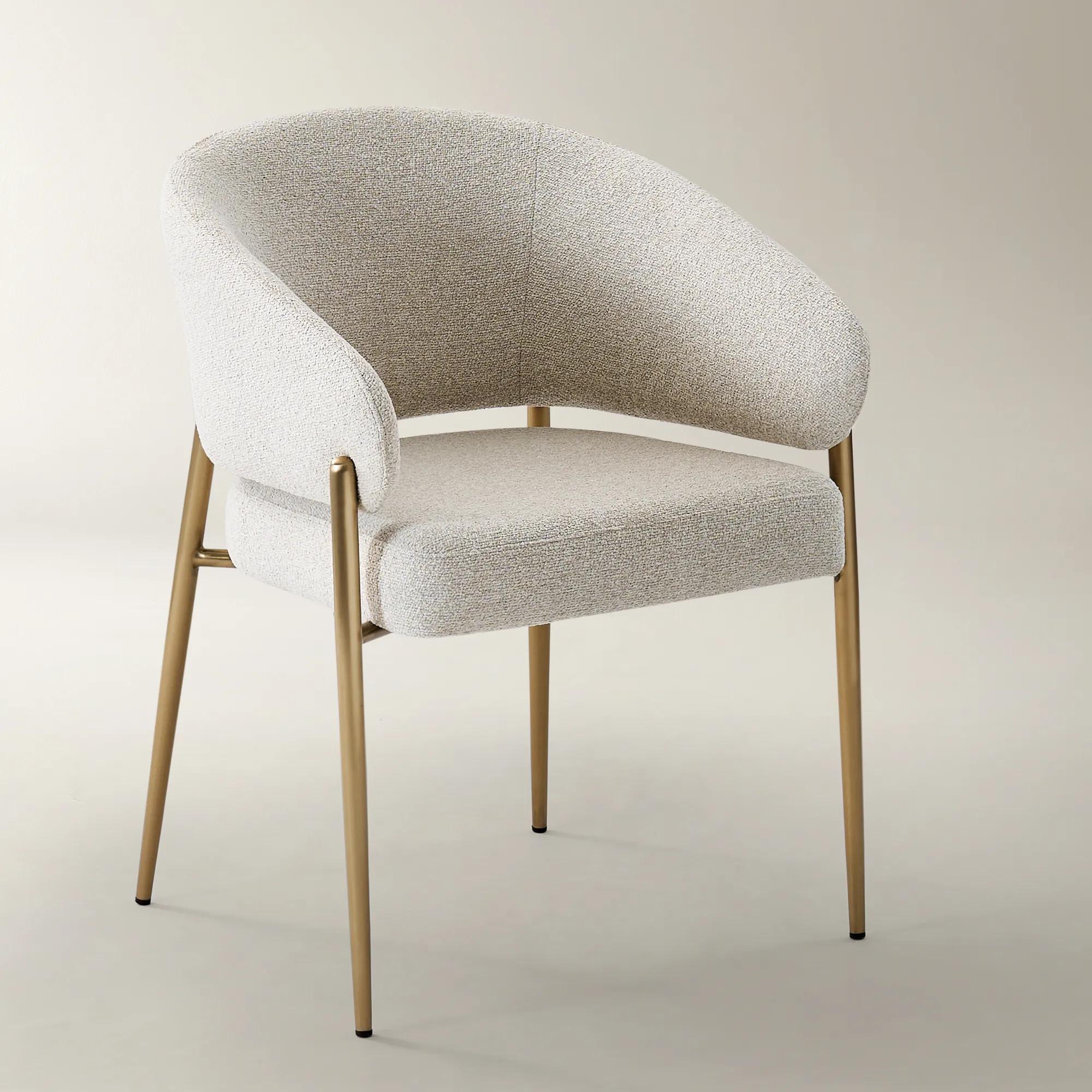
Bouclé Accent Chair With Metallic Legs (Softness)
A tactile counterpoint that reads modern glam interiors, not theme. Keep the silhouette clean. -
Warm Wood Credenza With Subtle Gold Hardware (Layer)
The collected rule in action. A hint of metal, integrated into function. -
Mirrored Nightstand (Quiet Glow)
A bedroom-friendly reflection. Best when paired with matte ceramics and plush bedding. -
Glass Table Lamp With Warm Brass Base (Finish)
A small, refined repetition that feels layered. Choose a linen shade for softness. -
Gold-Framed Floor Mirror (Perspective)
One reflective vertical, used sparingly. It elongates the room and ties the metallic story together.
Explore The Gilded Night Living Room
Stylist Note: The most elevated rooms use repetition like a signature, not a pattern.
Frequently Asked Questions
How do I style gold furniture in a modern living room without it feeling too glam?
Choose one sculptural piece, like a gold coffee table or mirrored console, and keep the palette tonal. Balance the shine with matte stone, warm woods, and textured upholstery like bouclé or velvet.
What colors look best with gold furniture for a high-end, collected feel?
Warm neutrals are the most reliable foundation: ivory, taupe, champagne, camel, and soft gray. Add depth with mocha woods, black accents in small doses, and stone elements that calm reflection.
Is gold furniture better in brushed brass or polished gold finishes?
Brushed brass and antique brass tend to read softer and more enduring, especially in everyday spaces. Polished finishes can be beautiful, but they require more negative space and fewer competing reflective surfaces.
How many gold furniture pieces should be in one room to look curated?
Start with one statement piece, then repeat the metal subtly in two smaller furniture moments. Avoid scattering gold across many small accessories, which can feel themed rather than collected.
What materials pair best with gold furniture for quiet luxury interiors?
Stone, glass, velvet, bouclé, and warm woods are the most flattering companions. They soften shine, add texture, and help metallic furniture feel architectural instead of decorative.
A Room That Holds the Light
Gold is most elevated when it is treated as structure. Choose the piece that holds the light, give it space to breathe, then let the room gather around it. When gold furniture is the decision, not the afterthought, the result feels collected, calm, and complete.
Discover the finishing touches in the Gilded Collection.
.png?w=2000&h=2000)