An ancient limestone reimagined for modern living, travertine stone brings sculptural softness, tonal warmth, and architectural permanence to the contemporary home.
There is a quiet authority to a room grounded in stone. Light glides differently across its surface. Edges feel softened, sculpted rather than assembled. In today’s interiors, that presence often comes from one material in particular: travertine stone.
What is travertine stone, and why has it become a defining element in modern luxury homes? Formed by mineral deposits near natural springs, this warm-toned limestone carries subtle veining and organic pores that make each piece inherently one of a kind. As design shifts toward tactile materials and architectural silhouettes, decorating with travertine stone feels both current and enduring.
For the design-forward homeowner seeking depth, texture, and quiet impact, travertine offers a grounded elegance that transcends trend.
In This Story
-
The origin and defining characteristics of travertine stone
-
How to decorate with travertine stone in modern interiors
-
The stylist’s rules for balancing weight and softness
-
A room-by-room formula for living, dining, and bedroom spaces
-
A curated edit of sculptural pieces that anchor the home
Explore the edit.
What Is Travertine Stone?
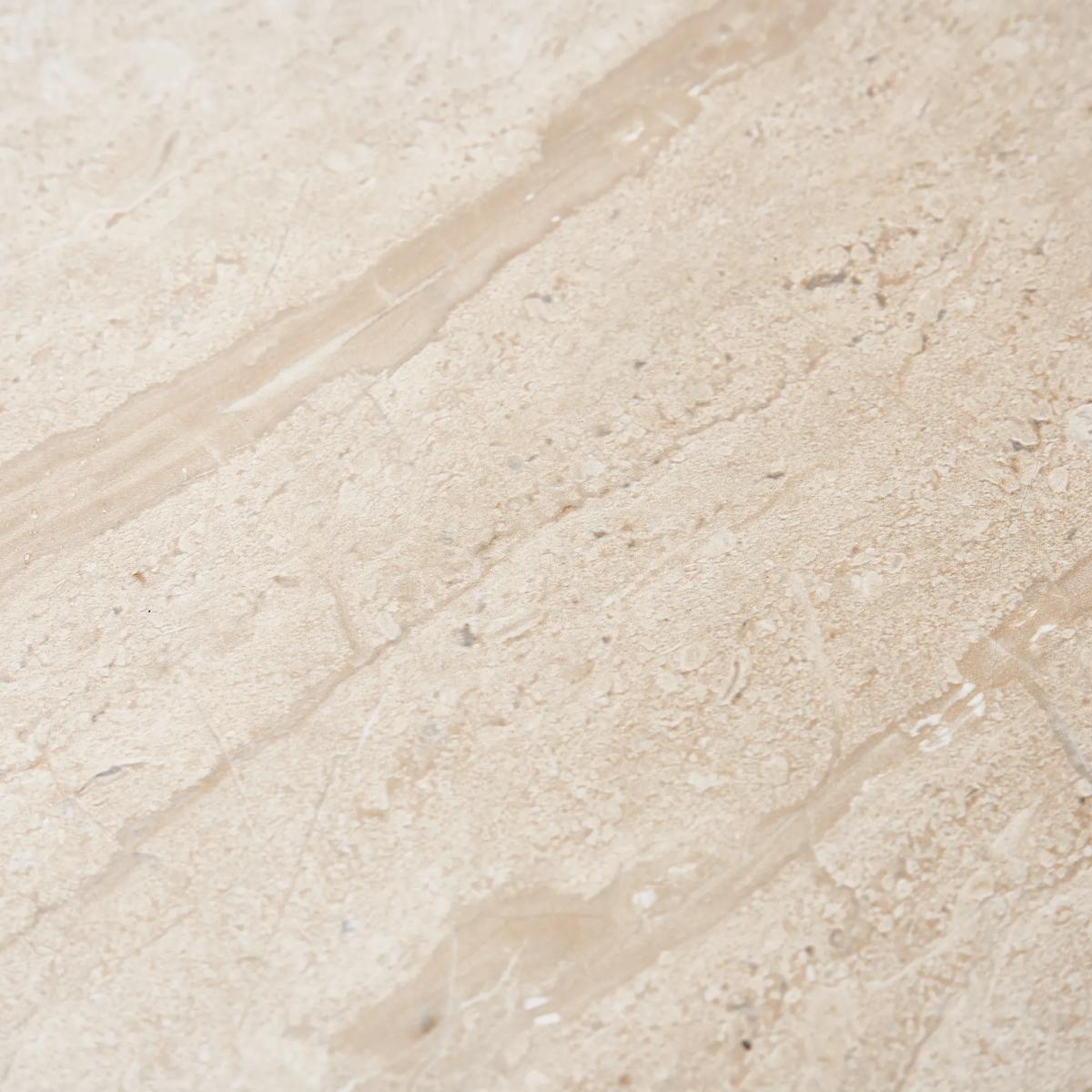
The organic surface of travertine stone reveals subtle movement and natural porosity.
Travertine stone is a sedimentary limestone formed from calcium carbonate deposits left behind by mineral-rich water. Over time, escaping gases create the small cavities and channels that give the material its distinctive texture.
Unlike high-contrast marble, travertine feels warmer and more grounded. Its color palette ranges from soft ivory and champagne to taupe and mocha, making it a versatile foundation for neutral interiors.
In modern design, travertine stone appears in:
-
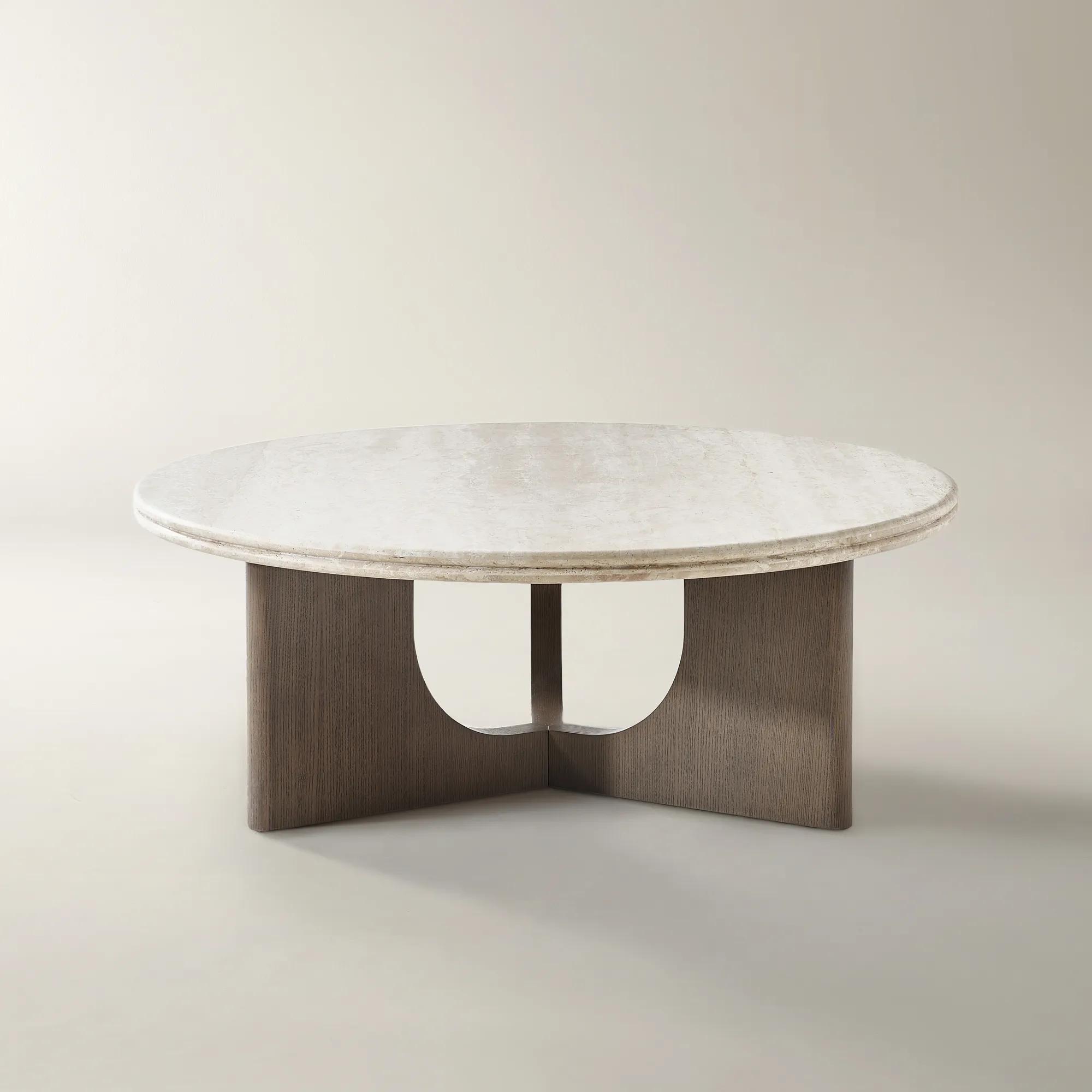
Sculptural travertine coffee tables
-
Oval and pedestal travertine dining tables
-
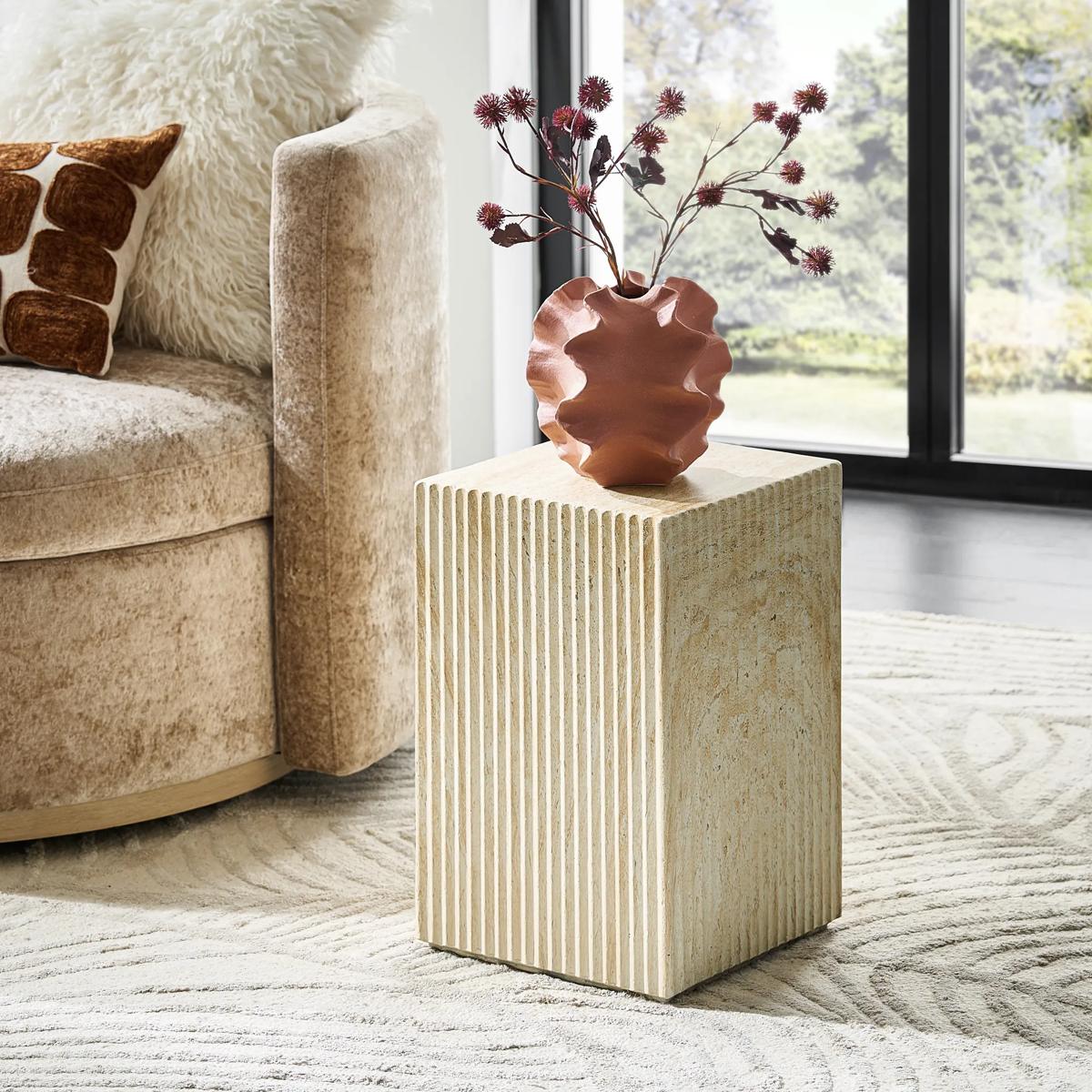
Stone plinths and accent pedestals
-
Decorative trays and objects
-
Architectural consoles and side tables
Did you know? Travertine can be finished in multiple ways. A honed finish offers a matte, velvety surface ideal for contemporary interiors, while polished travertine introduces a more formal sheen.
The Design Codes of Travertine Stone
Palette
Decorating with travertine stone begins with tone. Its warmth pairs effortlessly with:
-
Cream, ivory, and soft white
-
Champagne, sand, and taupe
-
Ginger, mocha, and espresso
-
Black accents for contrast
The effect is tonal layering rather than sharp contrast, a hallmark of quiet luxury interiors.
Materials
Travertine stone thrives in thoughtful material dialogue. Consider pairing it with:
-
Bouclé and textured linen upholstery
-
Natural oak or burl wood
-
Brushed brass and burnished bronze
-
Cast or wavy glass for subtle reflection
The juxtaposition of matte stone and luminous metal creates dimensional balance.
Silhouettes
Curved profiles soften the inherent weight of stone. Rounded pedestal bases, demi-lune consoles, and fluid edges echo the organic formation of travertine itself.
Shine Level
For modern homes, honed travertine stone feels most refined. The low sheen allows texture to take precedence over gloss.
Texture
Porosity is not a flaw but a feature. The subtle pitting offers tactile interest, especially when contrasted with plush upholstery or smooth lacquer.
Stylist Note: Allow negative space around travertine furniture. Stone needs room to breathe for its sculptural presence to resonate.
The Stylist’s Rules for Decorating with Travertine Stone
Decorating with travertine stone is an exercise in restraint and balance.
Do:
-
Anchor the room with one primary travertine piece
-
Balance stone with soft textiles and curved forms
-
Repeat the tone in smaller decor elements
-
Use layered lighting to highlight surface texture
Avoid:
-
Overloading a space with multiple heavy stone surfaces
-
Mixing drastically different stone colors in one visual field
-
Placing travertine in cluttered, overly busy rooms
Stylist Note: If you introduce travertine in the living room, echo its tone subtly in the dining space for cohesion rather than repetition.
The Room Formula
Living Room
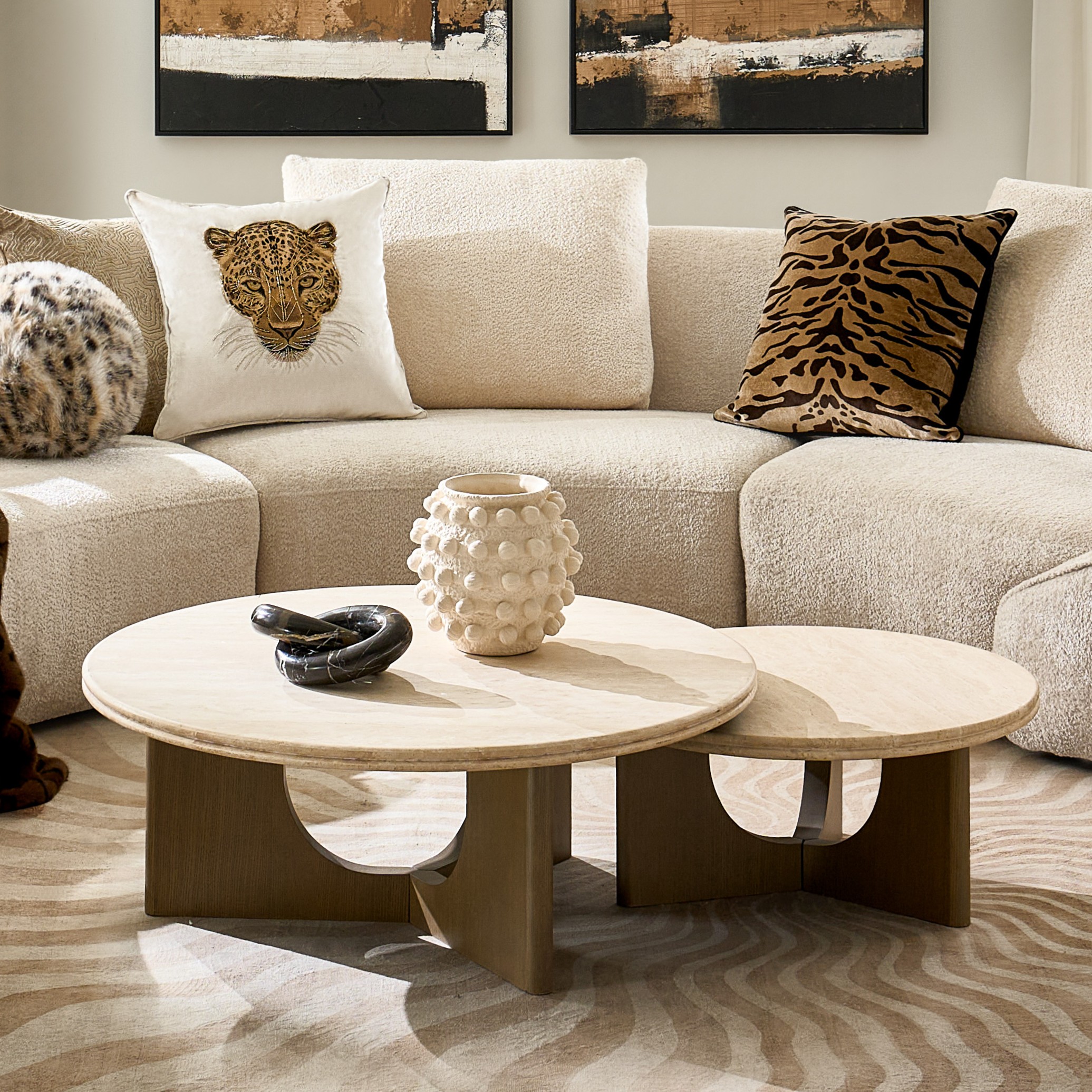
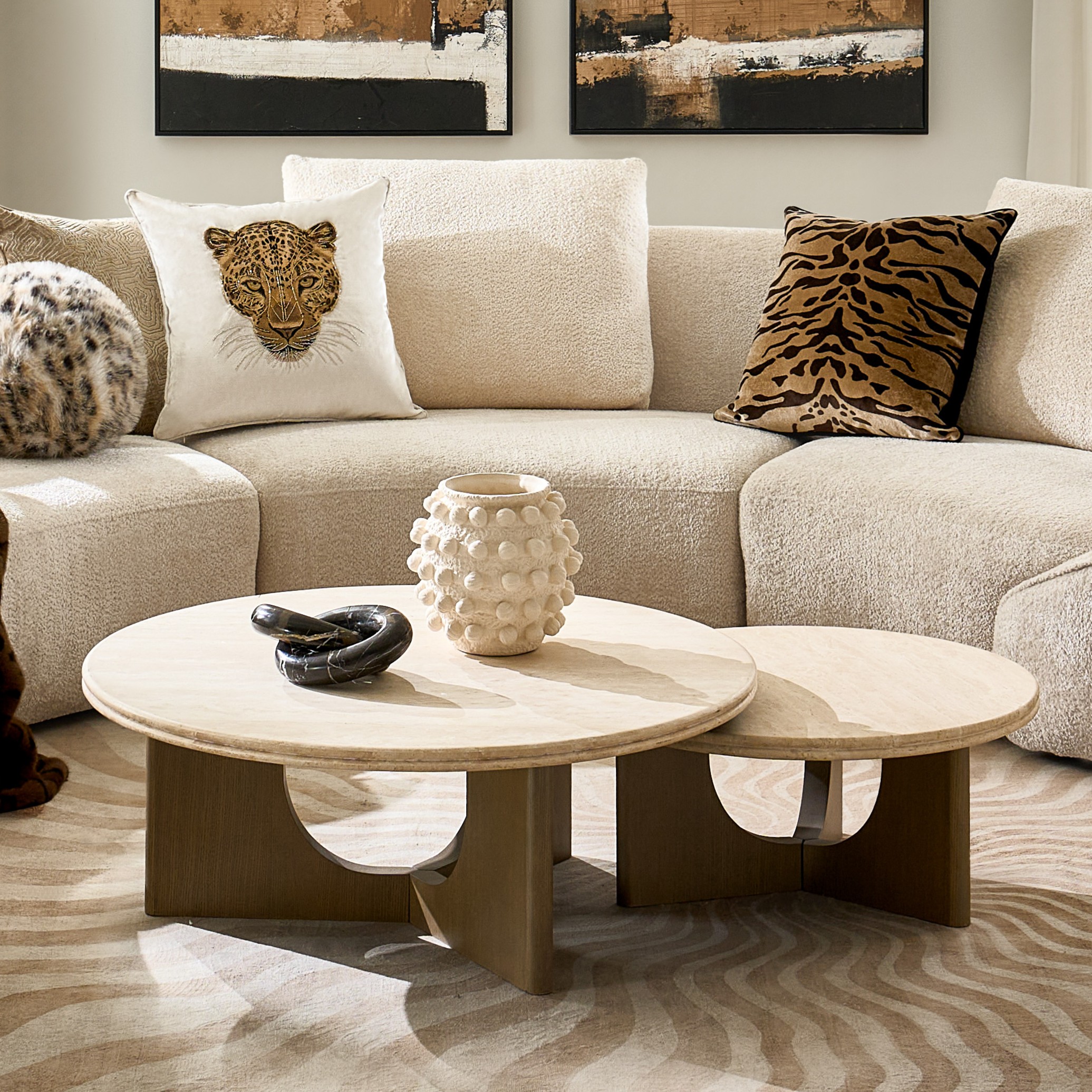
A sculptural travertine coffee table anchors a neutral living room with architectural softness.
The living room is where travertine stone often makes its most iconic statement.
Formula:
Anchor: Rounded travertine coffee table
Contrast: Deep velvet or bouclé seating
Glow: Brass or bronze table lamp
Finish: Textured ceramic or cast glass decor
This balance of solid and soft creates a grounded yet inviting atmosphere.
Dining Room
Travertine stone transforms the dining table into a sculptural centerpiece.
Formula:
Anchor: Oval or pedestal travertine dining table
Soften: Upholstered dining chairs in tonal fabric
Reflect: Antique brass chandelier
Ground: Neutral textured rug
Keep tabletop styling minimal. A single stone vessel or low sculptural bowl is sufficient.
Bedroom
In the bedroom, travertine becomes a refined accent.
Formula:
Accent: Travertine bedside table or tray
Layer: Plush bedding in cream or champagne
Balance: Light wood case goods
Detail: Cast glass lamp for luminous contrast
The effect is serene, tactile, and elevated.
Did you know? Because travertine stone is naturally porous, sealing functional surfaces such as dining tables or nightstands helps protect against staining while preserving its organic finish.
The Edit
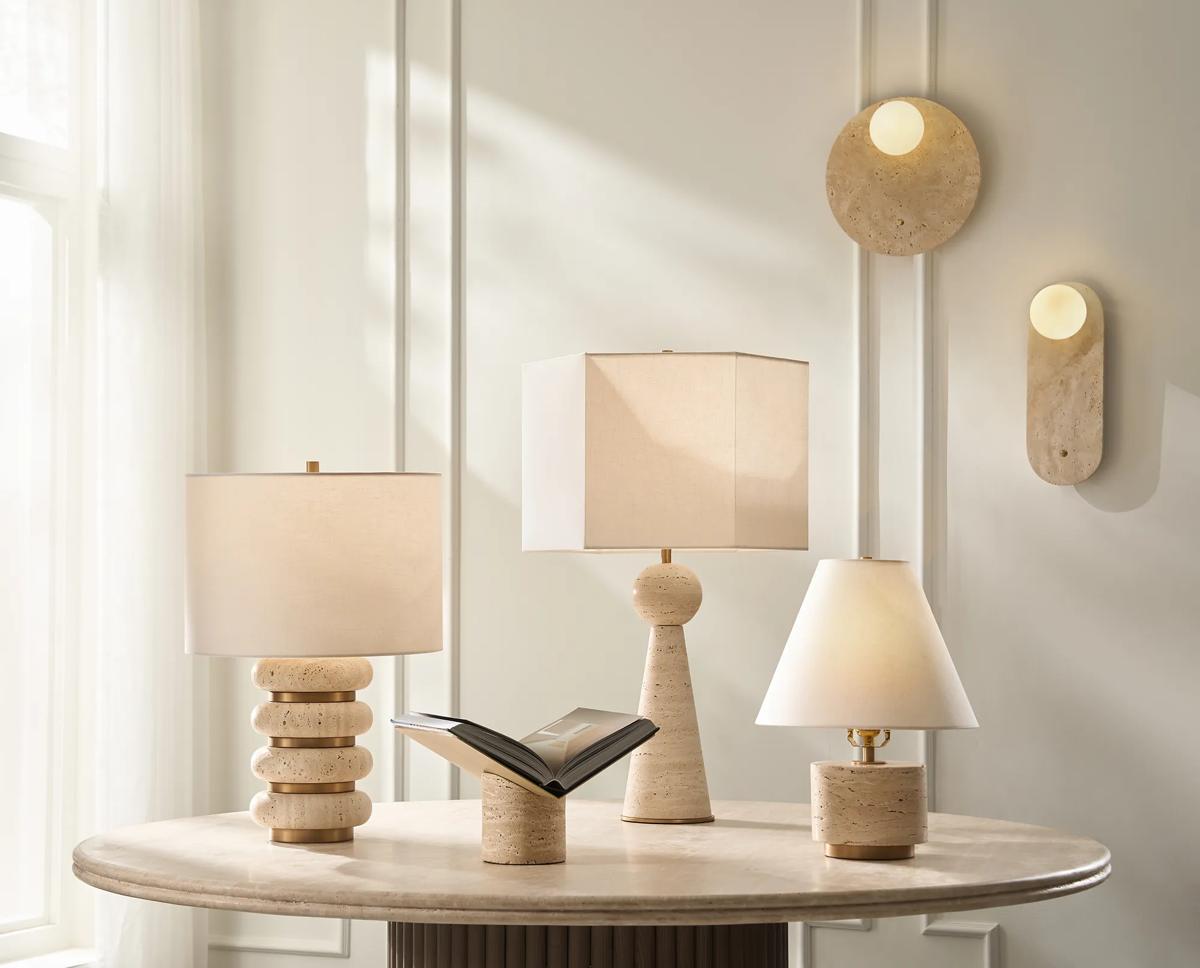
A curated selection that embodies the art of decorating with travertine stone.
-
Rounded Travertine Coffee Table – The anchor. Sculptural and grounding.
-
Pedestal Accent Table in Travertine Stone – The vertical moment beside seating.
-
Oval Travertine Dining Table – The architectural focal point.
-
Travertine Stone Tray – The layering piece for candles or objects.
-
Stone Plinth – The gallery pedestal for art or florals.
-
Brushed Brass Table Lamp – The glow that softens stone.
-
Bouclé Accent Chair – The textural counterpoint.
-
Cast Glass Vase – The reflective finish that introduces fluidity.
-
Neutral Wool Rug – The foundation that balances weight.
Each piece plays a role. Each supports the material rather than competing with it.
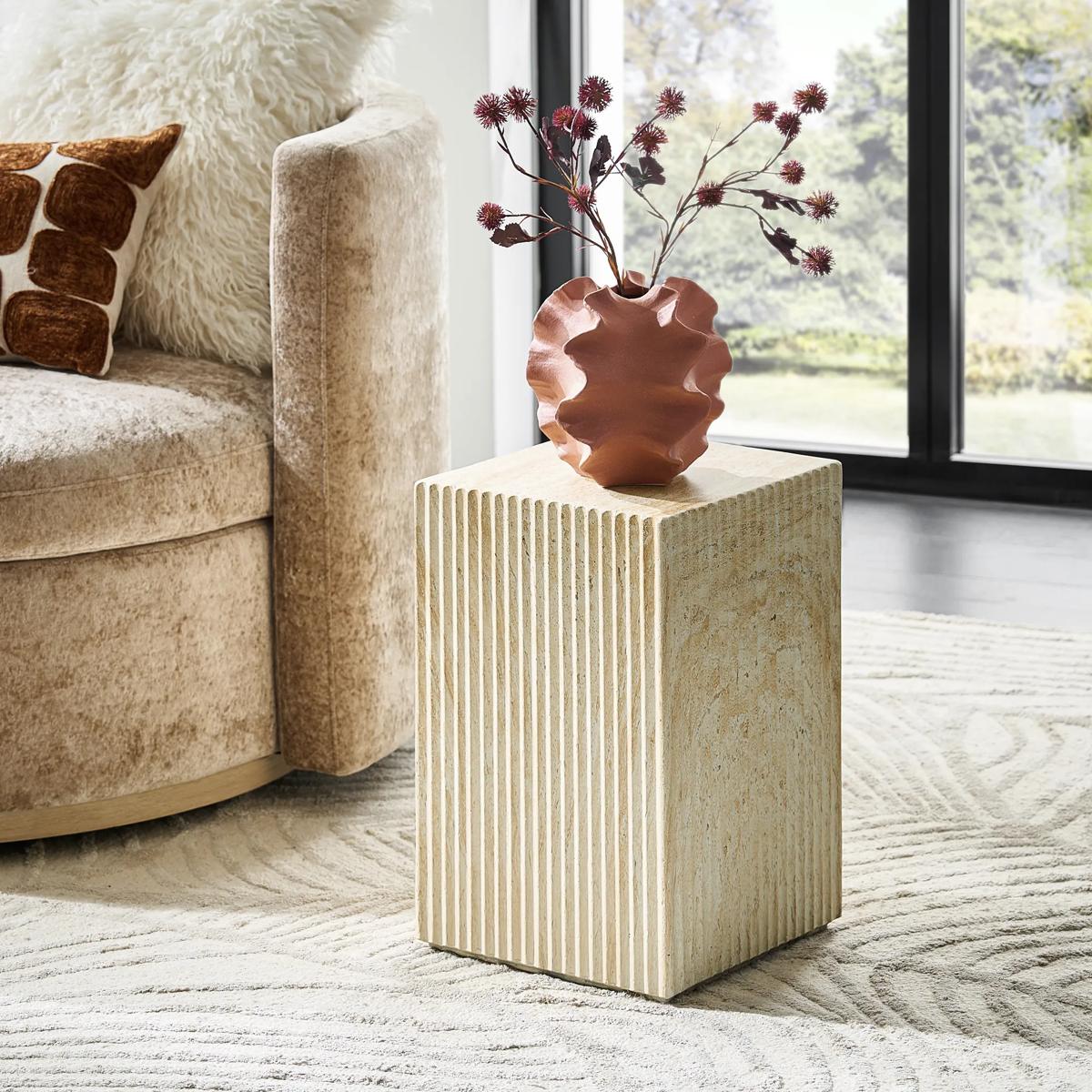
Strata Side Table
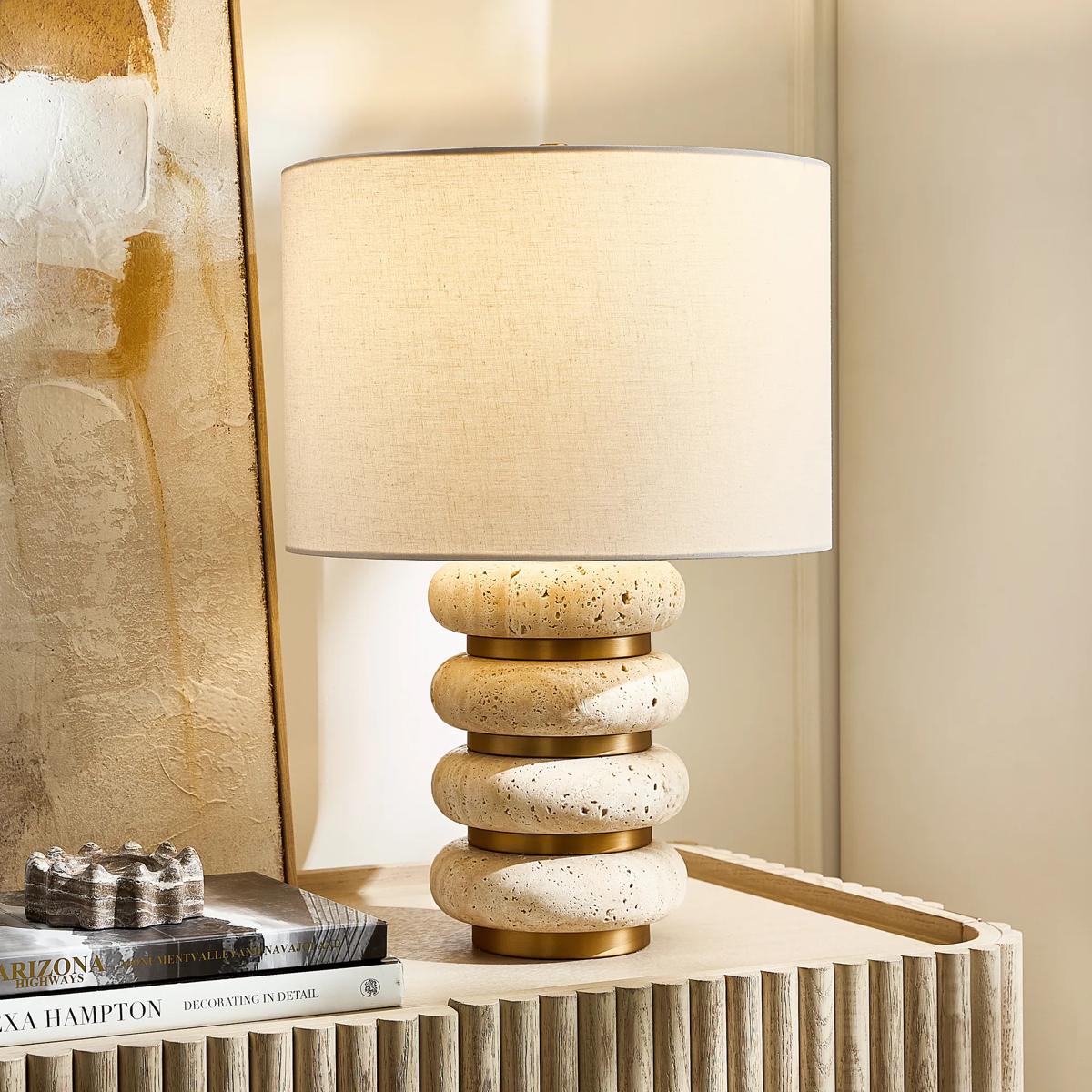
Sloane Travertine Table Lamp
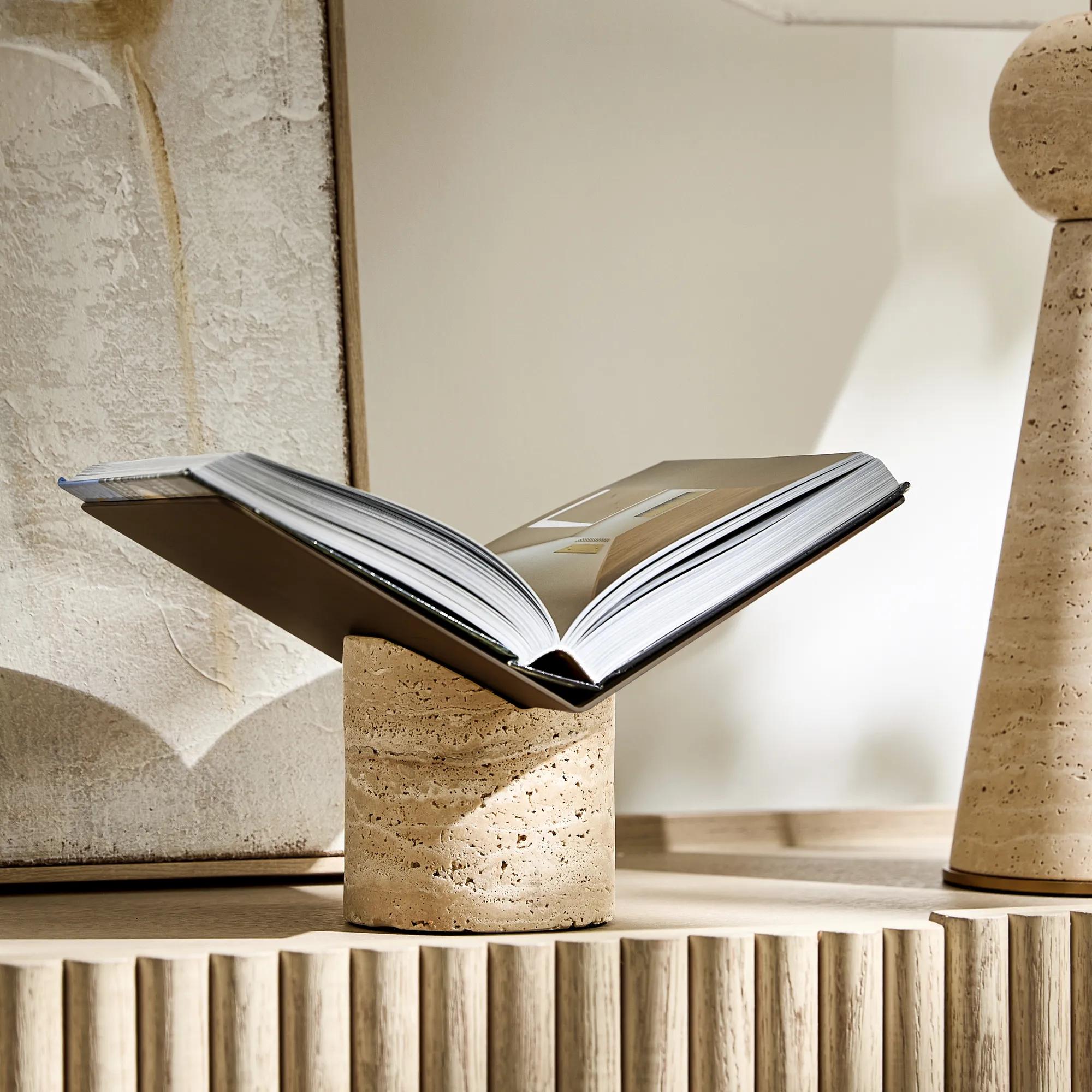
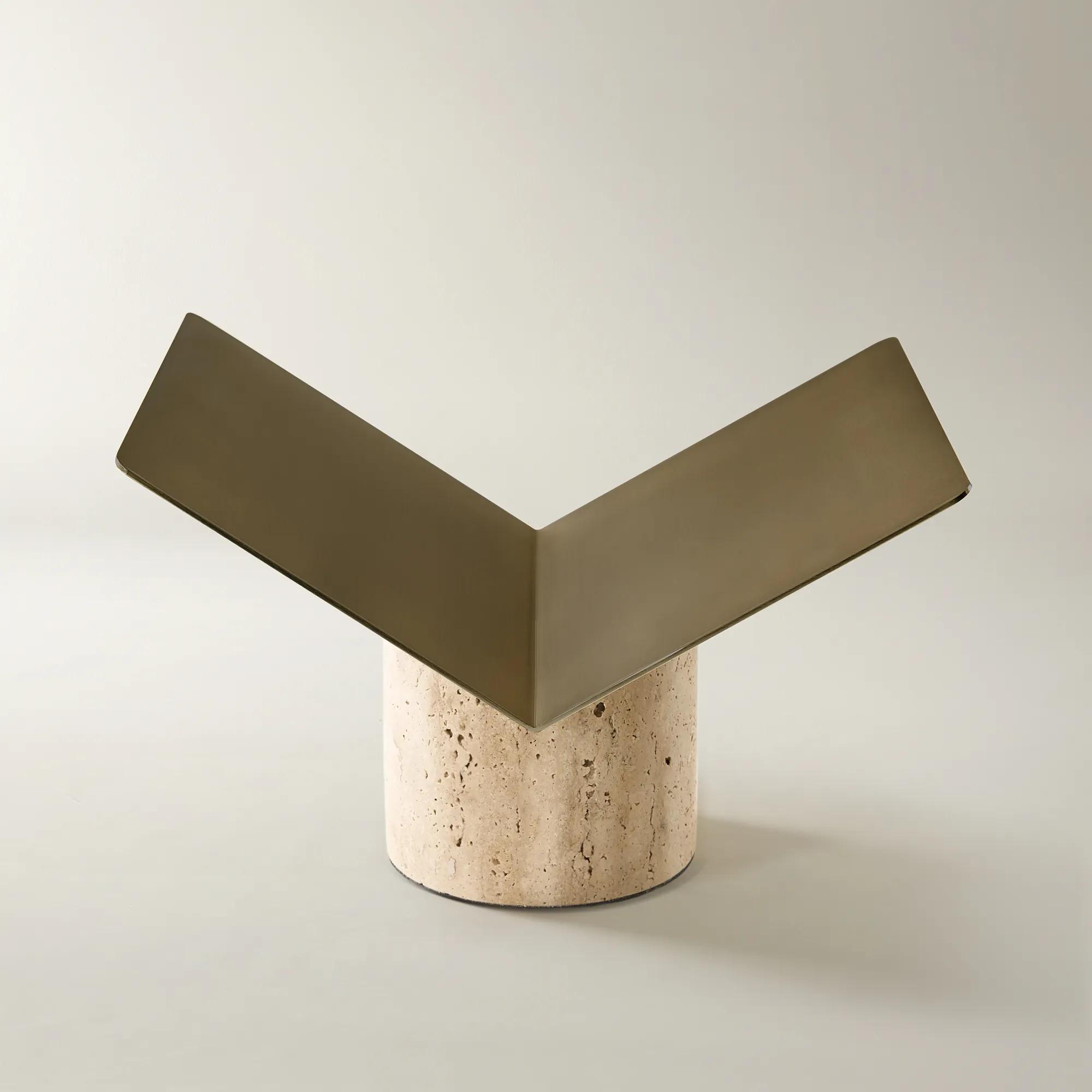
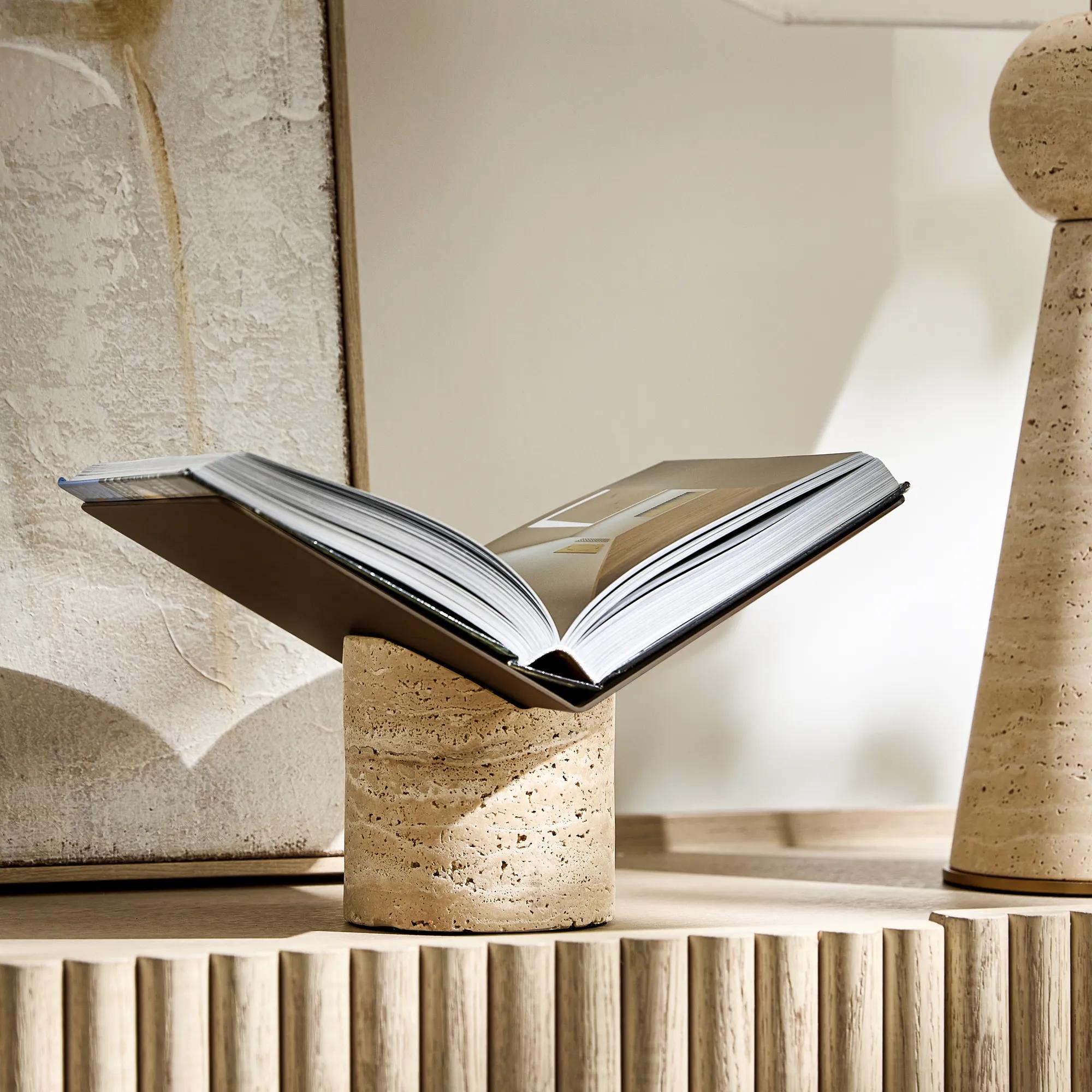
Travertine Book Stand
Frequently Asked Questions
What is travertine stone and how is it different from marble?
Travertine stone is a form of limestone formed by mineral deposits, characterized by small pores and soft linear movement. Marble forms under greater heat and pressure and typically displays bolder veining and a cooler tone.
Is a travertine coffee table durable for everyday use?
Yes. A properly sealed travertine coffee table is suitable for everyday living rooms. Honed finishes are particularly practical for modern homes.
How do you decorate with travertine stone in a modern interior?
Decorating with travertine stone works best when paired with curved silhouettes, warm metals, textured upholstery, and a tonal neutral palette.
Does travertine stone stain easily?
Travertine is porous by nature, so sealing is recommended for high-use surfaces such as dining tables. With appropriate care, it performs beautifully.
Is travertine stone furniture in style right now?
Travertine stone aligns with the current shift toward organic modern interiors, sculptural forms, and natural materials, making it both timely and enduring.
The Enduring Presence of Travertine Stone
Travertine stone is not decorative in the fleeting sense. It is elemental. It is architectural. It carries history within its surface and brings permanence to modern interiors.
When used with intention, travertine stone grounds a home in material honesty and sculptural elegance.
Discover the finishing touches.
.jpeg?w=4043&h=4043)
-1500x.jpeg?w=1500&h=1500)