A room changes the moment color takes the lead. Not louder, not brighter, just more deliberate. The kind of choice that feels like walking into a gallery where every piece is placed with intention, and nothing is accidental.
If you are searching for an interior design color palette, what you are really asking is more personal: How do I make my home feel composed, expressive, and undeniably modern? SS26 answers with a point of view that is fuller, richer, and more versatile, built for layered living across furniture, art, lighting, and textiles.
This is Color Theory, the Z Gallerie way. Expressive hues, unexpected pairings, sculptural forms, and high-impact finishes that translate personality into atmosphere.
In This Story
-
How Z Gallerie Design Codes turn color into an ownable style language.
-
Why undertones matter more than the color name on the label.
-
How shine changes the entire mood of a palette, and when to use it.
-
A room-by-room formula for building a cohesive interior design color palette.
-
A curated edit of pieces that carry the story with modern glamour.
Explore the edit.
The High-Impact Modern Dining Room
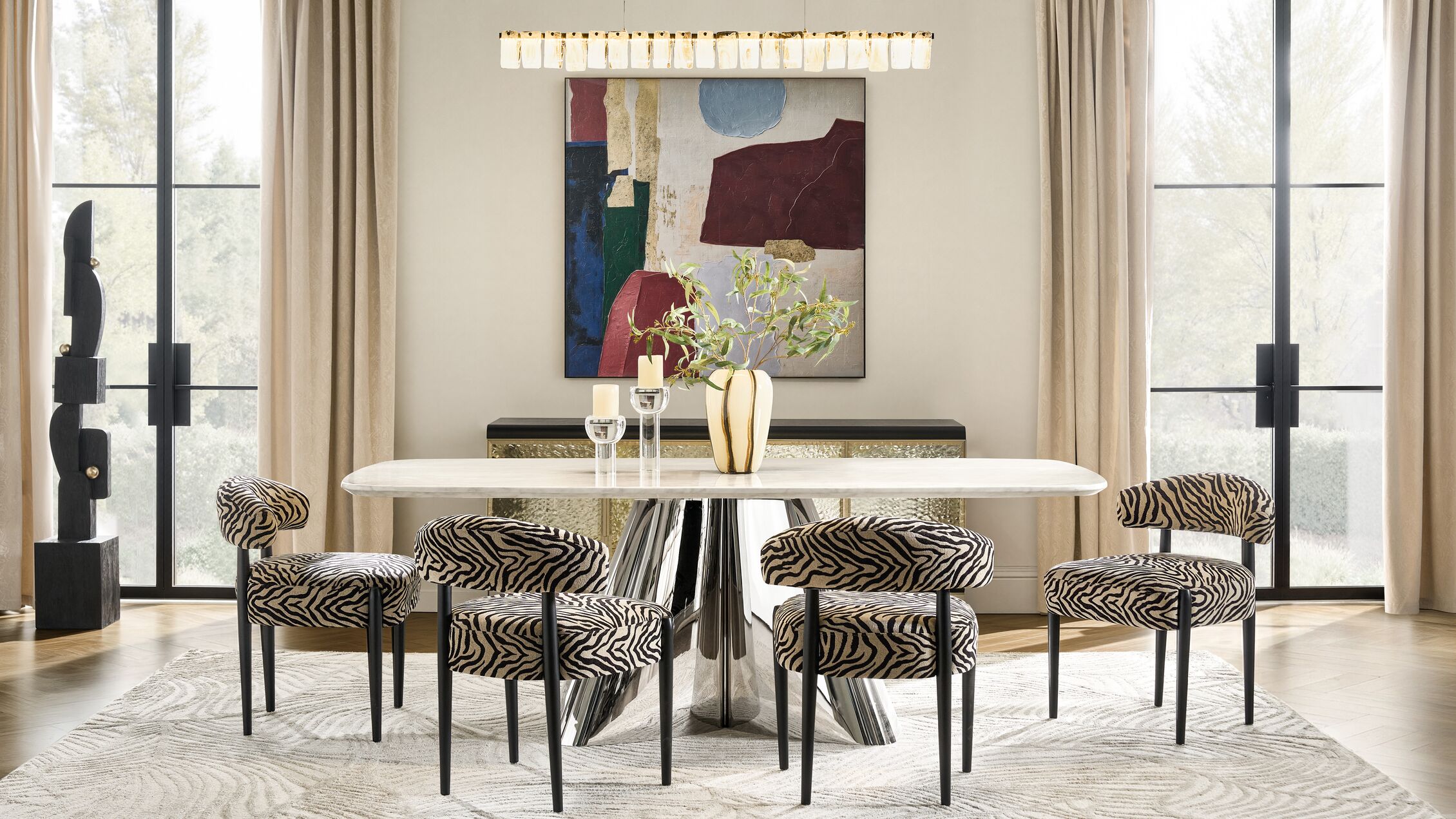
The Design Codes
Z Gallerie design stories are not trends you chase. They are codes you live with. In SS26, Color Theory sits inside the larger Z Gallerie Edit, alongside Sculptural Softness, The Modern Heirloom, and Leopardo, each one expressing modern glamour through shape, material, and styling.
Color Theory begins with a premise: when color leads the design, everything else falls into place. The palette carries soft coral, airy blue, oxblood, oatmeal, and blush, grounded by finishes that do the heavy lifting: lacquer, velvet, ceramic, glossy resin.
Then the Design Codes sharpen the lens with names that feel like chapters, not swatches:
-
Sunlit Citrus: citron and tangerine accents that bring warmth and vitality, refined and intentional.
-
Verdant Balance: green in depth and variation, layered and grounded, effortlessly elevated.
-
Blue Note: refined blues with fluid forms, quiet sophistication with clarity.
-
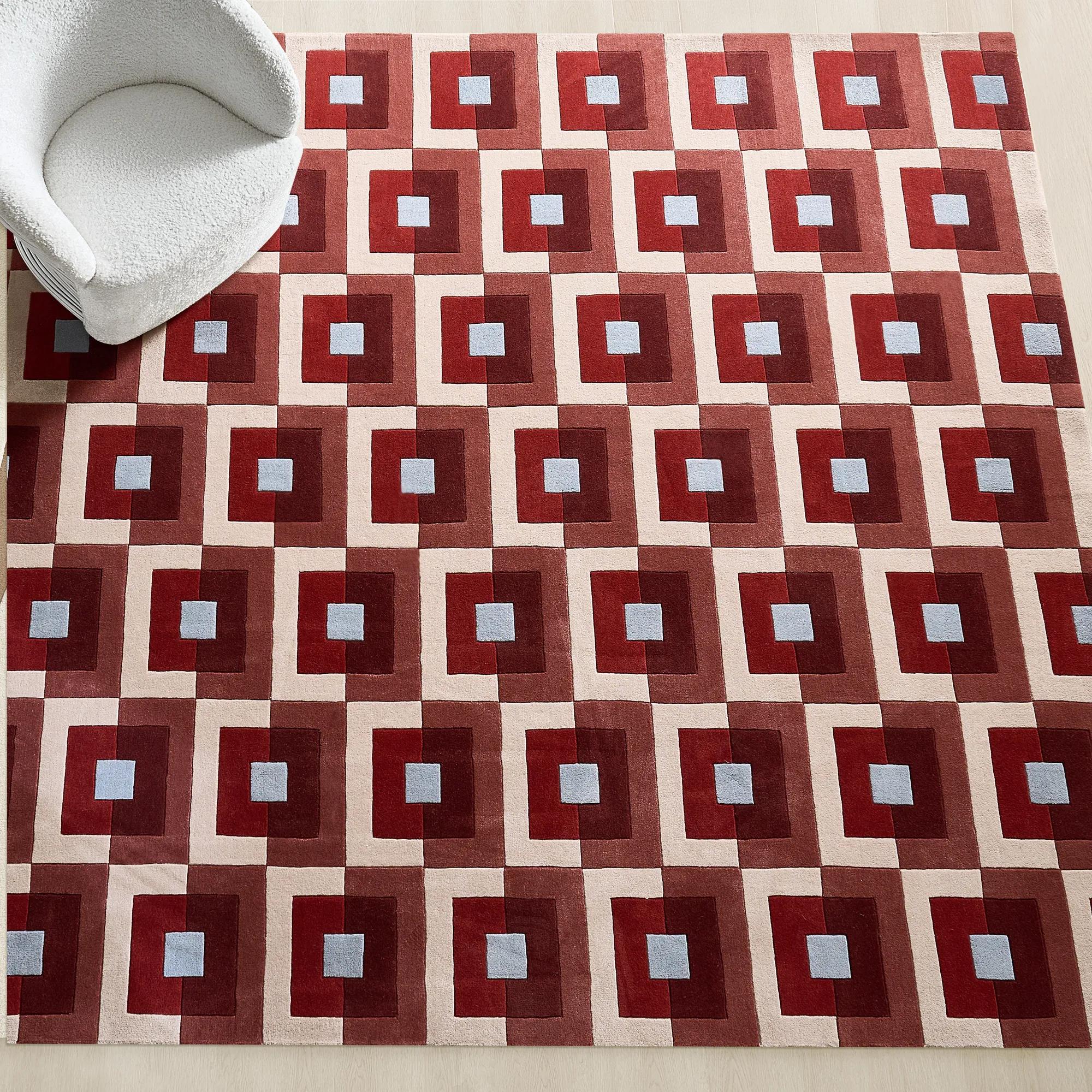
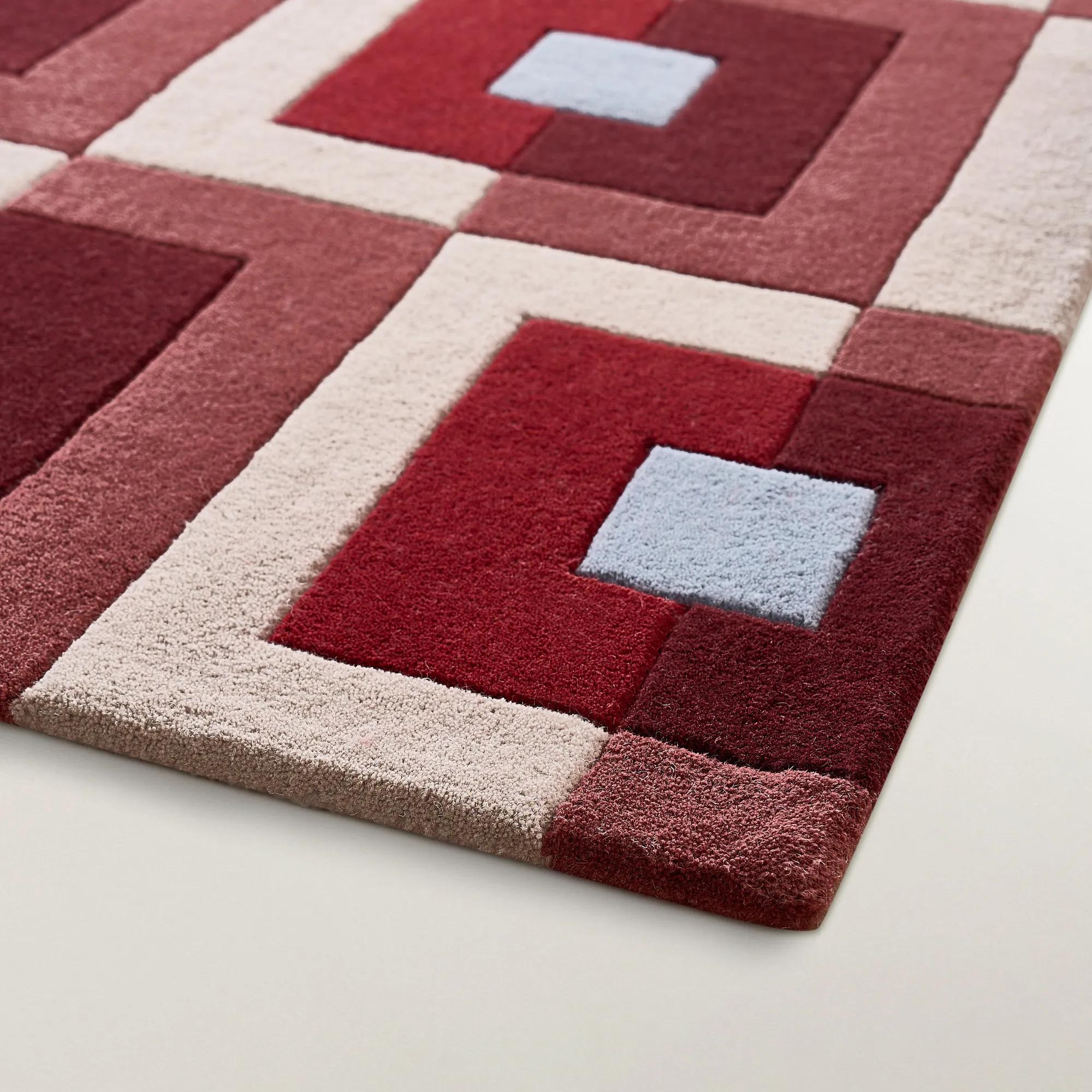
Modern Rouge: deep red drama paired with glossy finishes, bold yet controlled.
-
Refined Rosé: blush tones with sculptural shapes and graphic lines, softness with structure.
-
Skywash: soft blues and airy teals, open and serene, expansive and light.
Color is only half the story. The rest is silhouette, texture, and shine level.
-
Curves Ahead brings softness in motion, rounded forms and fluid silhouettes.
-
Hyper-Textural is designed to be felt, depth and dimension that holds the eye.
-
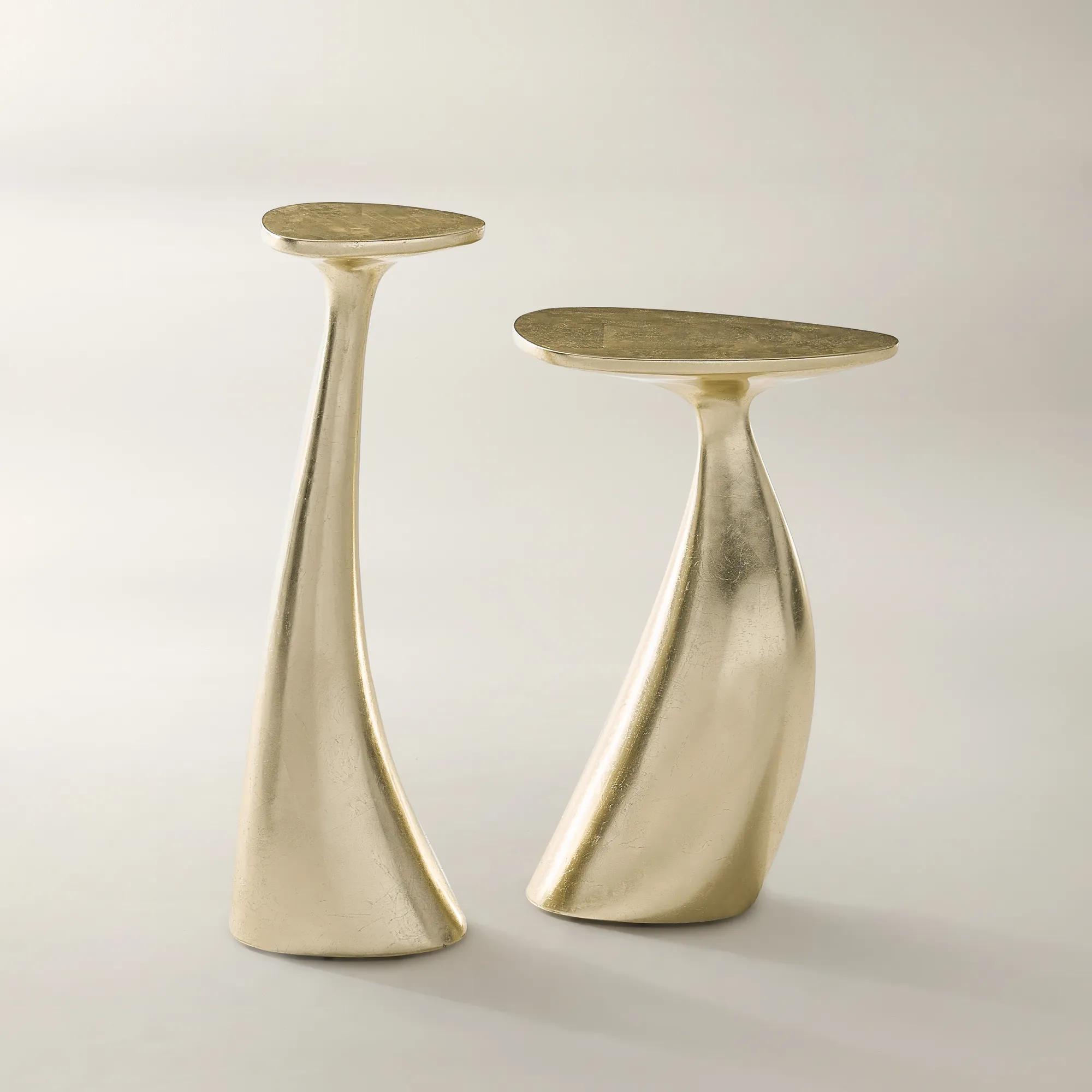
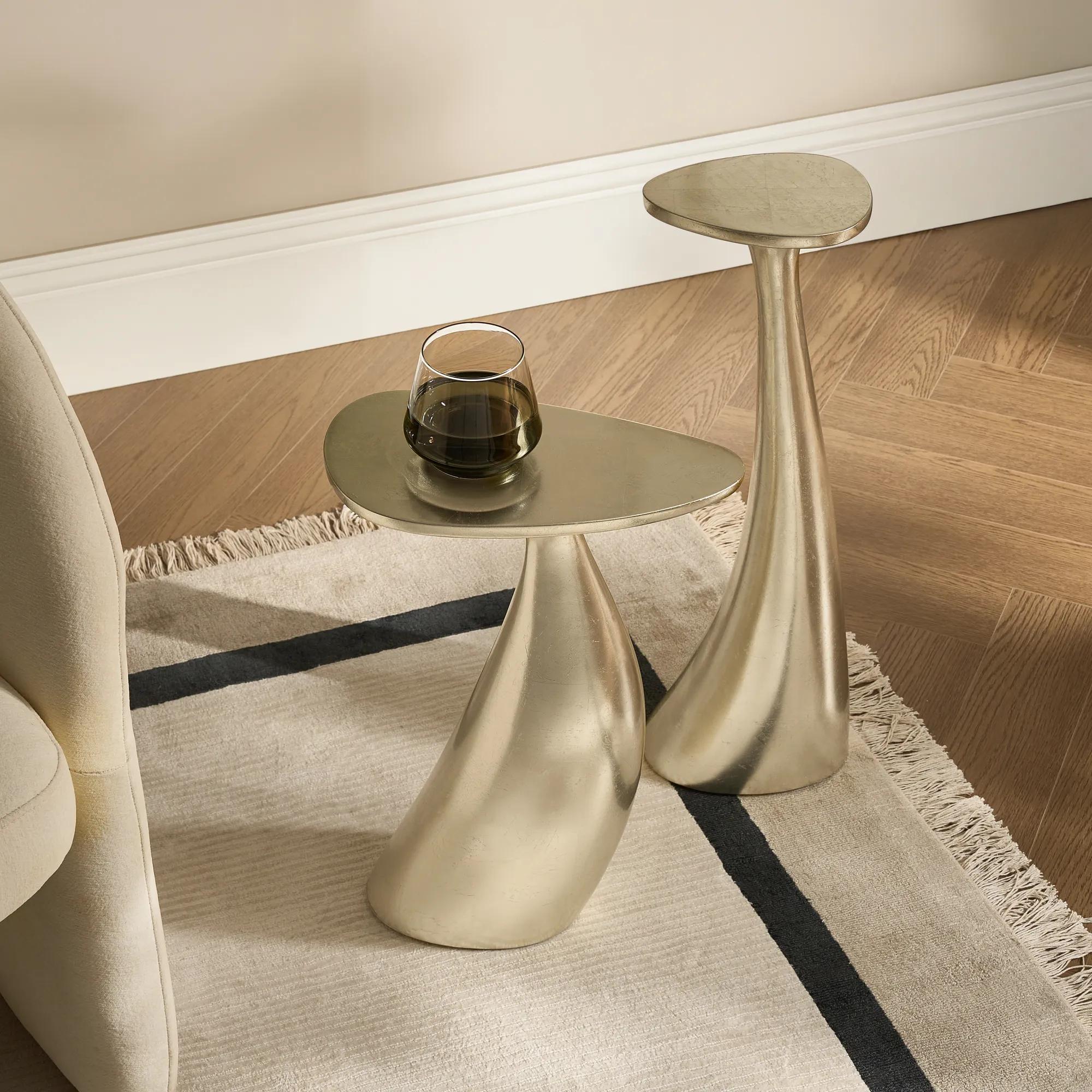
Molten Modern treats metal as sculpture, reflective and brushed finishes that feel alive.
-
Shine codes define the mood of reflection: Polished Accents, High Gloss Society, Opulent Opalite, In Soft Focus.
Stylist Note: A palette becomes luxurious when it has a clear anchor, and a clear reason for every contrast.
The Stylist’s Rules
Color theory is not about more color. It is about better decisions. These are the rules that keep an interior design color palette from feeling busy, flat, or uncertain.
Do this
-
Choose one anchor neutral, then commit. Think Champagne or Mocha Mousse as the base, with Black for structure.
-
Let one color be the “icon.” Citron Green can be that moment of modern electricity, or Deep Olive if you prefer restraint.
-
Repeat undertones, not exact colors. A blush that leans warm will feel cohesive with champagne and brushed gold, even across different materials.
-
Use shine like jewelry. Place it where you want the eye to pause: a lacquered surface, a polished metal accent, an opalite glow.
-
Balance organic and graphic. A soft curve looks sharper beside a linear frame, a bold artwork, or a clean-lined console.
Avoid that
-
Avoid mixing warm and cool whites without a bridge. If you love both, use oatmeal, champagne, or soft blush as the mediator.
-
Avoid matching everything. A perfect match can read like a set, not a story. Aim for harmony, not duplication.
-
Avoid making the darkest color too small. Black needs scale to feel intentional, even if it is just a substantial frame, base, or lighting detail.
-
Avoid scattering your accent color. Accent colors look editorial when they appear in fewer, more meaningful placements.
Did you know? Undertone is why a “neutral” can look creamy in one room and slightly green in another. Light reveals what paint chips hide.
The Room Formula
In this phase, the room becomes complete. Think layered textiles, dimensional materials, lighting that adds mood, and art that behaves like color itself. Use this formula to build a cohesive interior design color palette across the home.
Living Room: Verdant Balance, with Polished Accents
Start with an anchor that feels tailored: Champagne upholstery, Mocha Mousse wood tones, or an oatmeal-toned rug that reads calm underfoot. Then bring in Verdant Balance through layered greens, from Deep Olive to softer moss.
Add shine with restraint. This is Polished Accents territory: sculptural metals and soft reflective finishes that add depth without turning the room into a mirror.
The look, in practice
-
Anchor: champagne or oatmeal seating, sculptural and generous
-
Contrast: black frames, black bases, or a graphic coffee table profile
-
Color: deep olive with a citron highlight, used once or twice
-
Glow: brushed gold, polished metal, or a reflective tray to catch light
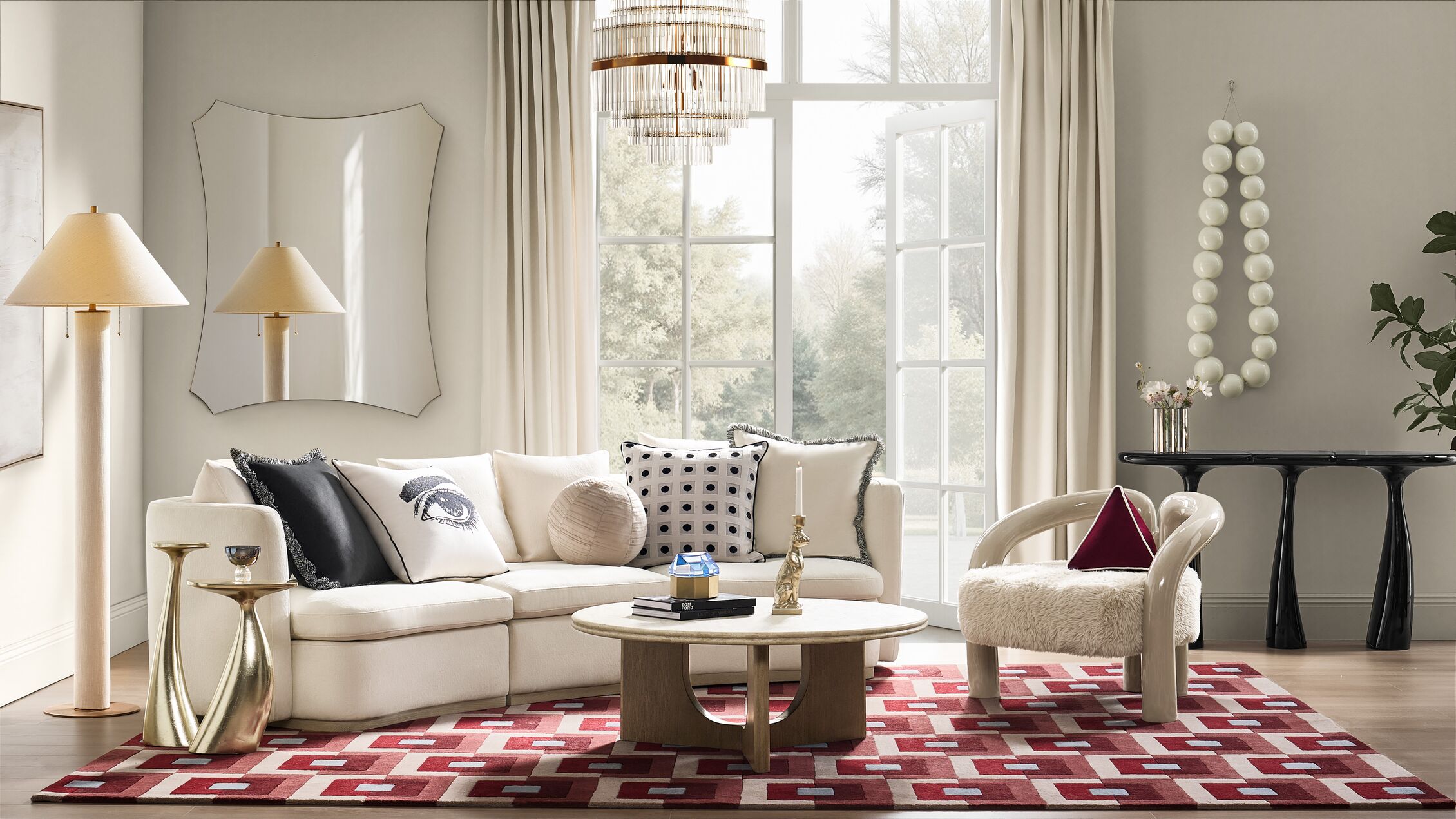
Color Theory turns palette into a statement through sculptural form and elevated finish.
Stylist Note: In a living room, green reads most luxurious when it appears in at least two textures, for example velvet plus ceramic, or textile plus glass.
Dining Room: High Gloss Society, with Modern Rouge
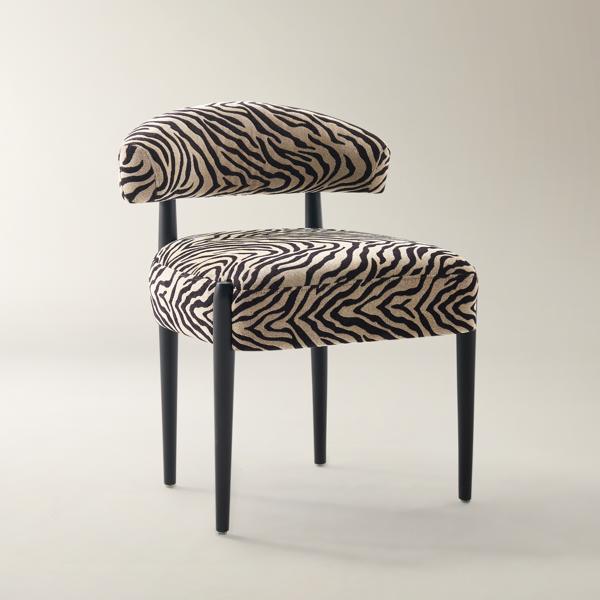
Dining is where graphic clarity belongs. A lacquer finish makes the space feel crisp, especially when paired with clean silhouettes. This is High Gloss Society, where shine feels confident and contemporary.
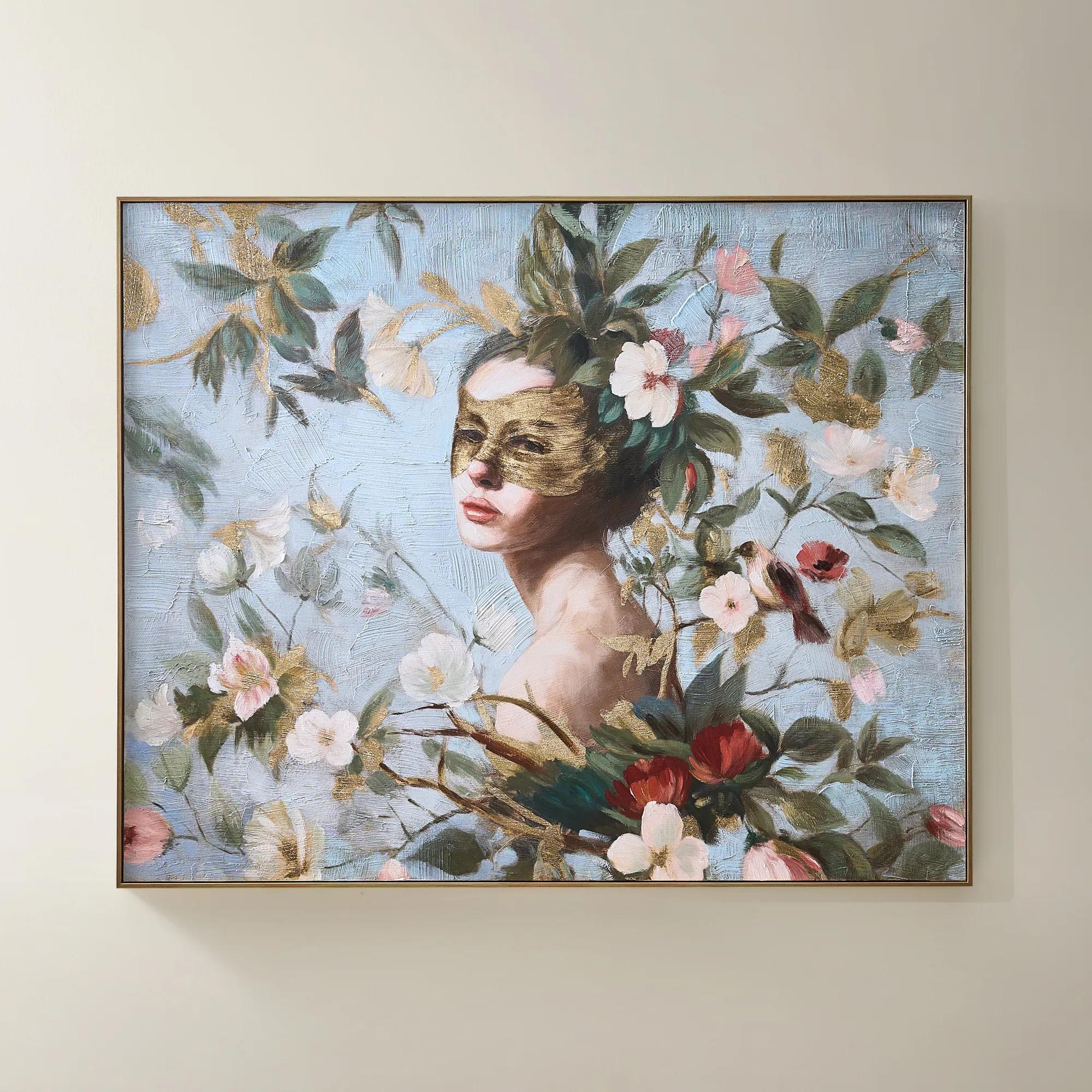
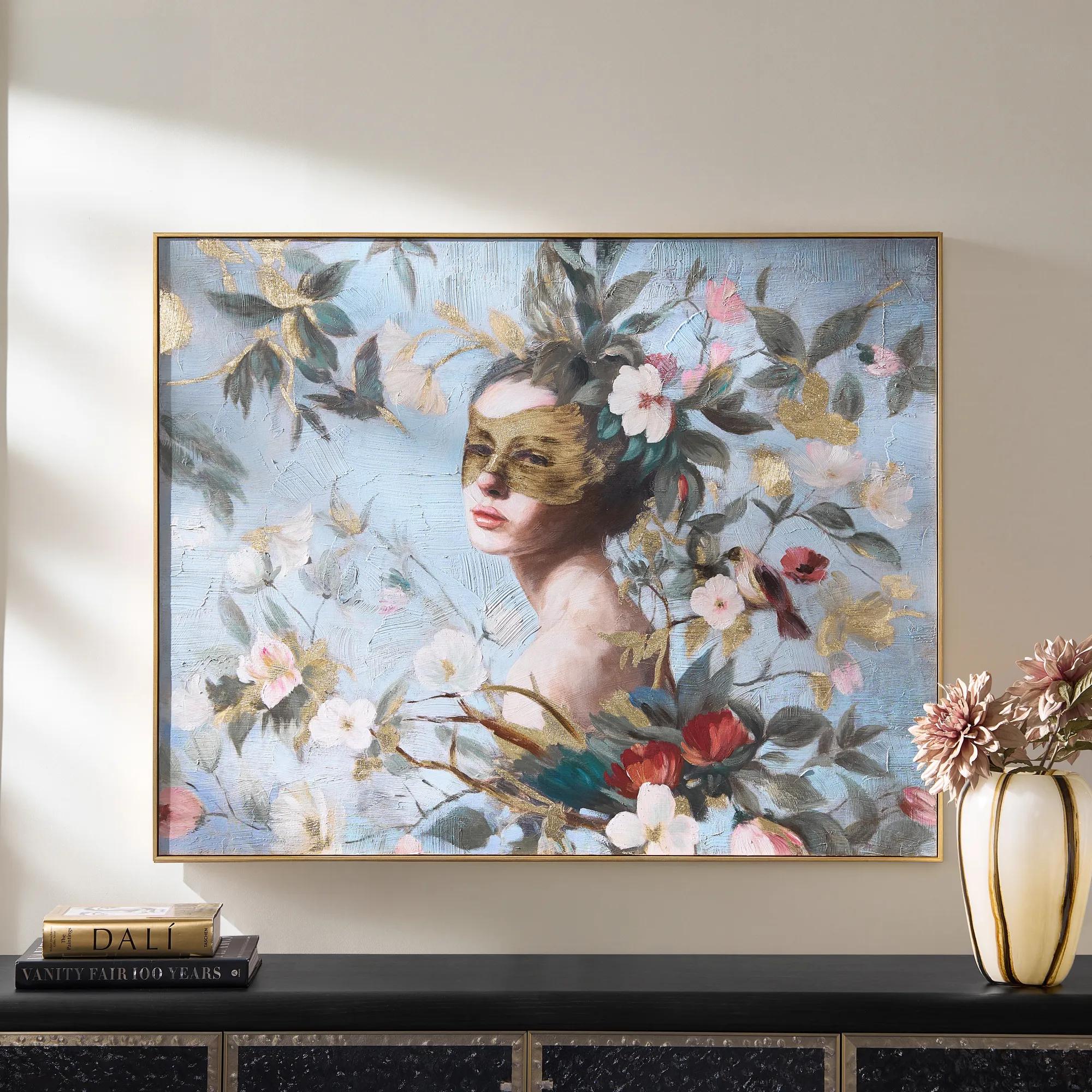
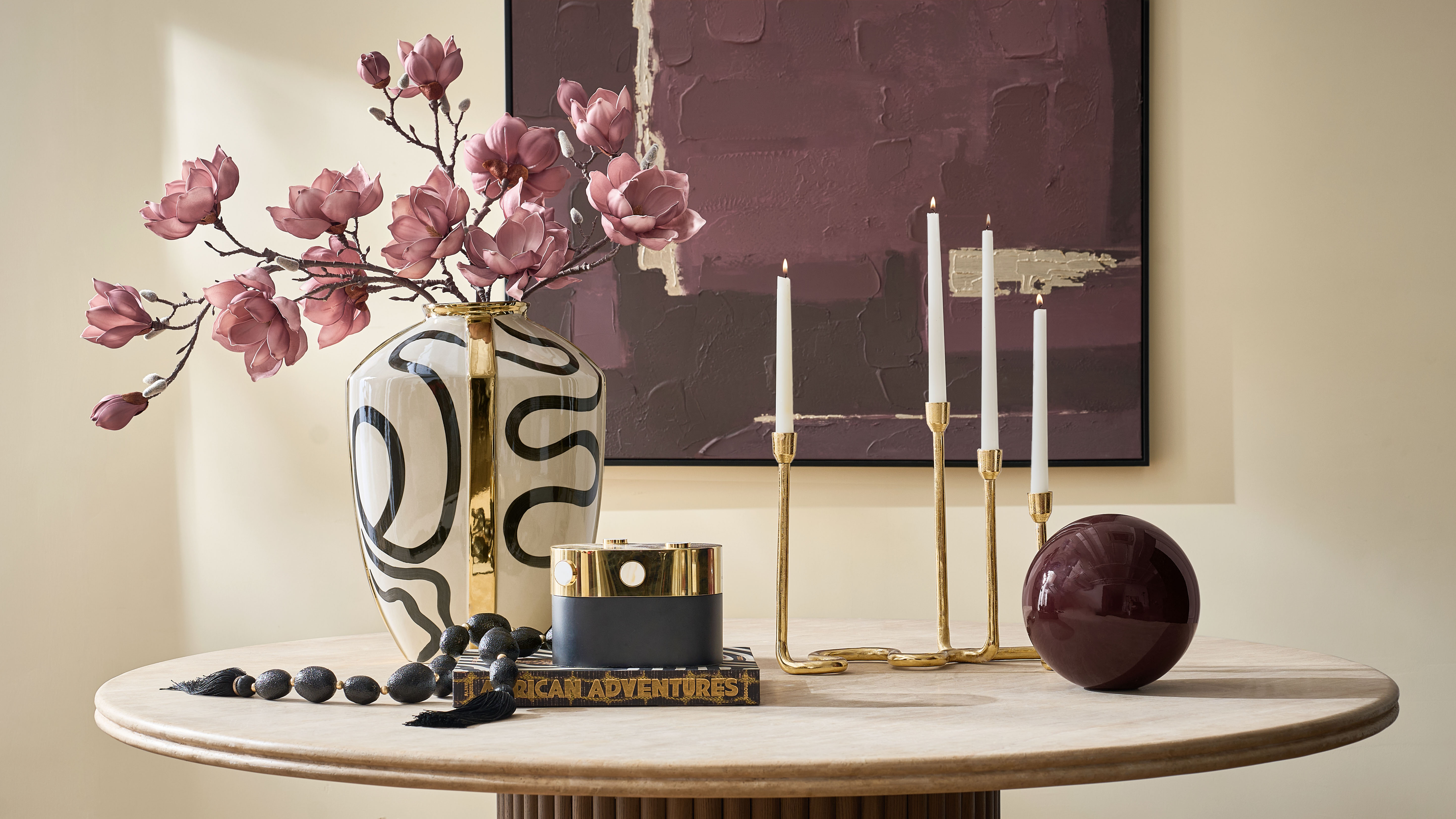
Bring in Modern Rouge as drama with discipline: a deep red artwork, an oxblood accessory, or a single upholstered moment. Keep the rest controlled so the color feels like a choice, not a theme.
The look, in practice
-
Anchor: black and champagne contrast, tailored and architectural
-
Shine: lacquered surfaces, reflective lighting, polished hardware
-
Color: modern rouge in one focal area, then echoed subtly in art or glass
-
Texture: a soft textile runner or velvet chair backs to temper the gloss
Bedroom: Refined Rosé, In Soft Focus
The bedroom is where softness should still feel designed. Refined Rosé proves blush can be confident when paired with sculptural shapes and graphic lines. Think mocha rose tones against champagne, or blush with black-framed contrast.
Finish matters here more than anywhere. In Soft Focus and Opulent Opalite create calm through diffusion: frosted glass, milky iridescent surfaces, lighting that glows gently.
The look, in practice
-
Anchor: mocha mousse, champagne, or oatmeal bedding layers
-
Color: mocha rose, blush, or soft coral in textiles and art
-
Glow: frosted or opalite glass lamps, luminous and quiet
-
Structure: black linework in frames, nightstands, or hardware
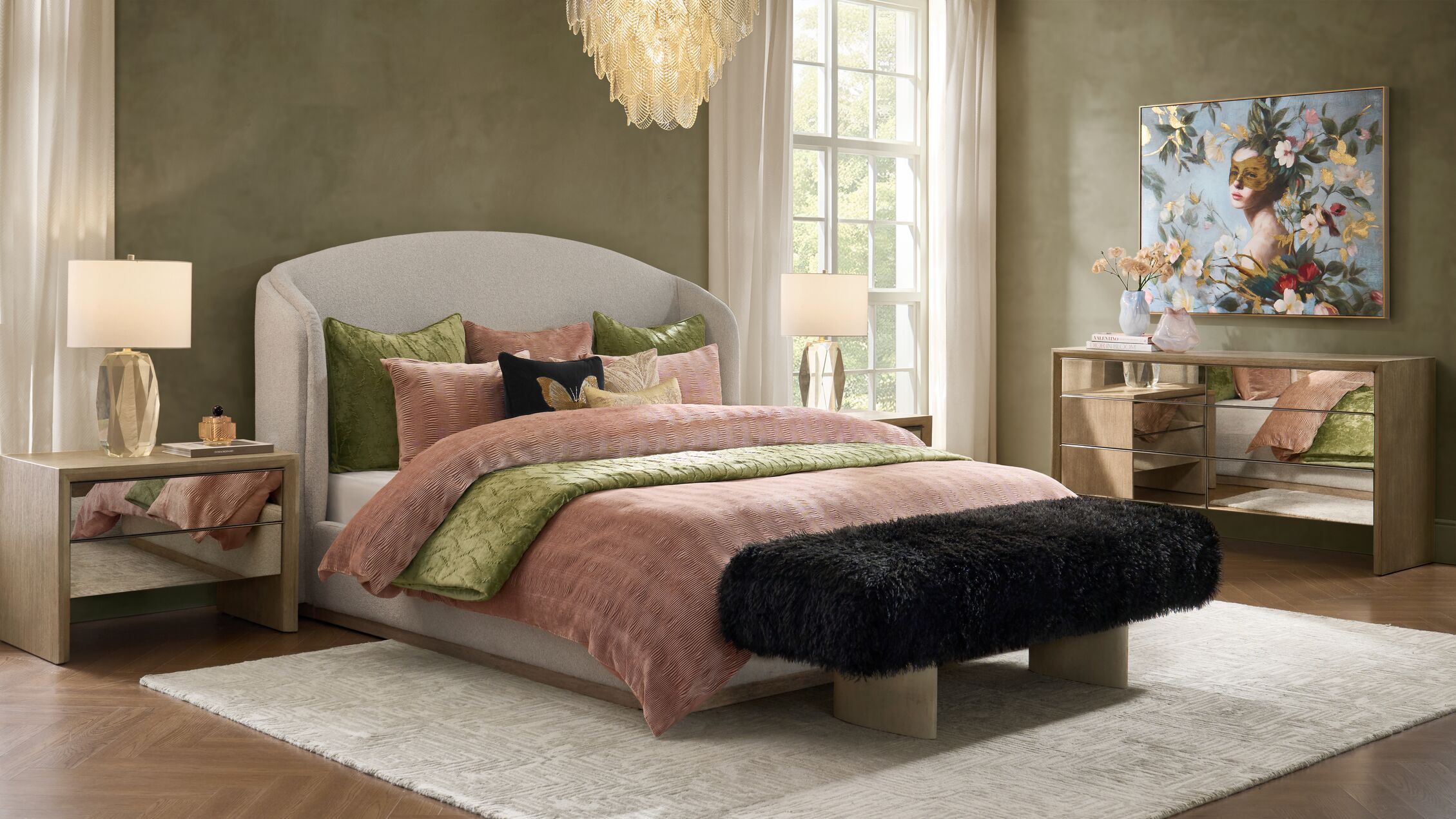
The Soft Bloom Bedroom
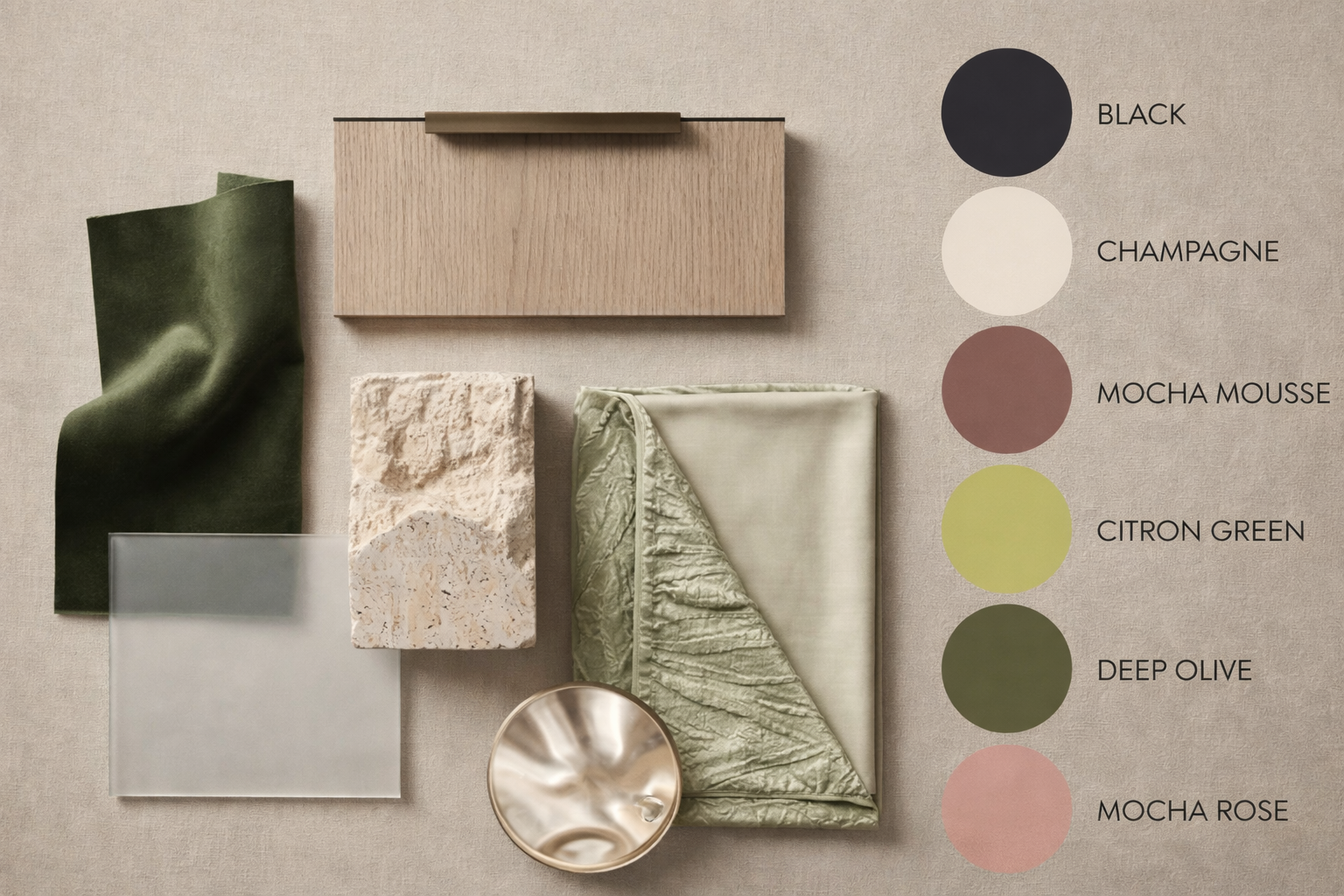
Color story: grounded neutrals, olive depth, and a citron highlight.
Did you know? Frosted glass does not just soften light, it softens color. The same shade can feel calmer when it is seen through a diffused lens.
The Edit
A curated home reads like an edit. Not everything speaks at once. Each piece plays a role, and together they create a room that feels intentional, expressive, and finished. Here is a selective edit, designed to carry SS26 Color Theory through layering.
The Anchor Sofa (Champagne or Oatmeal)
A neutral that sets the temperature of the room. Choose a sculptural silhouette for Sculptural Softness, then layer color through art and accessories.
-
A Lacquered Console or Credenza: This is your High Gloss Society foundation. Lacquer brings graphic clarity and modern glamour, especially when paired with black accents.
-
Velvet Accent Seating in Deep Olive: Velvet deepens color and adds intimacy. Deep olive delivers Verdant Balance with a sense of depth and restraint.
-
A Single Citron Accent: A pillow, a small object, a glass piece. Sunlit Citrus is most powerful when it is used like punctuation, not a paragraph.
-
Oxblood or Modern Rouge Artwork: Let the red live on the wall, not scattered throughout the room. It becomes controlled drama, and it elevates everything around it.
-
Opalite Glass Vessel: For Opulent Opalite, look for milky, iridescent glass that glows with softness and depth. It reads romantic, but still modern.
-
Frosted Glass Lighting: In Soft Focus creates quiet sophistication. Diffused light makes the room feel calm and luminous, especially in the bedroom.
-
Polished Metal Sculpture or Tray: This is Polished Accents in its best form: radiant reflections, restrained elegance, and a finishing touch that feels deliberate.
-
Black Framing: Frames, bases, lamp details, or a substantial mirror. Black gives structure, and it keeps blush, champagne, and olive from drifting too sweet.
-
A Hyper-Textural Layer: A bouclé pillow, a sculpted ceramic, a dimensional throw. Texture is what makes neutrals feel expensive.
If you want the room to feel more Deco Pop, lean into bolder geometry, higher contrast, and a slightly stronger shine story. If you want Mod Naturalist, keep the palette grounded, then add polish through metal, glass, and sculptural shapes.
Frequently Asked Questions
How do I choose an interior design color palette that feels modern and luxurious?
Start with one anchor neutral, then build around undertones. Add one statement color and one shine story, such as polished metal or lacquer, so the palette feels composed and intentional.
What is the difference between warm and cool undertones in home decor?
Warm undertones lean toward yellow, red, or creamy notes. Cool undertones lean toward blue, green, or crisp grey. Undertones determine whether your neutrals feel harmonious, especially across paint, textiles, and wood.
How can I use green in a modern living room without it feeling traditional?
Choose greens with depth, like olive, then pair them with clean-lined silhouettes and polished finishes. Verdant Balance reads modern when it is layered across materials, velvet, ceramic, and glass.
Where should I use high gloss finishes in an interior?
High gloss works best where you want graphic clarity, such as a dining console, a bar moment, or a statement table. Balance it with softer textures so the room still feels livable.
What colors pair well with champagne and mocha neutrals?
Champagne and mocha pair beautifully with olive greens, blush tones, airy blues, and deep reds. Citron can work as an accent when used sparingly.
How do I create a cohesive color palette across living, dining, and bedroom spaces?
Repeat the same undertone family across rooms, then assign each room a featured story, such as Verdant Balance in the living room, High Gloss Society in dining, and Refined Rosé in the bedroom.
A strong interior design color palette does not announce itself. It reveals itself over time, through undertones that align, finishes that glow, and contrasts that feel curated rather than accidental. This is where the story expands, and where your home becomes the most personal kind of editorial.
Discover the finishing touches.