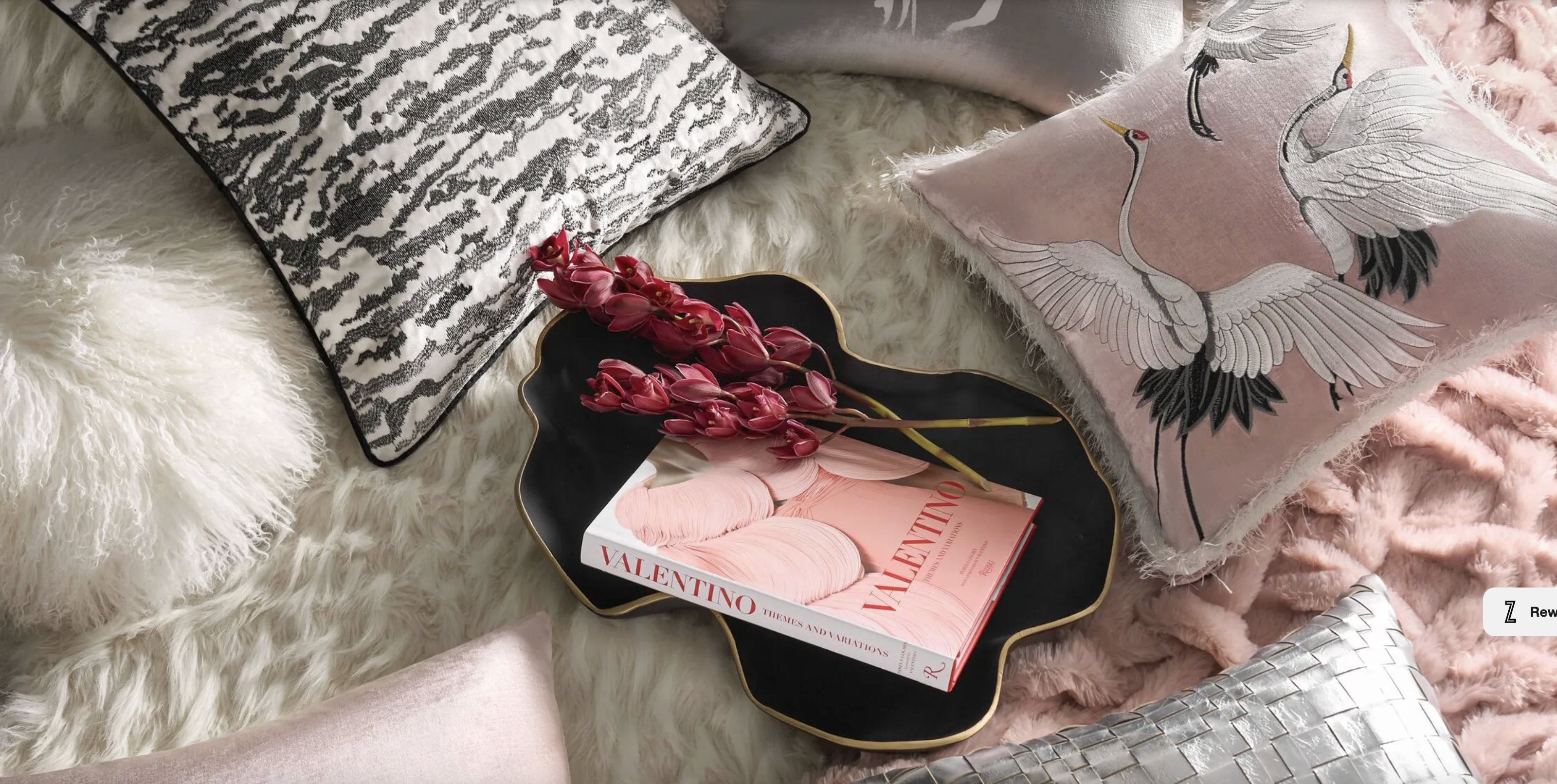
Plain linen, fig-colored glass, a sweep of smoked plum. Three ways to dress the table you already own.
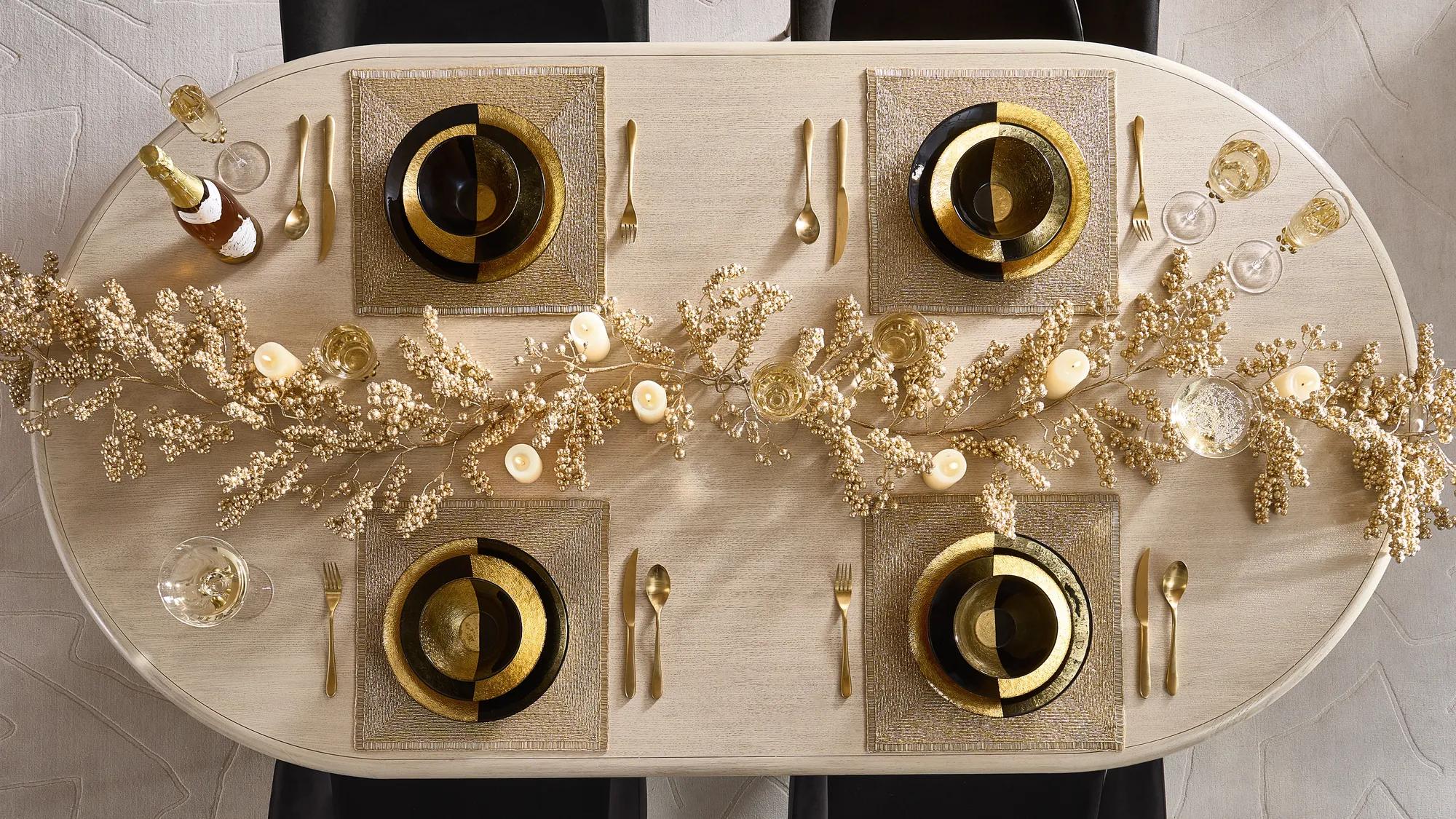
Gold does not always need more gold. Against pale linen, a white-and-gold plate can be the dressiest thing on the table. Add a glass with a rounded fig-colored base, and the setting feels more playful. Lay smoked plum down the center, and the same dinnerware has a decidedly more theatrical backdrop.
These dinner party table setting ideas begin with that one plate. For this Z Entertains edit, we propose three ways to use the same dinnerware, drawing on the richer colors of our Fall/Winter 2026 collection. A small celebration, a Friday supper, a dinner that runs late: the occasion can change without a new set of everything.
The pieces worth repeating
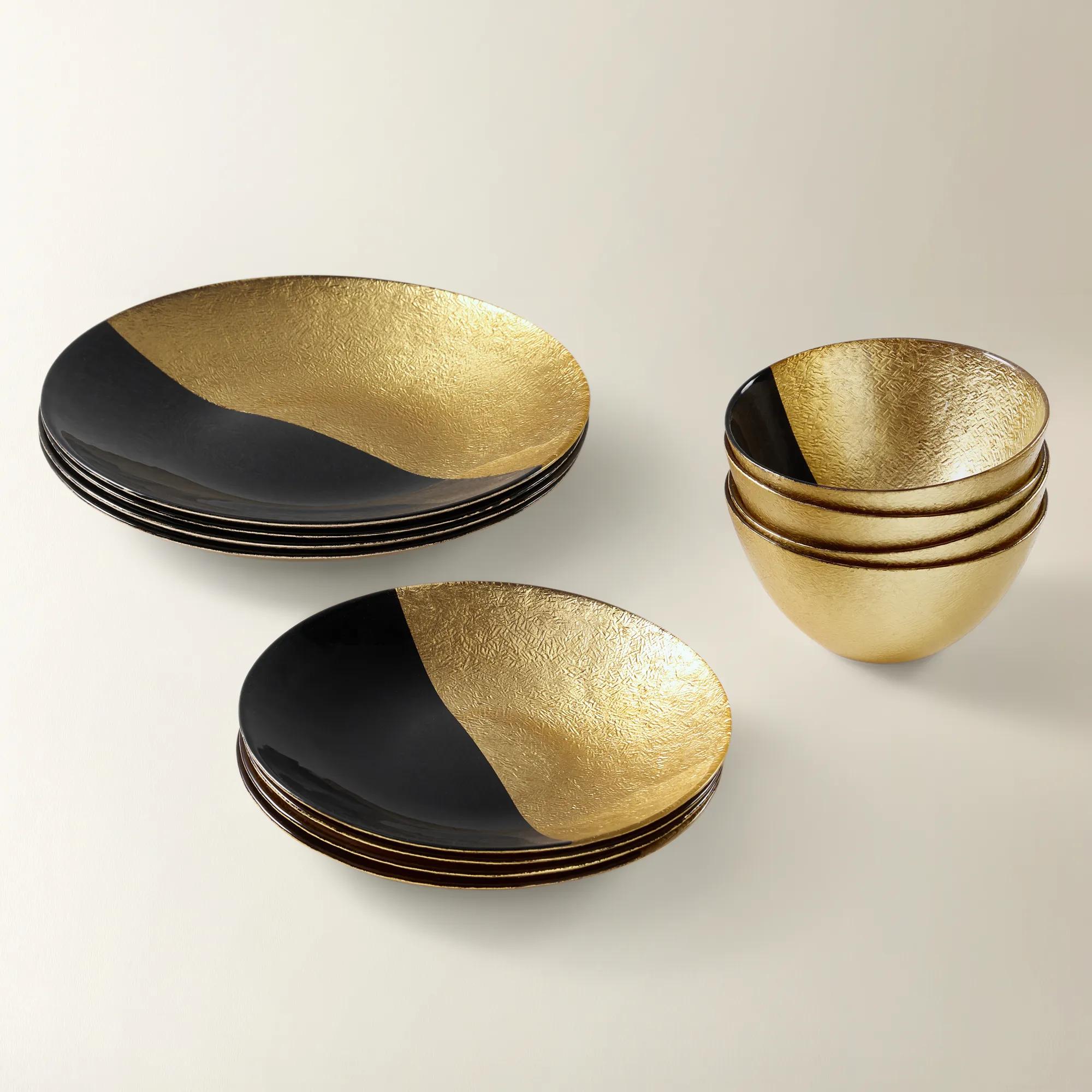
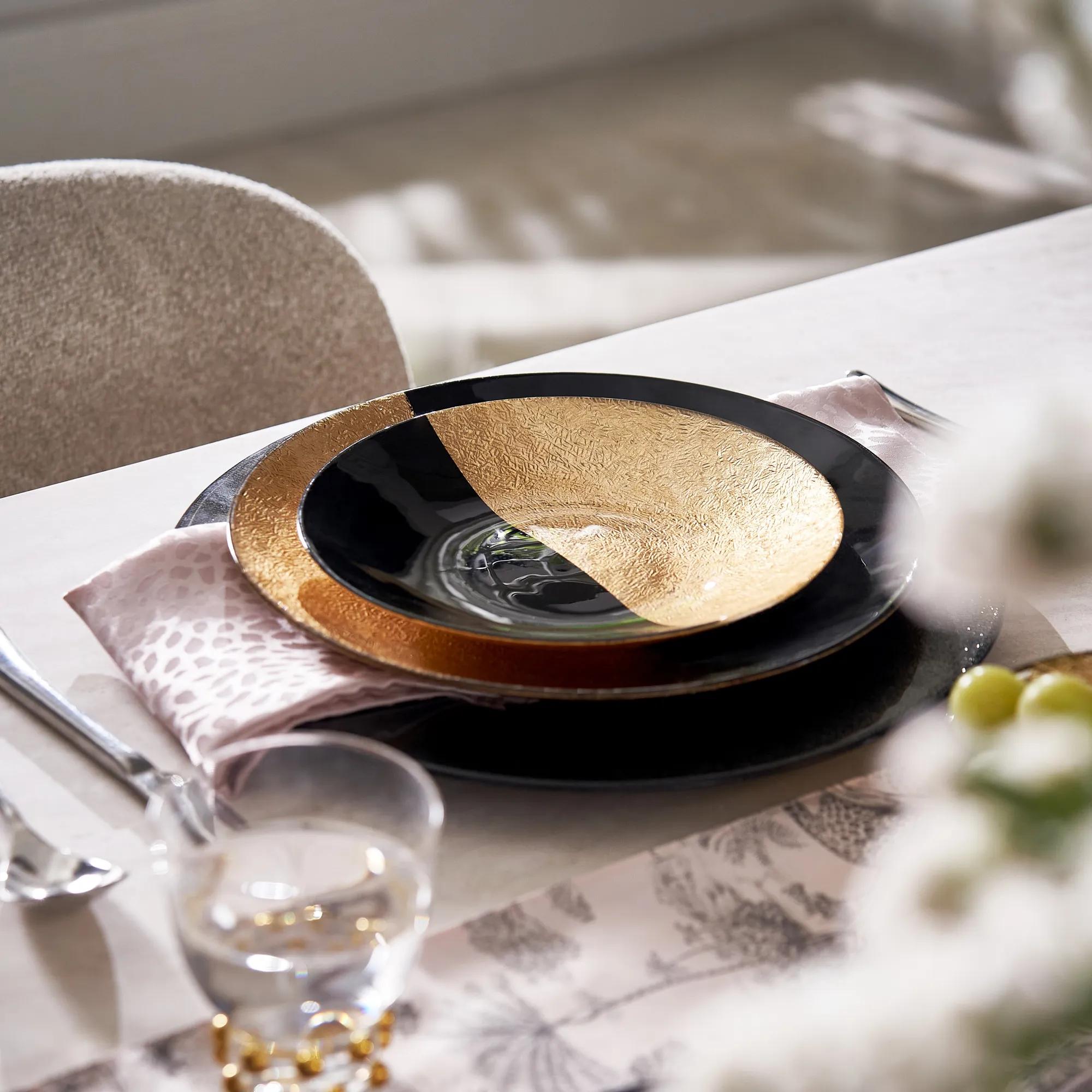
Start with the Gemini White and Gold Leaf Dinnerware. A broad, off-center sweep of gold crosses the white glass; this is more expressive than a discreet gilt rim. Give it plain companions and let the design show.
Bring out the flatware you like using, a set of white cloth napkins, and clear water glasses. Those pieces stay throughout all three looks. Add a salad plate or soup bowl for the course you are serving, rather than stacking dishes just for height.
Before choosing flowers, set one place and pull up a chair. Include the placemat or surface protection your table needs. Then put the serving platter in the middle. The space that remains is your decorating space.
Look One: White and gold, without the formality
For a small celebration that does not need a banquet table.
Run plain pale linen down the center and set the plates along either side. The quiet weave gives the gold something to stand out against. Keep the additional stemware clear, and resist the urge to add an ornate charger beneath an already decorative plate.
Silver-colored flatware belongs here, too. There is no need to echo the gold in every knife, napkin ring, and vase. A little difference keeps the arrangement from looking like a display assembled all at once.
Fold the white napkins lengthwise and place them to the left of the forks. That leaves the plates visible and gives each setting a simple vertical line. For a birthday or an intimate celebration, add a handwritten place card above the plate. It is the personal detail this restrained palette can use.
For flowers, choose a few white blooms with green leaves in a low clear vase. Let the stems take a slightly loose shape, rather than building a tight dome. Check the view while seated: the flowers should sit below the conversation.
The appeal is the contrast between the dressed-up dinnerware and everything that feels familiar around it. You can bring the bread to the table in the basket you always use.
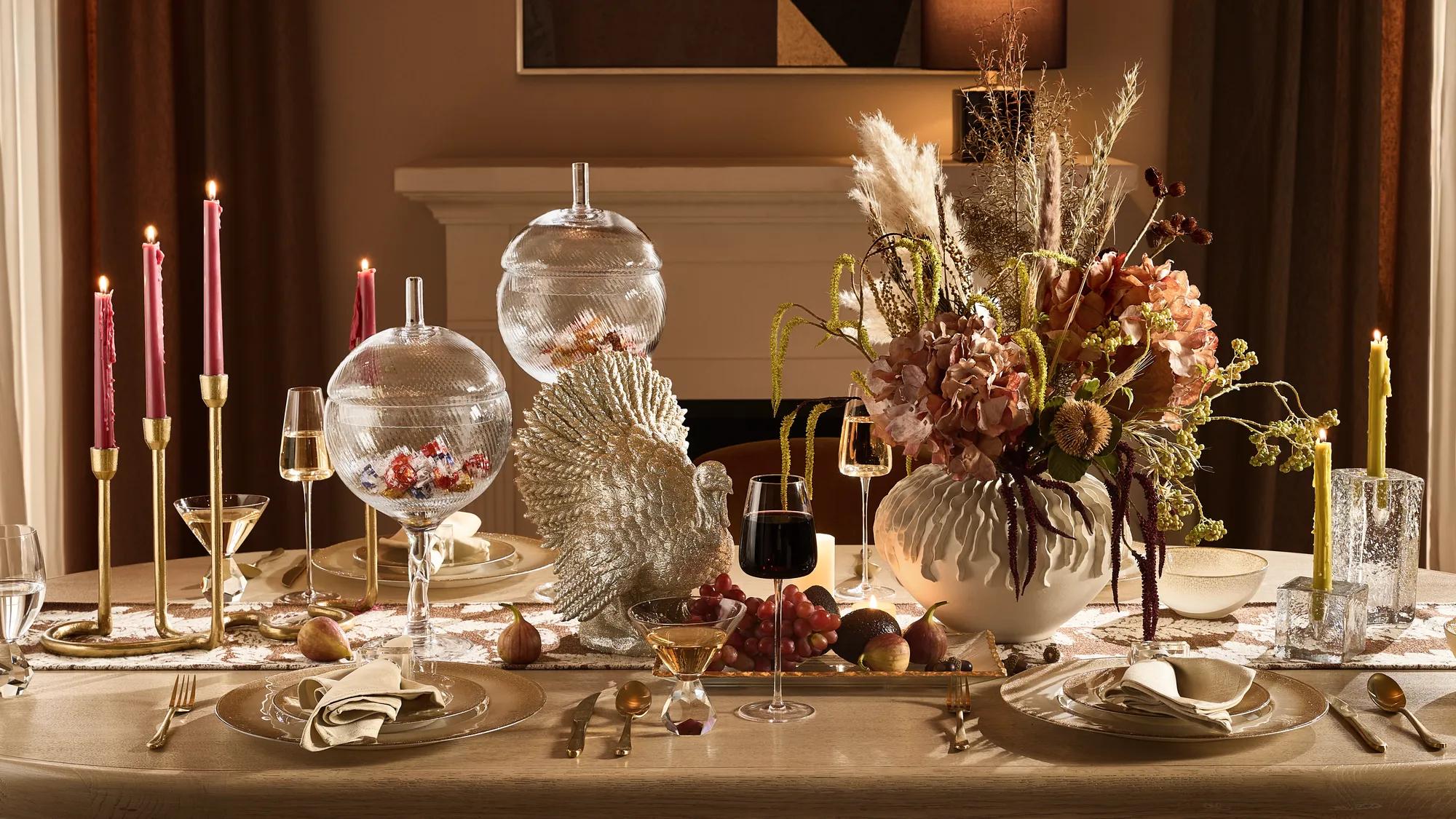
Look Two: Fig, with a little wit
For a Friday supper that starts with a welcome drink.
Take away the pale runner and reveal more of the table, keeping any protective placemats you need. Without that central strip of linen, the new glassware gets the attention.
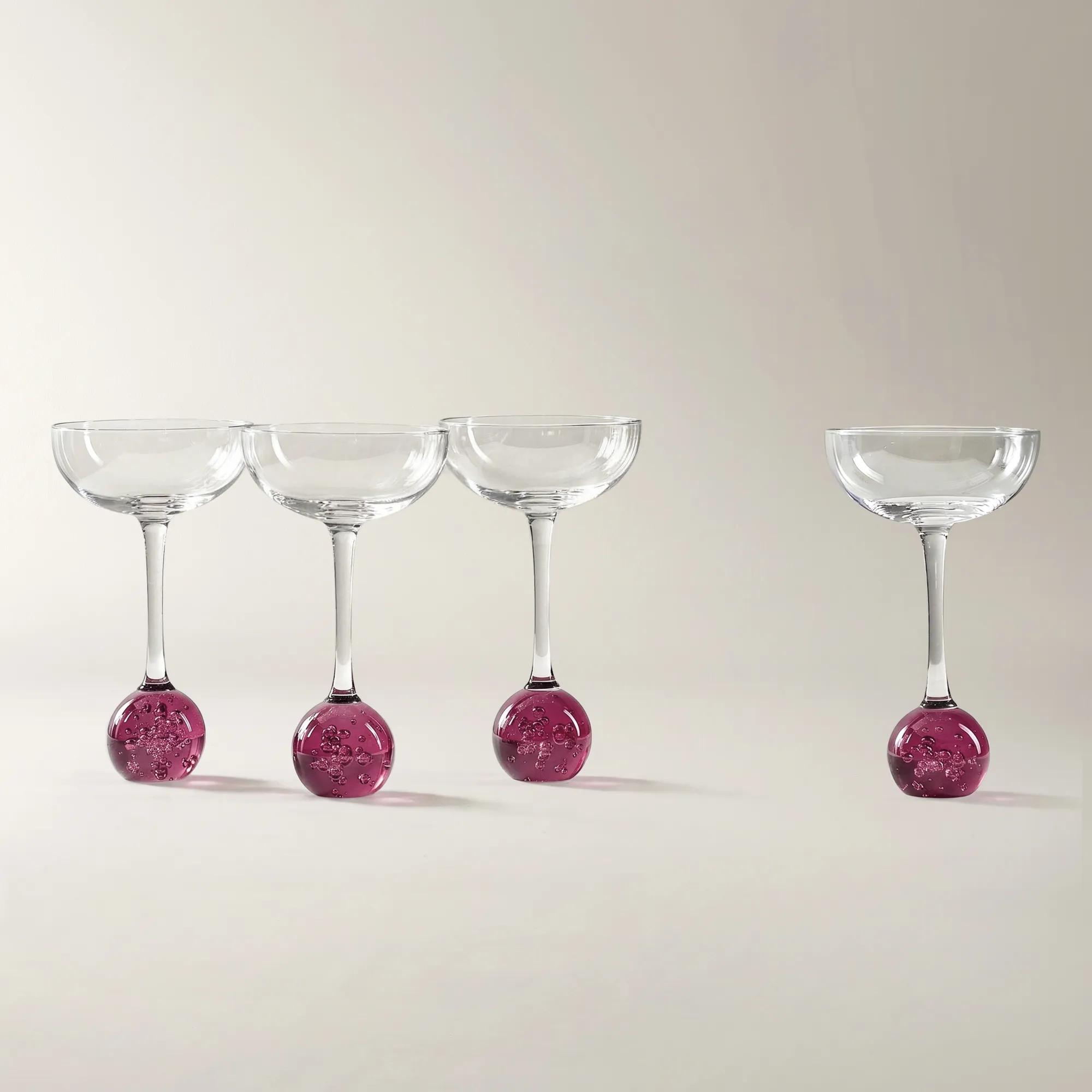
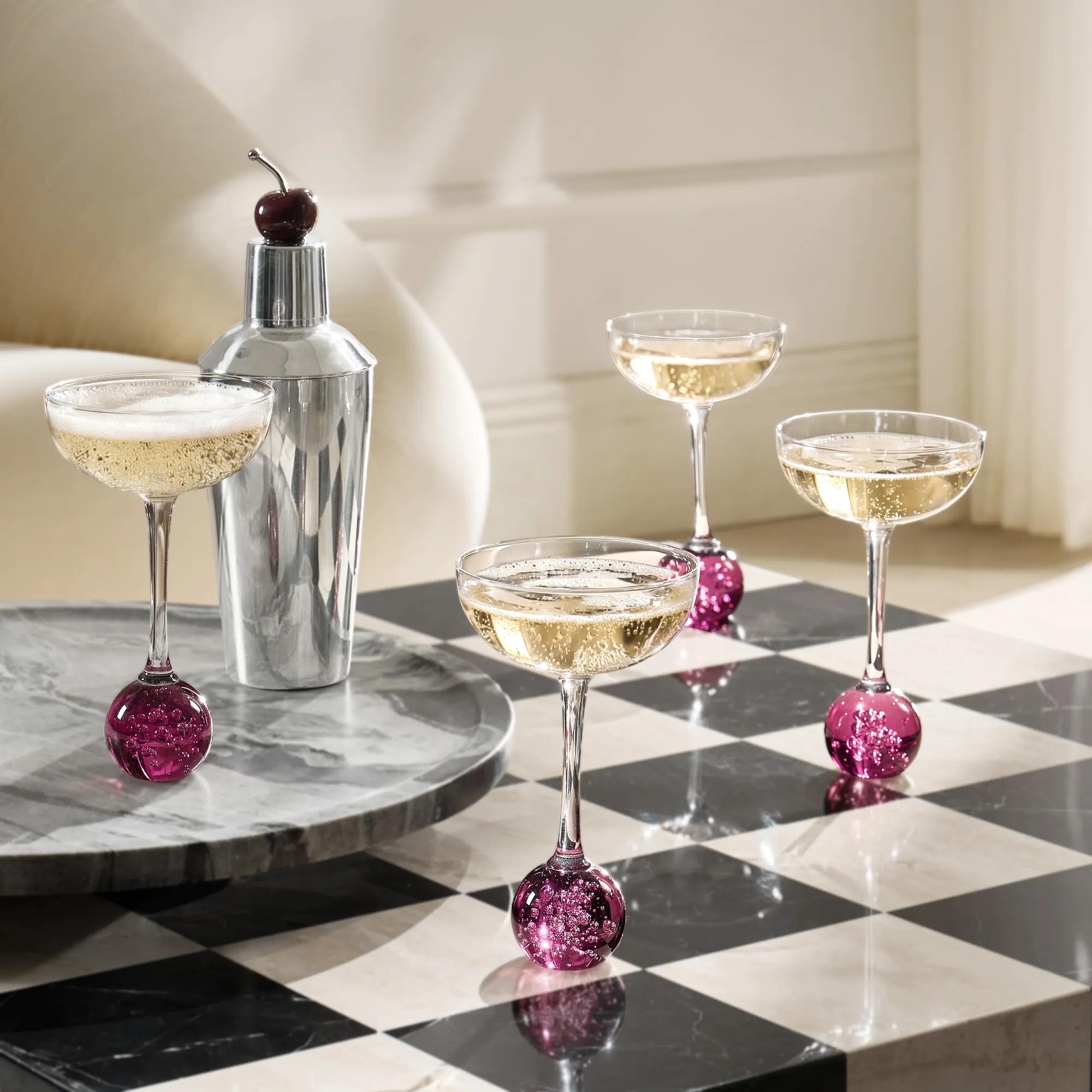
The Dottie Fig Martini Glasses have clear bowls above rounded, fig-colored bauble bases. The color sits low on the table instead of filling the whole glass. Repeated at each place, those small rounded forms are a playful counterpoint to the gold on the plates.
Serve a chilled welcome drink in Dottie, with a clear water glass alongside. A nonalcoholic drink deserves the same thoughtful glassware. Clear the welcome glasses when they are finished, before bringing dinner to the table.
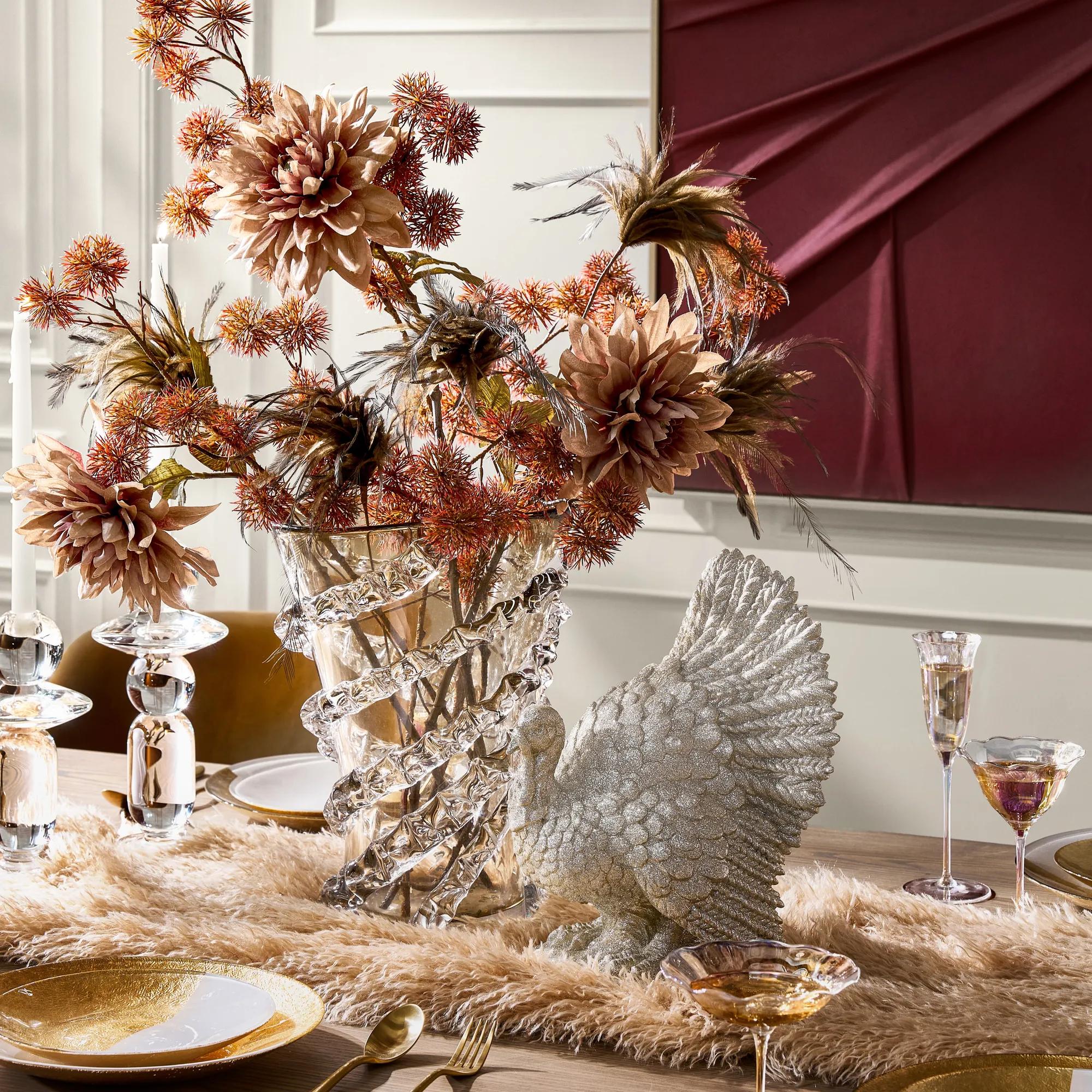
Exchange the white flowers in the same low vase for burgundy stems. Leave the napkins white, this time folded simply beside the plates. Putting the deeper color in the flowers and glass gives the arrangement a connection without turning every object plum.
This is the version for a generous salad and a main course passed around. Leave a gap for the platter and keep the vase easy to move. Once the food arrives, the table has another source of color; it does not need every inch decorated first.
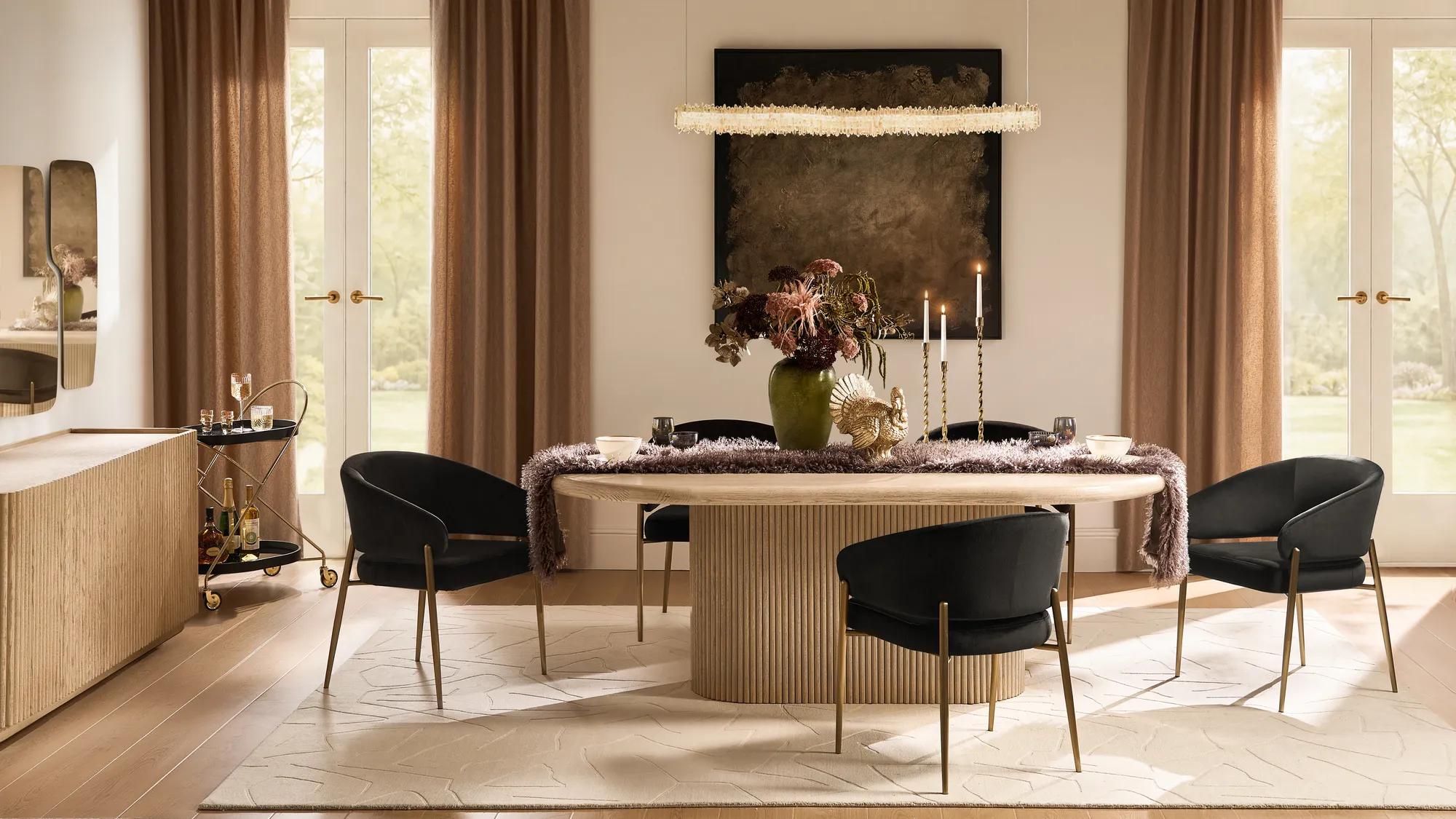
Look Three: Smoked plum, after dark
For the evening when one extravagant detail is exactly right.
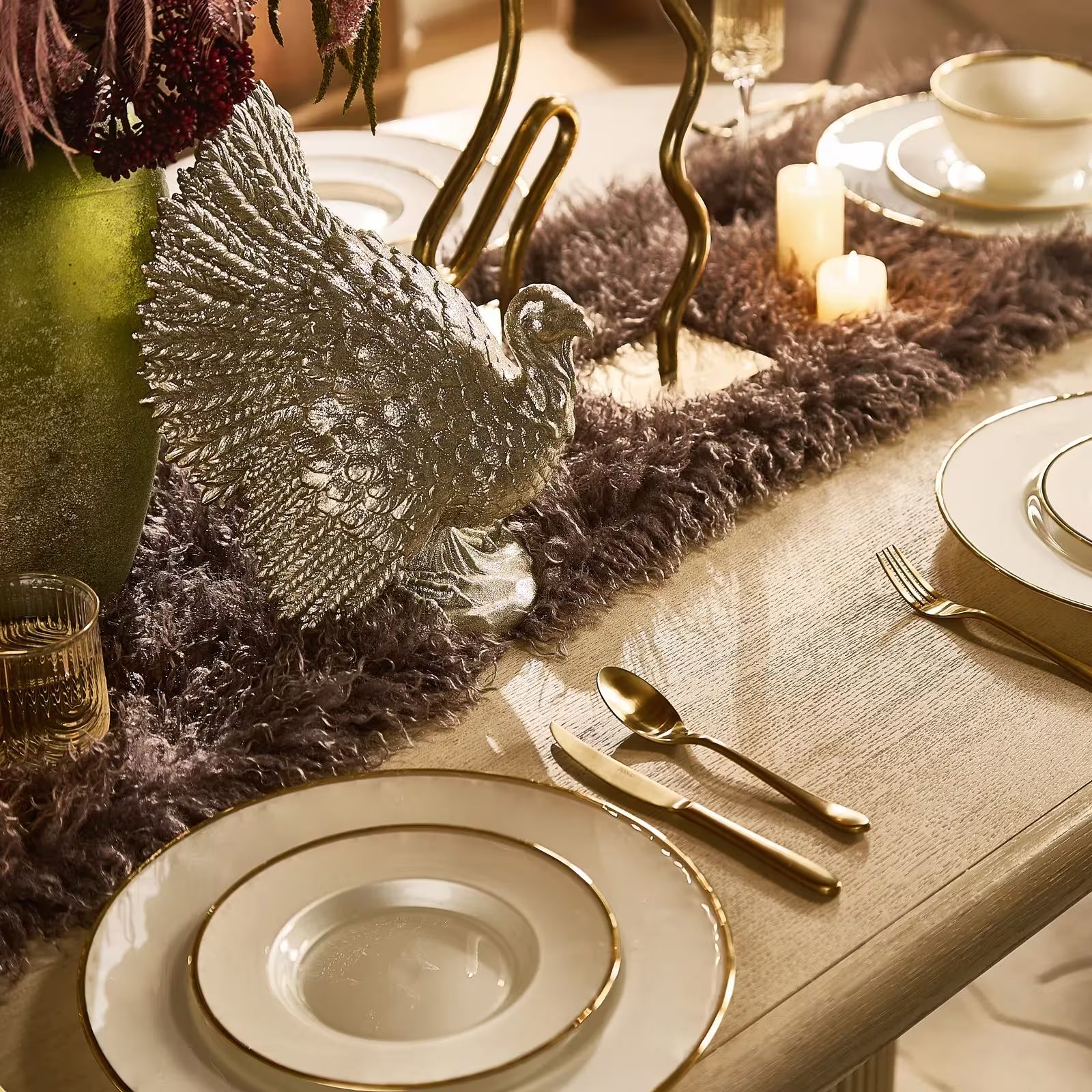
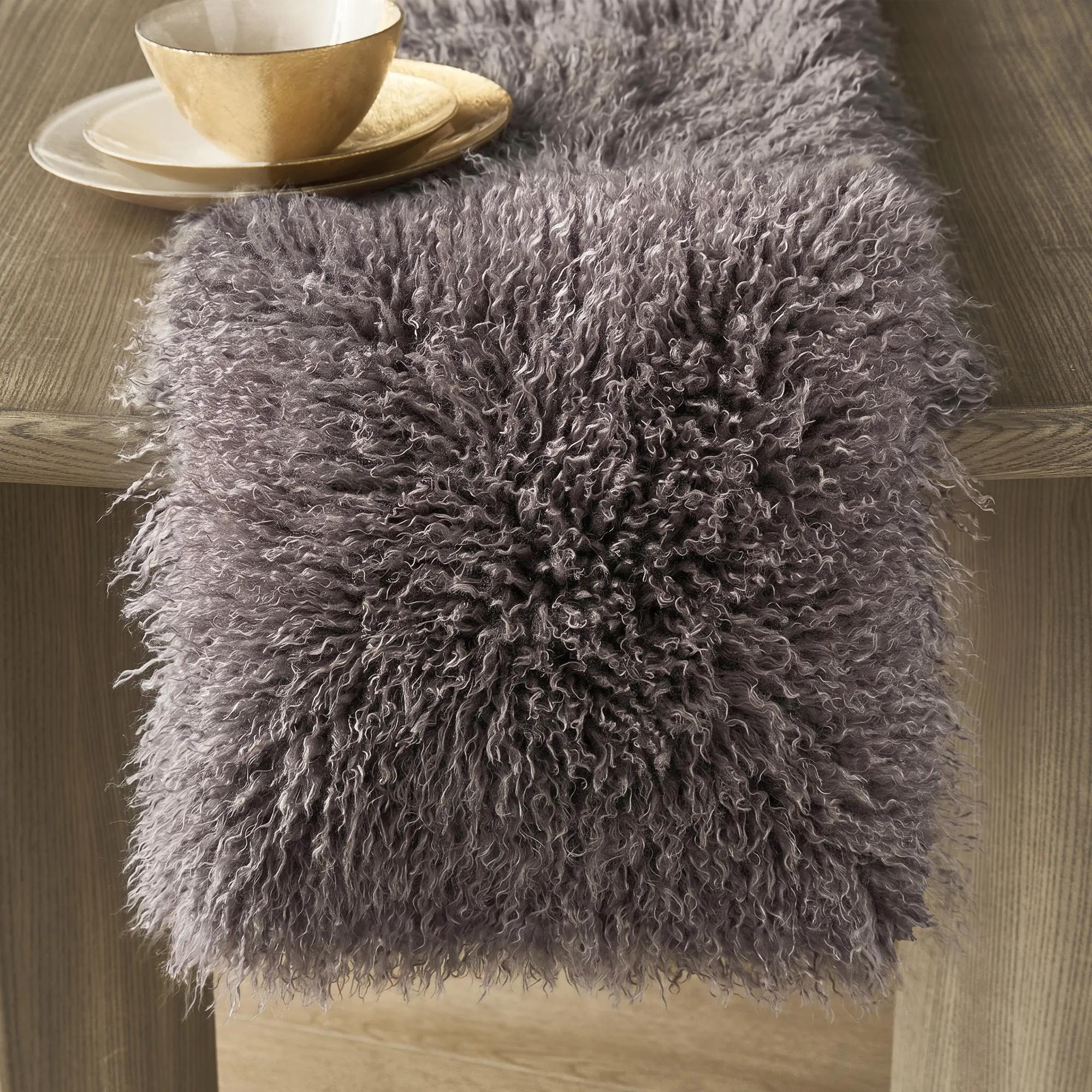
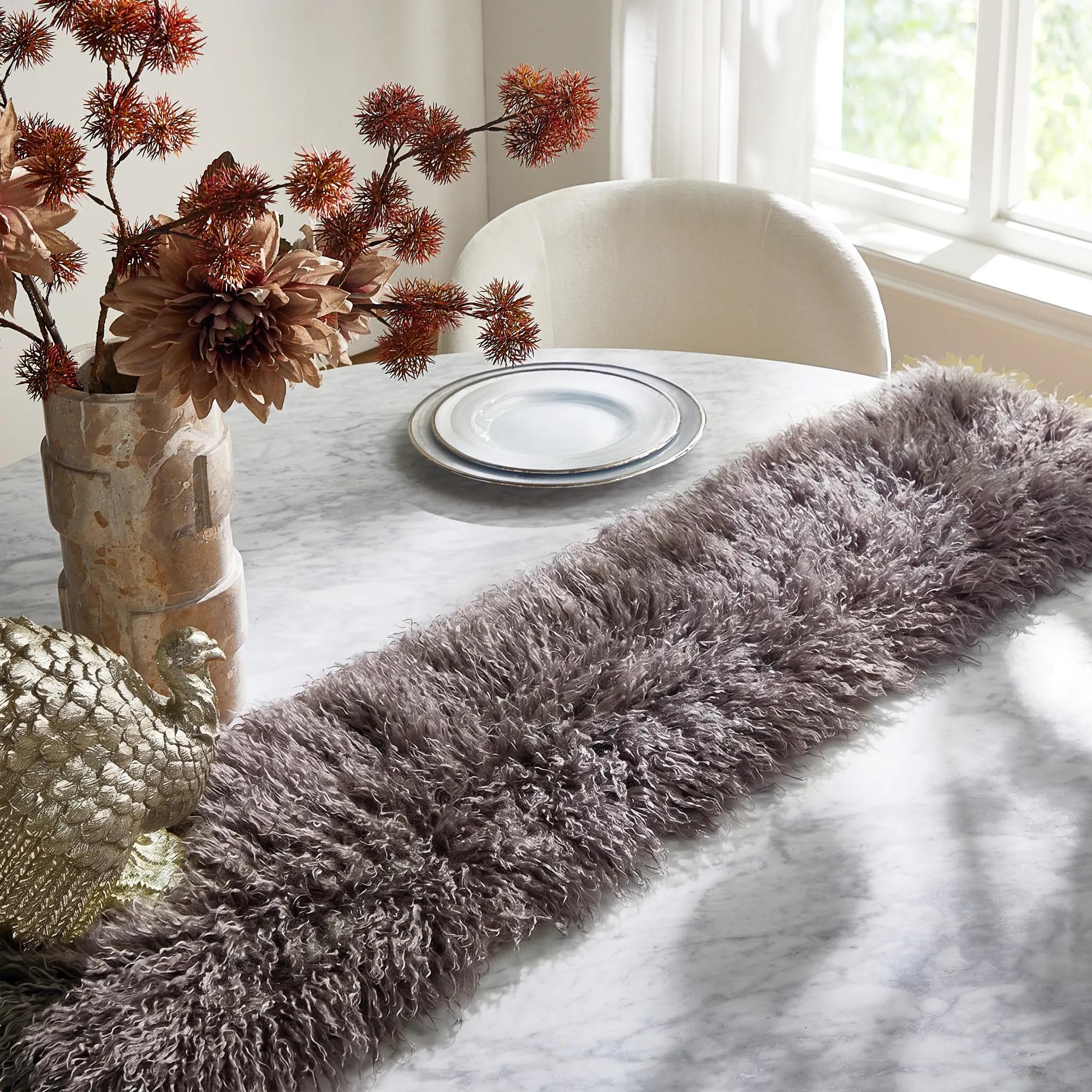
Let the runner take the place of flowers. The Micah Smoked Plum Faux Mongolian Fur Runner brings a plush, unexpected surface to the center of the table. Against it, the smooth white-and-gold plates feel sharply defined. This is a setting built around a difference in texture, not another pattern.
Return to clear stemware and keep the white napkins in a plain rectangular fold. Set plates and glasses on the firm, uncovered tabletop beside the runner, with suitable surface protection. Leave the center free of additional ornaments; the textile has already supplied the drama.
Plan this version for a meal plated in the kitchen, with dinner brought to each guest rather than serving dishes placed along the runner. It suits a smaller gathering where you can take your time between courses.
Use flameless candles on stable, exposed tabletop for a glow without an open flame beside the textile. Keep hot dishes off the runner. There is no need to add flowers, a second runner, or a scattering of decorative objects. Let this one choice be enough.
Three fall table setting ideas, side by side
The dinnerware, flatware, white napkins, and clear water glasses stay. Here is what changes around them.
| Look | Table layer | Additional glassware | Centerpiece |
|---|---|---|---|
| White and gold | Plain pale linen runner | Clear stemware, only as needed | Low white flowers with green leaves |
| Fig accents | More tabletop visible; protective placemats as needed | Dottie Fig glasses for the welcome drink | The same vase with burgundy flowers |
| Smoked plum | Micah runner, where the dimensions suit the table | Clear stemware, only as needed | The runner itself; flameless lights on exposed tabletop |
Choose the treatment that suits the dinner you are serving. A family-style meal needs space for platters; a plated meal leaves more of the table available for a decorative center. Neither calls for a different dining room.
How to set a table for a dinner party
For a simple place setting, center the dinner plate in front of the chair. Place the fork on the left and the knife on the right, with its blade facing the plate. Add a spoon to the right of the knife when the menu needs one. The water glass goes above the knife; the napkin can sit on the plate or to the left of the fork.
For several courses, arrange the utensils in the order they will be used, working from the outside inward. Bring dessert utensils with dessert to keep the opening arrangement simpler. Only set the pieces your guests will actually use.
Then sit down. Reach for the water glass, open the napkin, and imagine passing a dish to the next person. This brief rehearsal tells you more about the spacing than another photograph from above.
Leave room for the evening to happen
Before guests arrive, give the water jug, bread, and serving dishes a place. A nearby sideboard or counter can hold what does not need to be on the table at once. Keep the centerpiece low enough to see across, and check the room with the lights you will use during dinner.
Dim does not have to mean difficult to see. Leave enough light to enjoy the food and the faces around the table. Move anything that interrupts that view, even when it looked beautiful in the original arrangement.
For a larger seasonal gathering, our Thanksgiving table decor guide offers another starting point for planning the place settings and central arrangement.
A few questions before you set the table
How can I make a simple dinner party table setting feel special?
Make one visible change and repeat it at each place. A colored glass, a different napkin fold, or a handwritten place card can give familiar plates a new setting. Use a vase you already own, and spend your effort on an arrangement that leaves guests room to eat comfortably.
Do I need chargers for an elegant dinner party?
For these looks, no. Let the dinner plate be the first decorative layer, with the placemat or tablecloth your surface requires beneath it. Add a charger only when you like the contrast and have enough room; it does not need to compete with the dinnerware.
How do I adapt these ideas for a small or round table?
Keep the palette and reduce the number of objects. A single low vase can replace a long centerpiece. Use plum napkins instead of a large plum runner, or serve the welcome drinks away from the table before sitting down. Place serving dishes nearby rather than filling the center before the meal begins.
Keep the plates. Change the evening.
The white-and-gold version might be tonight’s small celebration. The fig glasses can come out for friends next Friday. Save the smoked plum for the evening you feel like doing something more theatrical.
Explore our tableware collection for the dinnerware, glassware, or finishing layer your next gathering is missing. Then bring it together with the linen, flatware, and favorite vase you already own.
Set the table for the people coming over, not for the photograph. Leave room for the meal, and time to enjoy it.
.jpg?w=800&h=450)