A design-forward approach to luxury bedding, where fabric, silhouette, and finish shape a bedroom that feels composed, tactile, and deeply lived in.
Late evening light changes a bedroom before anything else does. It softens contrast, pulls shine into focus, and lets texture do the talking. In that quieter hour, luxury bedding is not just a comfort decision, it becomes the visual center of the room.
That is why the question of how to build a layered, polished bed matters now. Bedrooms are working harder than before, as retreat, reset, and design statement at once. The right bedding can make the room feel more intentional without making it feel staged.
A refined bed is rarely about one dramatic piece. It is about proportion, material contrast, and the order in which each layer appears.
In This Story
-
How to build an editorial bed through palette, texture, and finish, not clutter
-
The styling rules that make luxury bedding feel polished instead of precious
-
A room-by-room formula for creating a bed that fits the space, not just the trend
-
A selective bedding edit that balances comfort, structure, and visual depth
The Design Codes of Luxury Bedding
The most convincing luxury bedding looks considered from across the room and comfortable up close. The design language is subtle, but it is specific: tone, texture, silhouette, and shine are doing most of the work.
Palette
Start with a controlled palette, then let texture create dimension.
A strong foundation often begins with one of these directions:
-
Soft neutrals: ivory, oat, mushroom, stone, warm gray
-
Deep contrasts: charcoal, ink, espresso, black accents
-
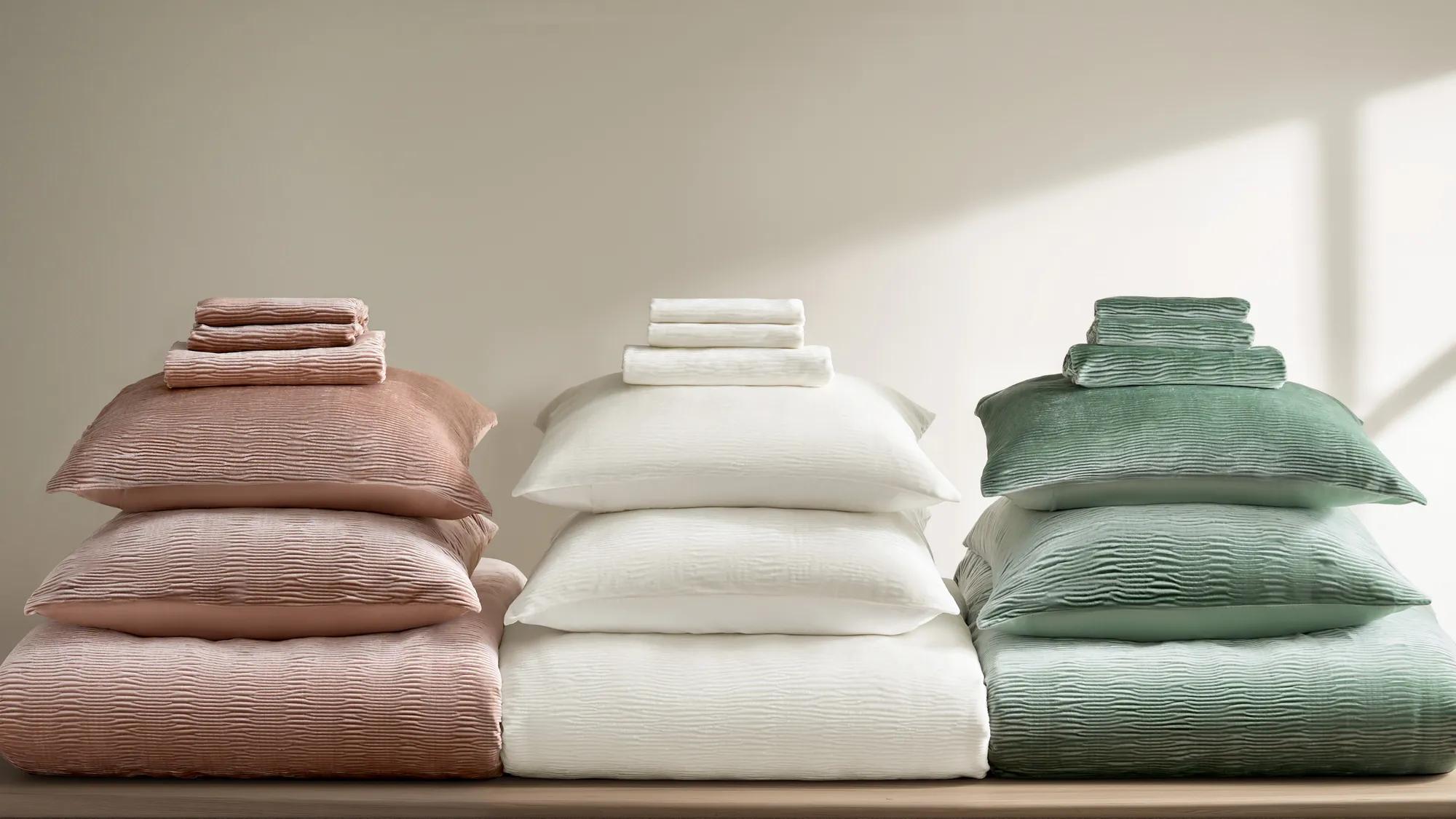
Muted color stories: mineral green, dusty rose, bronze, plum, blue-gray
-
Highlight tones: champagne, pewter, or soft gold used sparingly through trim, embroidery, or decorative pillows
If your bedroom already has statement furniture or bold wall treatment, keep bedding quieter and let the shape and hand-feel carry the look.
Explore the Bedding Collection
Explore the Bedding Furniture Collection
Stylist Note: The most elevated beds usually stay within a narrow tonal range, then introduce contrast through finish and texture, not loud pattern mixing.
Materials
Materials determine how the bed reads in daylight, lamplight, and real life.
Think in layers:
-
Sheets (base feel): percale for crispness, sateen for a smoother hand and softer sheen
-
Duvet cover or coverlet (visual field): linen for relaxed texture, cotton sateen for polish, velvet accents for depth
-
Quilt or matelassé layer (structure): adds shape and a tailored finish at the foot of the bed
-
Throws and pillows (editorial surface): used to create contrast, softness, and movement
The strongest luxury bedding stories pair one smooth material with one matte or textured material. This keeps the bed from feeling flat.
Did you know? Thread count is only one part of the picture. Weave, fiber quality, and finish often matter more to how bedding feels and wears over time.
Silhouettes
A bed looks editorial when the silhouette is intentional.
Focus on:
-
A duvet that is full, but not overstuffed
-
Pillows scaled to the bed size, especially Euros on larger beds
-
A coverlet or quilt that creates a clean horizontal line
-
A throw with a deliberate fold or relaxed drape, not a crumpled afterthought
Volume should feel architectural, not bulky.
Shine Level
Shine is where many beds drift off course. In luxury bedding, shine should be selective.
Use sheen in controlled places:
-
Sateen sheets peeking at the fold
-
Velvet or silk-look decorative pillow accents
-
Metallic thread or subtle embroidery detail
-
A polished bedside lamp or mirrored object nearby, instead of all shine on the bed itself
When everything gleams, nothing feels special.
Texture
Texture is what makes a neutral bed feel rich.
Combine three texture families:
-
Smooth (sateen, silk-like finishes)
-
Structured (quilted cotton, matelassé, tailored shams)
-
Soft / tactile (bouclé, faux fur, washed linen, velvet)
That combination creates a bed that photographs beautifully and still feels grounded in everyday use.
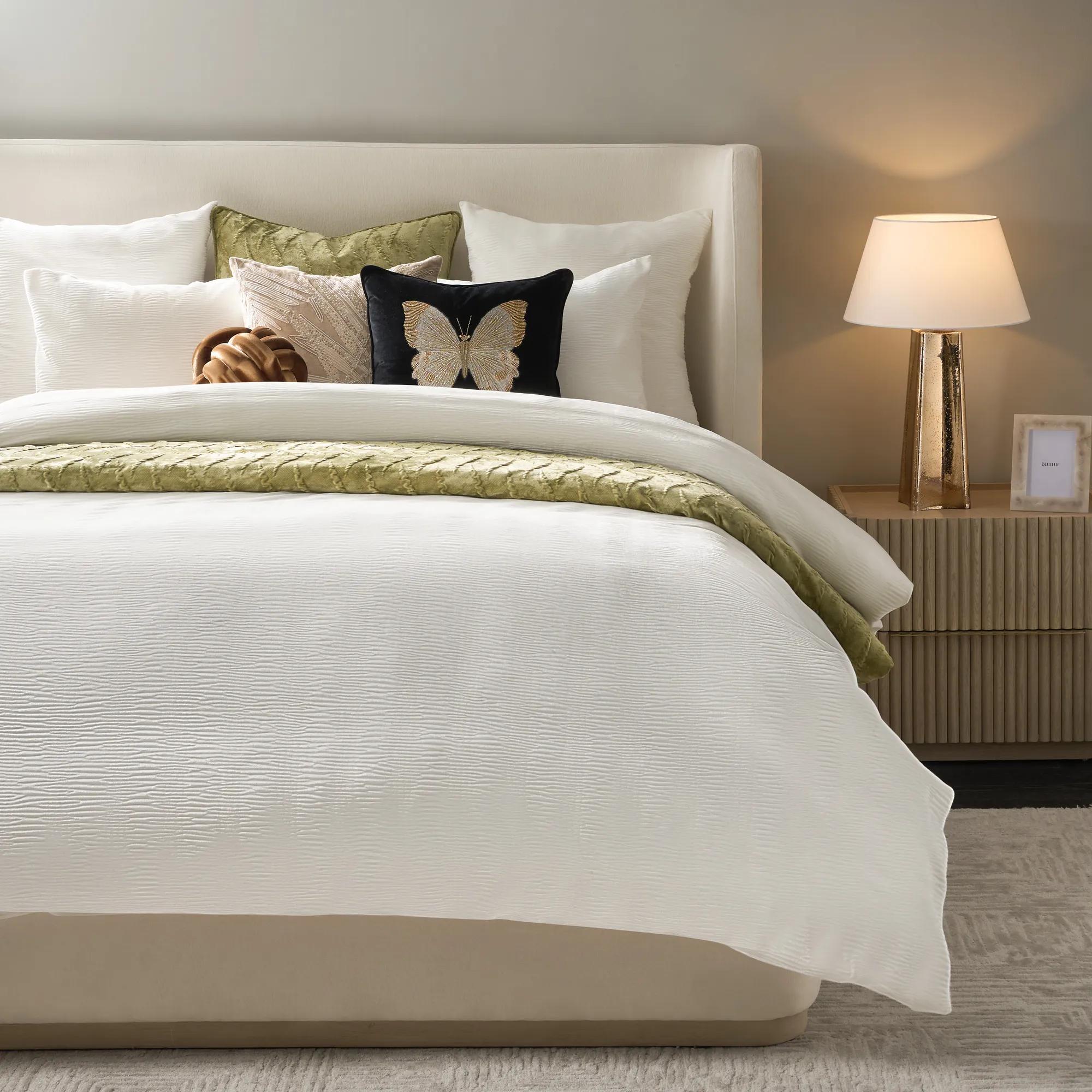
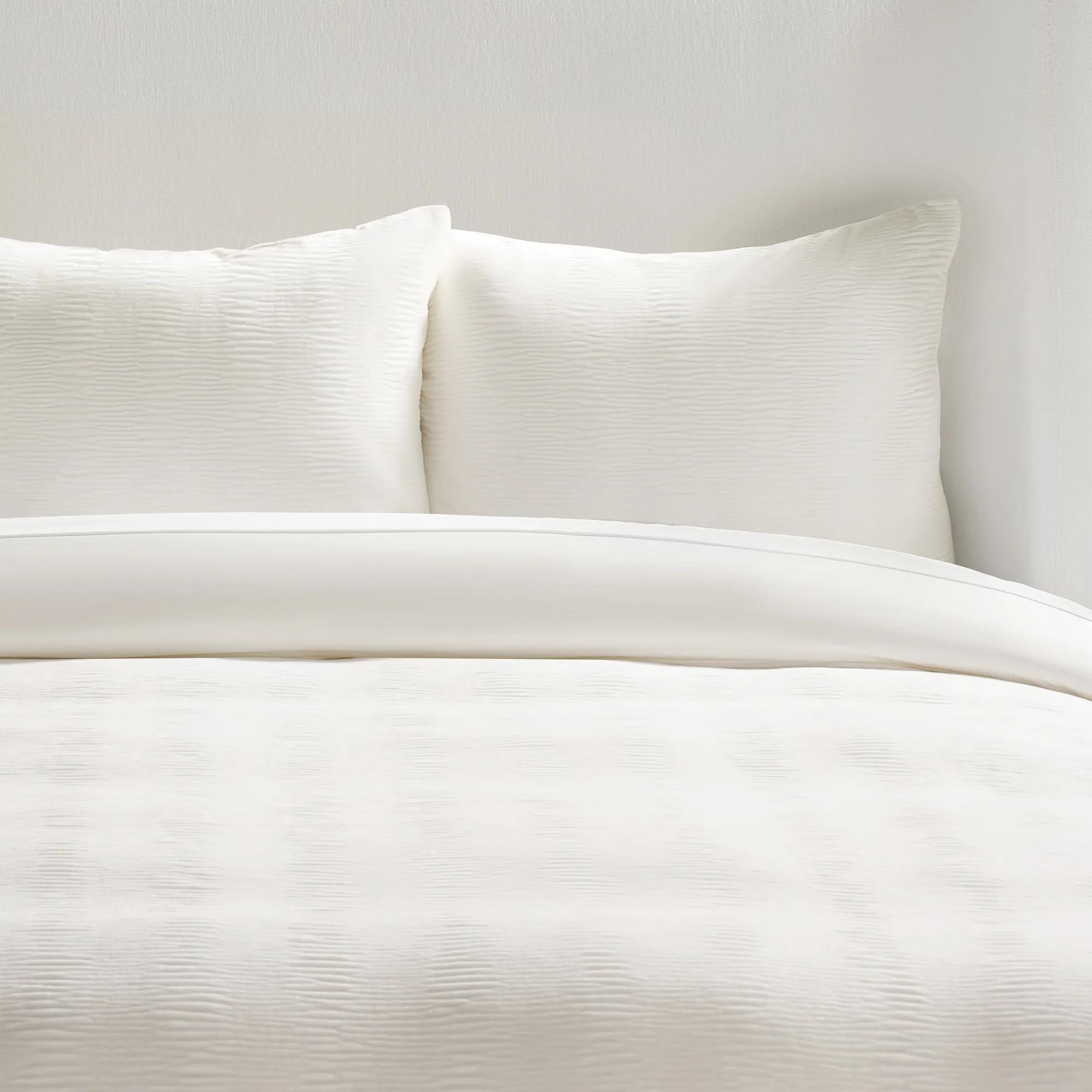
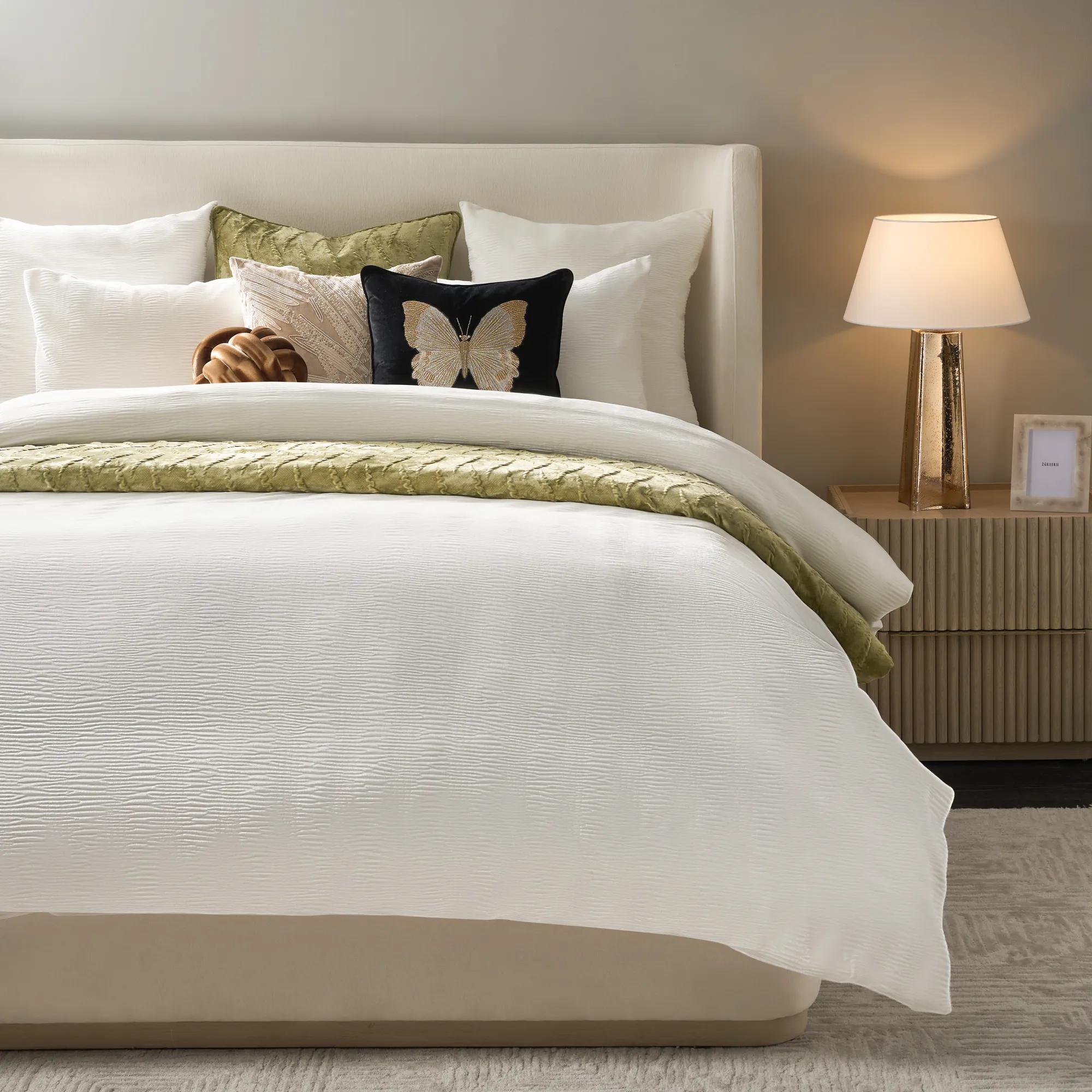
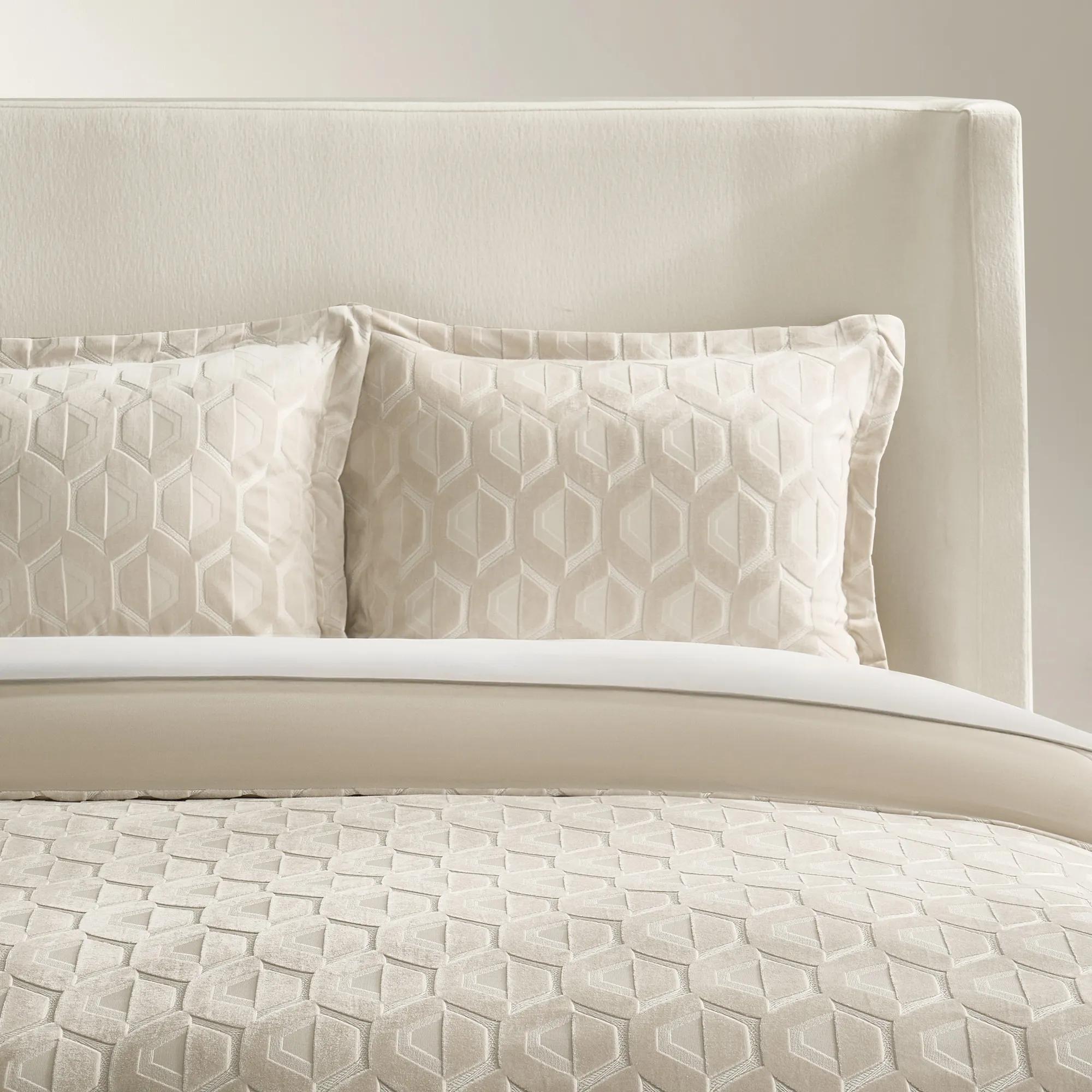
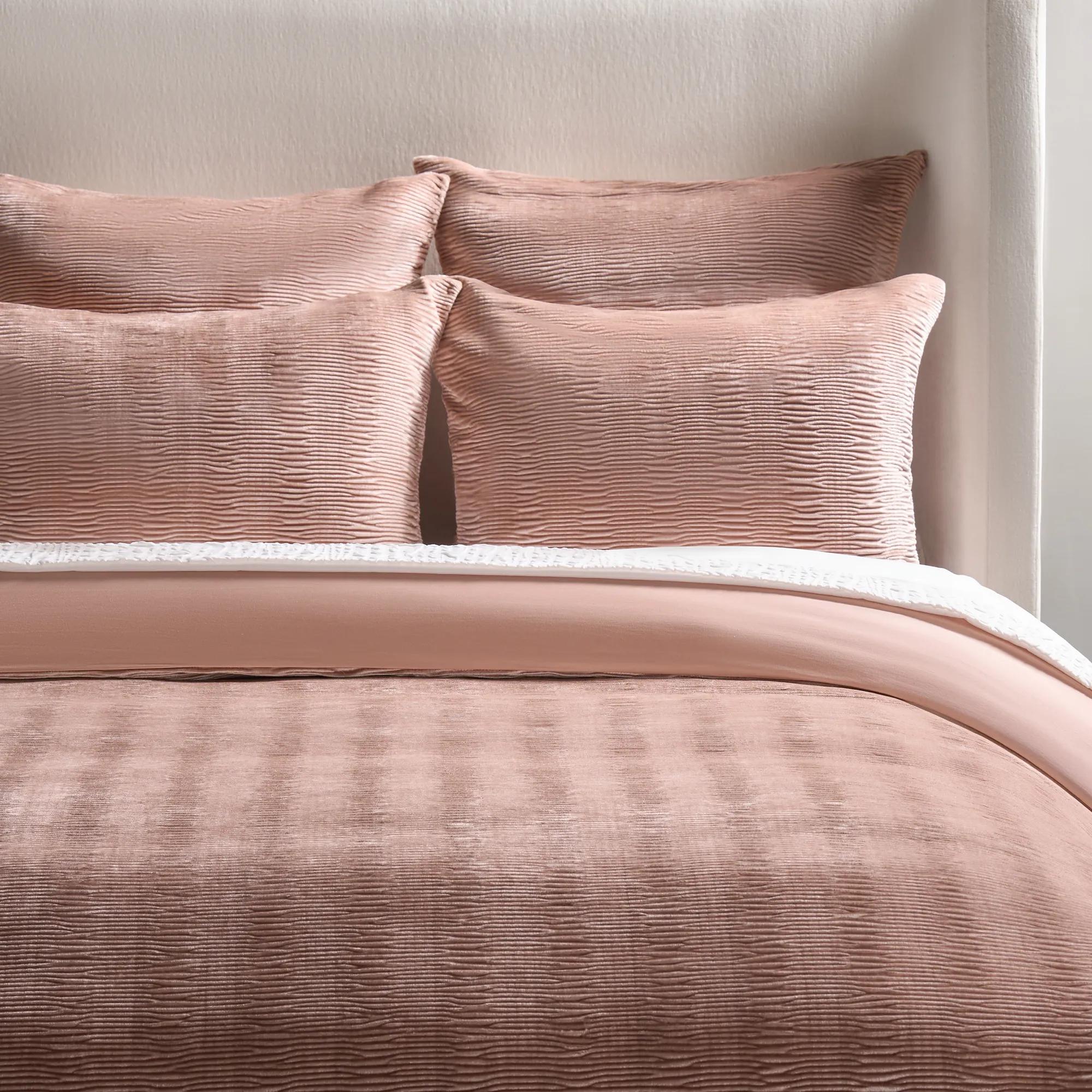
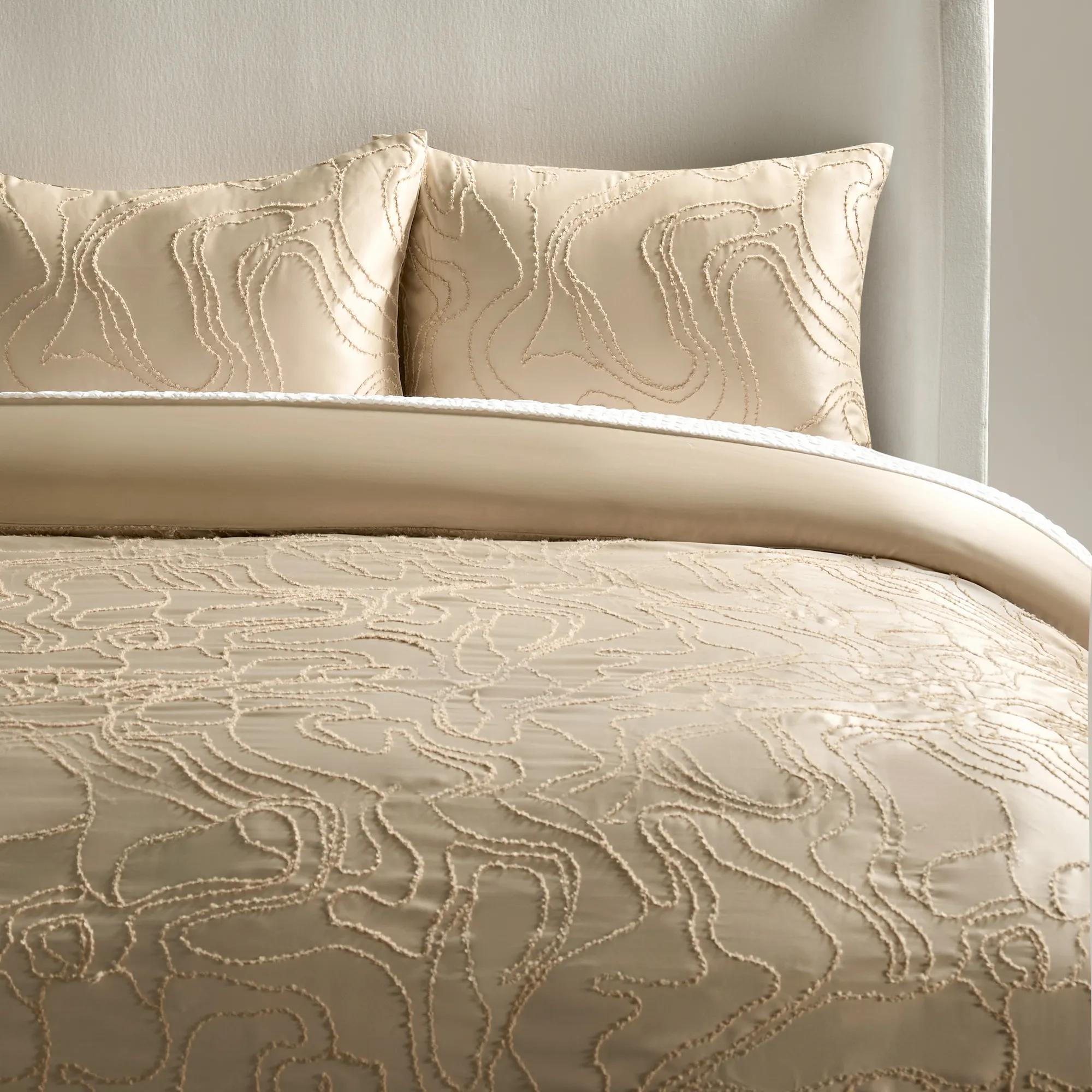
A tonal bedding story gains depth through mixed texture, matte linen, smooth sateen, and a structured quilt fold.
The Stylist’s Rules
A polished bed is less about adding more pieces, and more about editing what stays visible.
Do this
-
Choose a lead material, then support it with one or two contrast textures
-
Build from large to small, duvet first, then shams, then accents
-
Use symmetry as a base, then soften with one relaxed element
-
Keep the fold line clean, especially at the duvet turn-back
-
Repeat one tone at least twice, so the palette feels intentional
Avoid that
-
Too many competing pillow fabrics in similar values
-
High contrast pattern on every layer
-
Overfilling the bed so it loses shape and function
-
Gloss-heavy finishes across sheets, pillows, and throws at the same time
-
Decorative pillows that hide the bed instead of framing it
Stylist Note: If the bed feels busy, remove one pillow category first, not the top layer. The silhouette often improves faster than the color story.
Did you know? A bed can look more expensive with fewer pillows if the pillow sizes are scaled correctly for the mattress and headboard height.
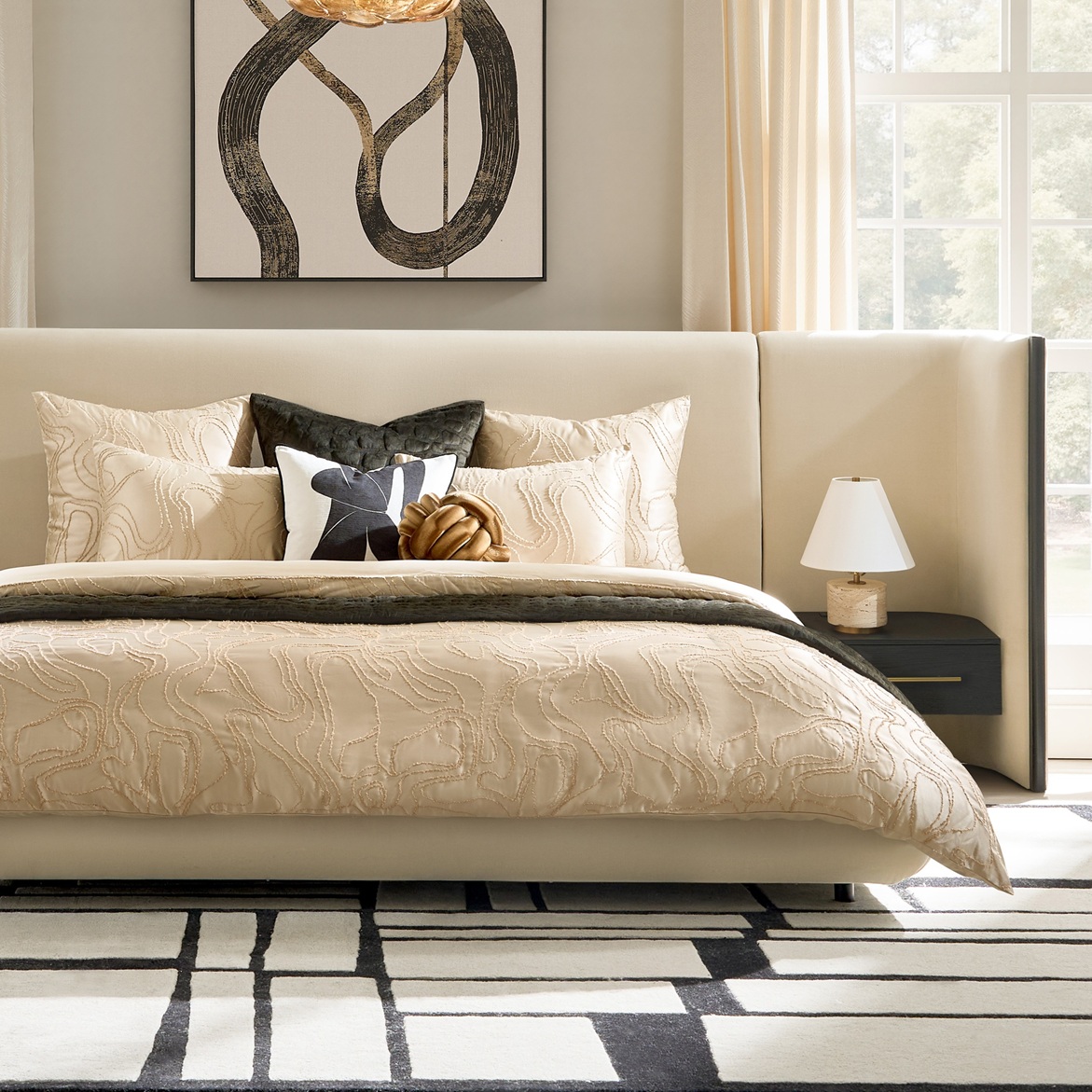
For a more cohesive bedroom story, pair the bedding palette with one repeated finish in the room, such as black metal, antique brass, smoked glass, or dark wood.
Layer with Throws and Blankets
The Room Formula
The right luxury bedding setup depends on the room, not just the bed. Scale, light, and how the room is used should guide the layering.
The Primary Suite Formula
This is where depth matters most.
Build the bed in five visible layers:
-
Sheet set
-
Duvet and duvet cover
-
Coverlet or quilt fold
-
Euro shams plus sleeping pillows
-
Two to three decorative accents
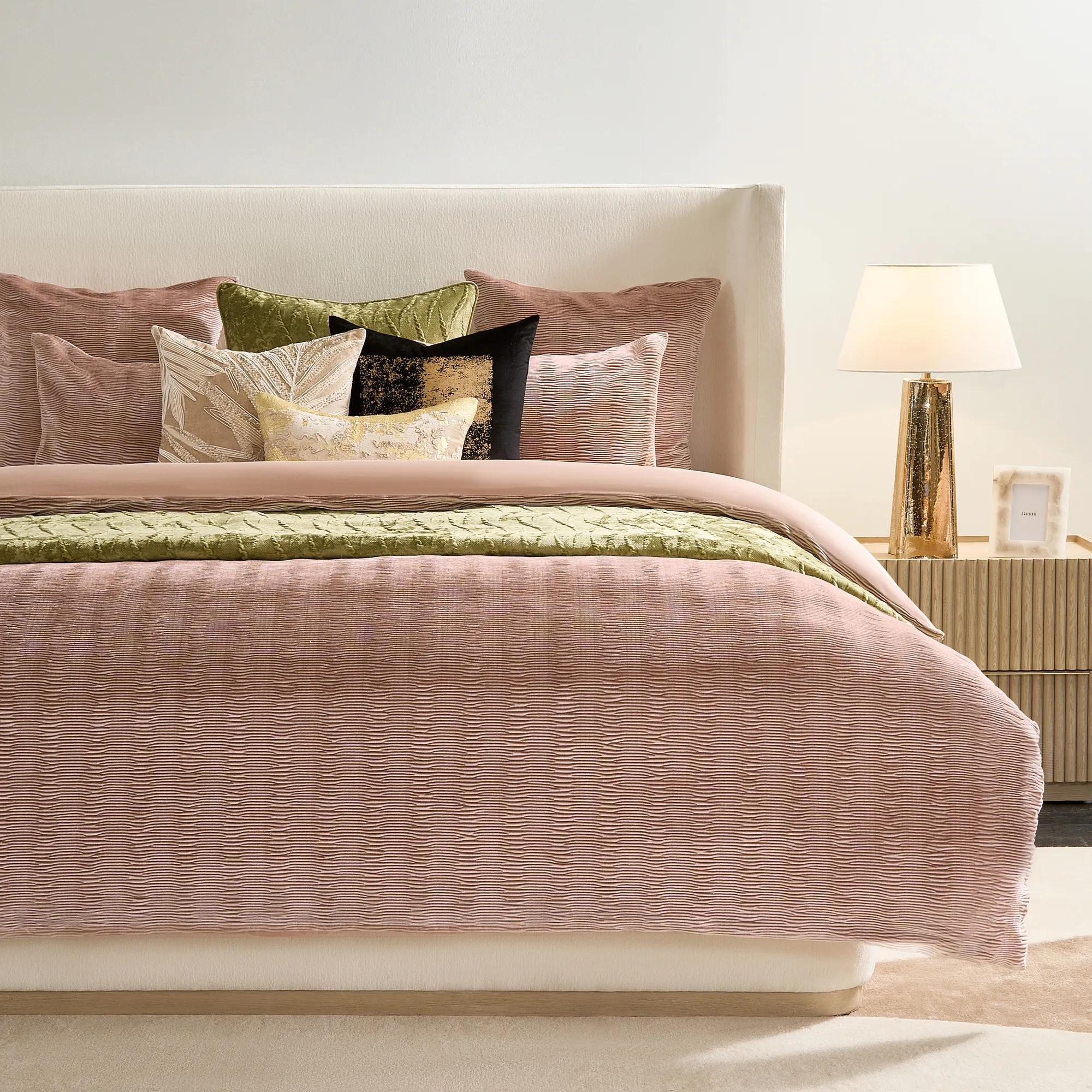
Use a restrained palette, then bring in one mood-setting element, such as a dark velvet lumbar or softly metallic accent pillow.
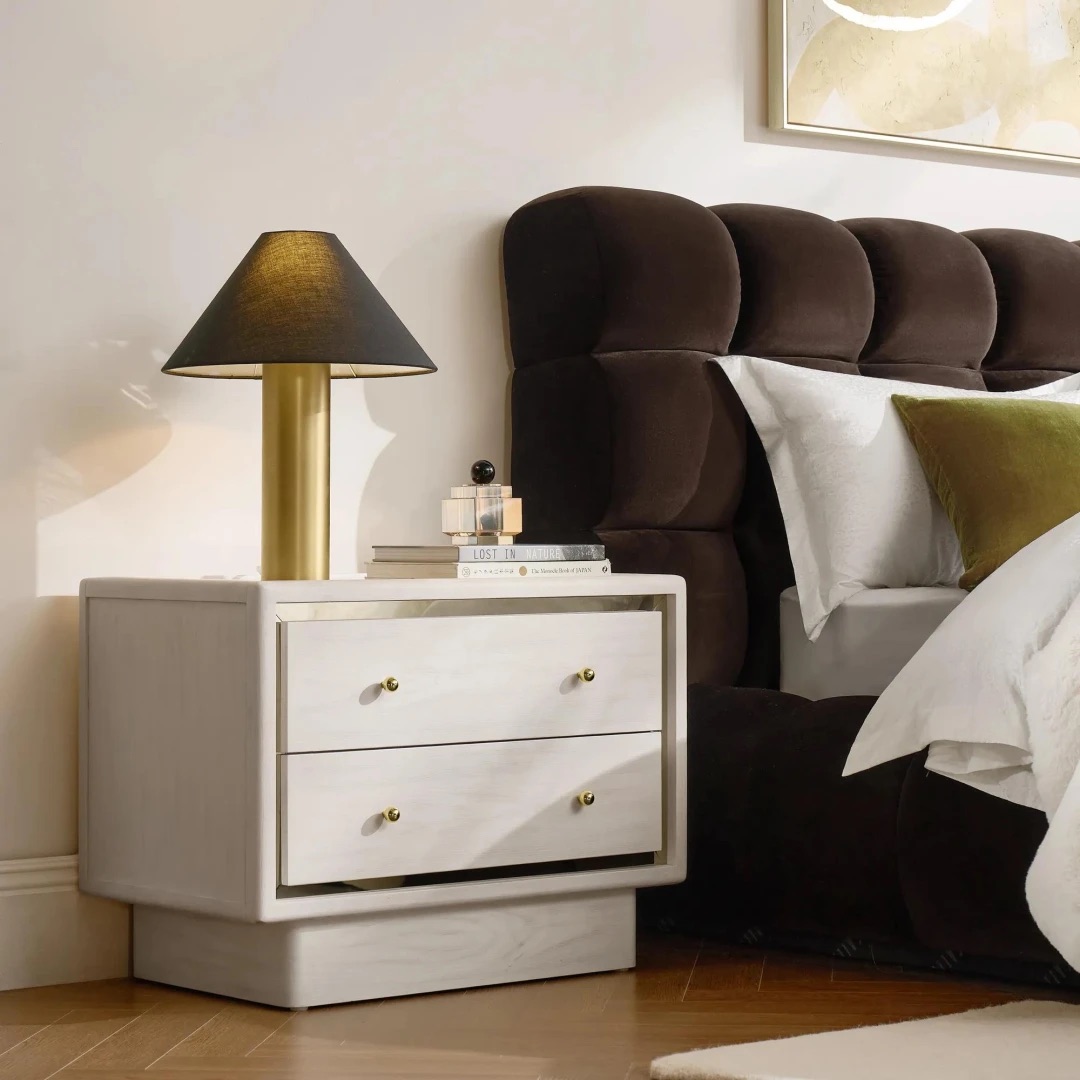
This formula works especially well in bedrooms with statement headboards, stone nightstands, or sculptural lighting.
The Guest Room Formula
Guest rooms benefit from clarity and comfort.
Keep styling simpler:
-
Crisp sheets
-
Medium-weight duvet
-
One quilt or throw at the foot
-
Two Euro shams
-
One accent pillow for finish
The visual message should be welcoming and easy, never over-layered. Guests notice comfort first, then style.
The Small Bedroom or Apartment Formula
In smaller rooms, a bed often takes up most of the visual field. The bedding has to carry the room without making it feel crowded.
Use:
-
A lighter tonal palette to open the space
-
One textured layer instead of many
-
Fewer pillows, but stronger shape
-
A tailored coverlet line to keep the bed looking clean during the day
This is where luxury bedding sets in coordinated tones can be especially effective, because they create cohesion quickly.
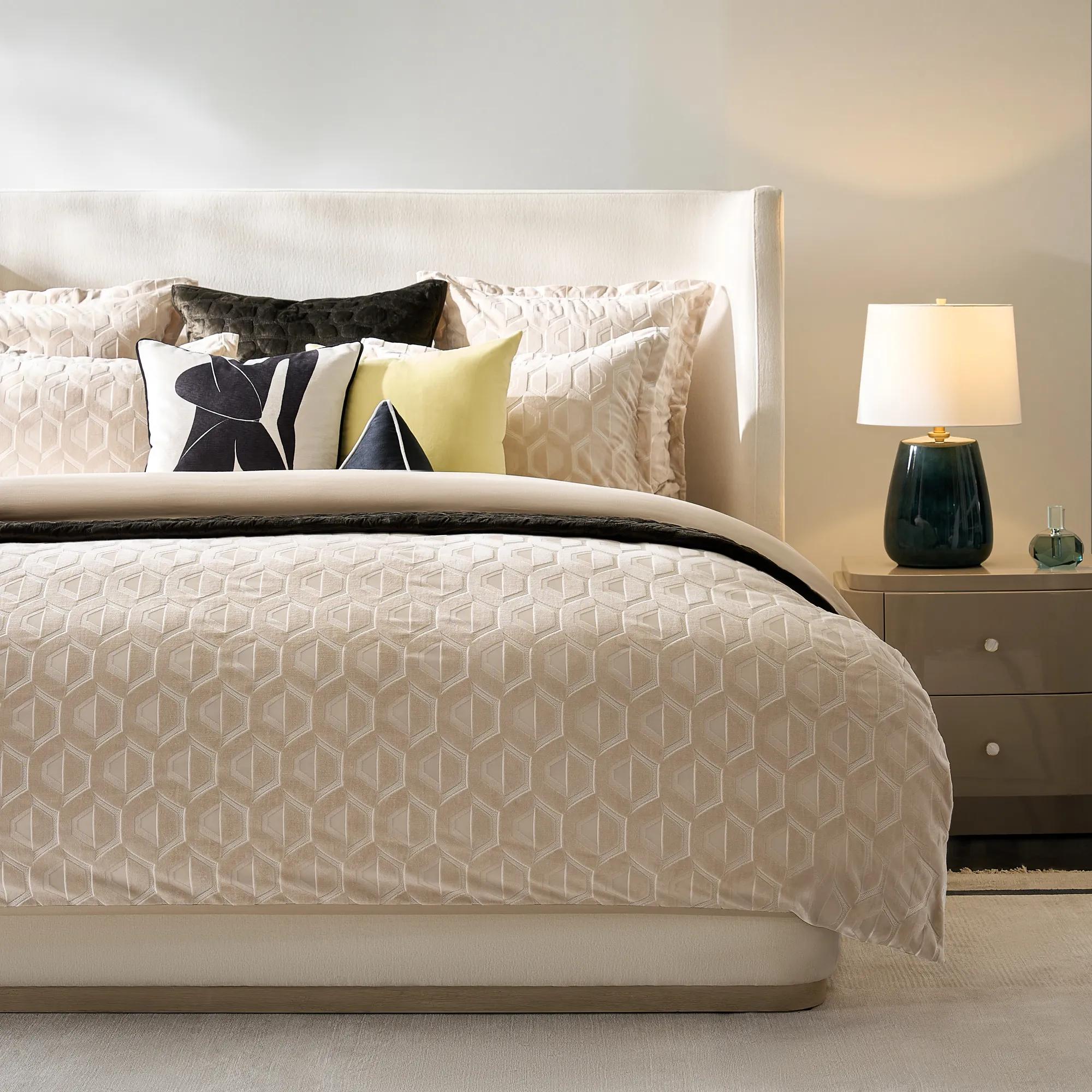
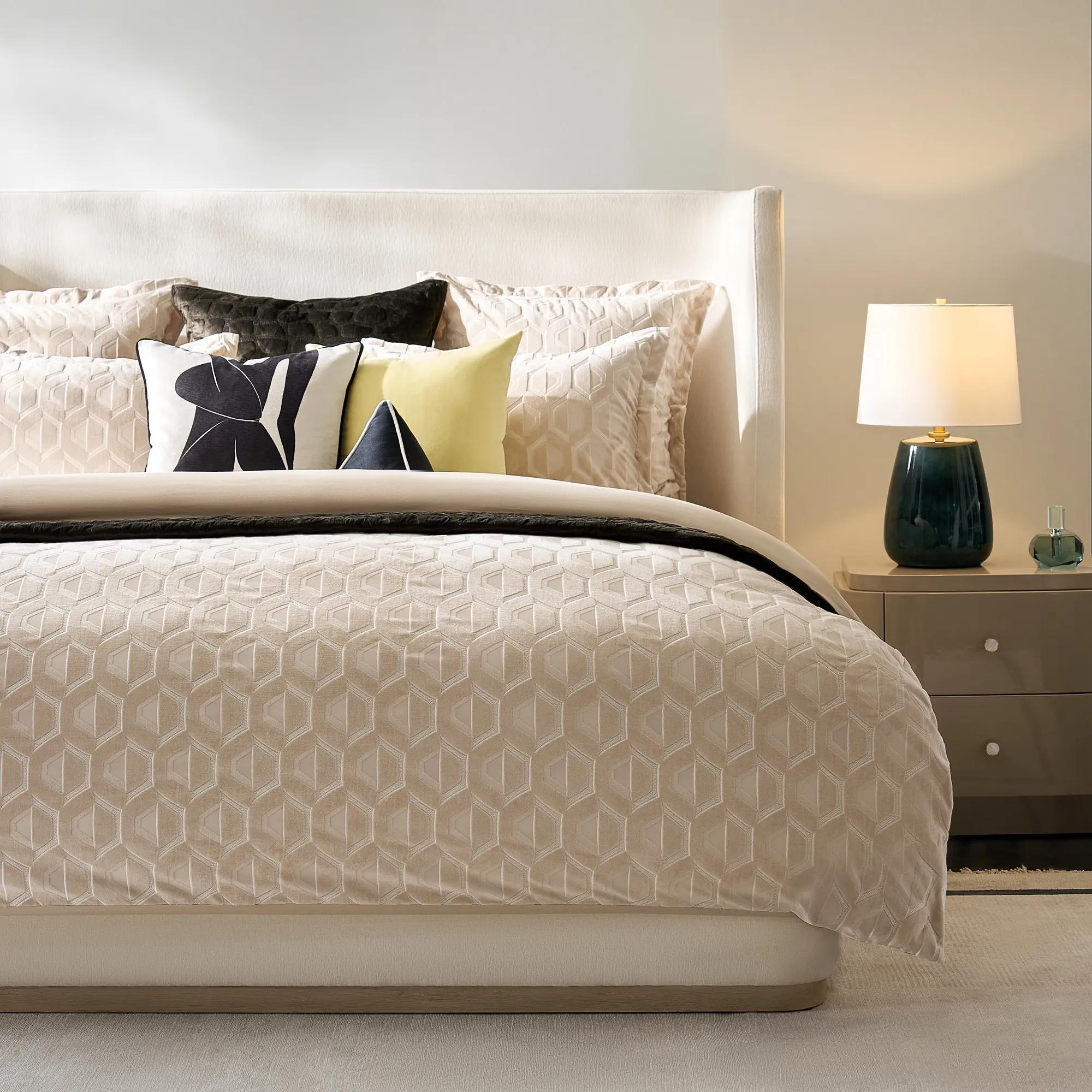
In smaller rooms, a controlled palette and one strong contrast accent keep the bed expressive without visual weight.
The Seasonal Refresh Formula
You do not need to rebuild the entire bed to change the mood.
Shift the room with:
-
A new coverlet texture
-
A different throw weight
-
One accent pillow in a deeper or brighter tone
-
A fabric change, such as linen in warmer months and velvet accents in cooler months
The foundation can stay consistent while the surface becomes more seasonal.
Stylist Note: Seasonal updates feel most refined when the palette stays related. Change texture and weight first, then color.
The Edit
A strong editorial bed is selective. This luxury bedding edit is designed around role and balance, not quantity.
-
The Sheet Set, the Foundation
Choose the sheet set for feel and finish first. This is the layer closest to the body, and it sets the tone for the entire bed. Crisp percale reads tailored, sateen reads softer and more luminous.
-
The Duvet Insert, the Volume
The insert is the hidden architecture. It determines loft, drape, and whether the bed feels thin or composed. Look for an insert that fills the cover fully without strain at the seams.
-
The Duvet Cover, the Visual Field
This is often the largest visible textile in the room. A linen duvet cover creates an effortless editorial look, while a sateen cover offers a more polished finish.
-
The Coverlet or Quilt, the Structure
Folded at the foot or layered across the full bed, this is the line that sharpens the silhouette. It adds weight, pattern restraint, and visual rhythm.
-
Euro Shams, the Backdrop
Euros build height and make the bed look complete. They also create a backdrop that allows smaller decorative pillows to feel intentional instead of floating.
-
Sleeping Pillows with Tailored Cases, the Utility Layer
This is where function meets finish. Matching or coordinating pillowcases help the bed stay polished even when decorative pillows are removed at night.
-
A Lumbar Pillow, the Anchor Accent
A single lumbar can often do more than several small pillows. It introduces contrast, shape, and a focal point at the centerline of the bed.
-
A Textured Throw, the Soft Contrast
A throw adds movement and tactile interest. Folded, draped, or lightly layered, it should feel integrated into the palette, not dropped in as an afterthought.
-
A Bench or Bed-End Accent, the Finishing Frame
Not bedding, but an important finish. A bench, stool, or low ottoman helps frame the bed and gives the top layers a place to transition into the room.
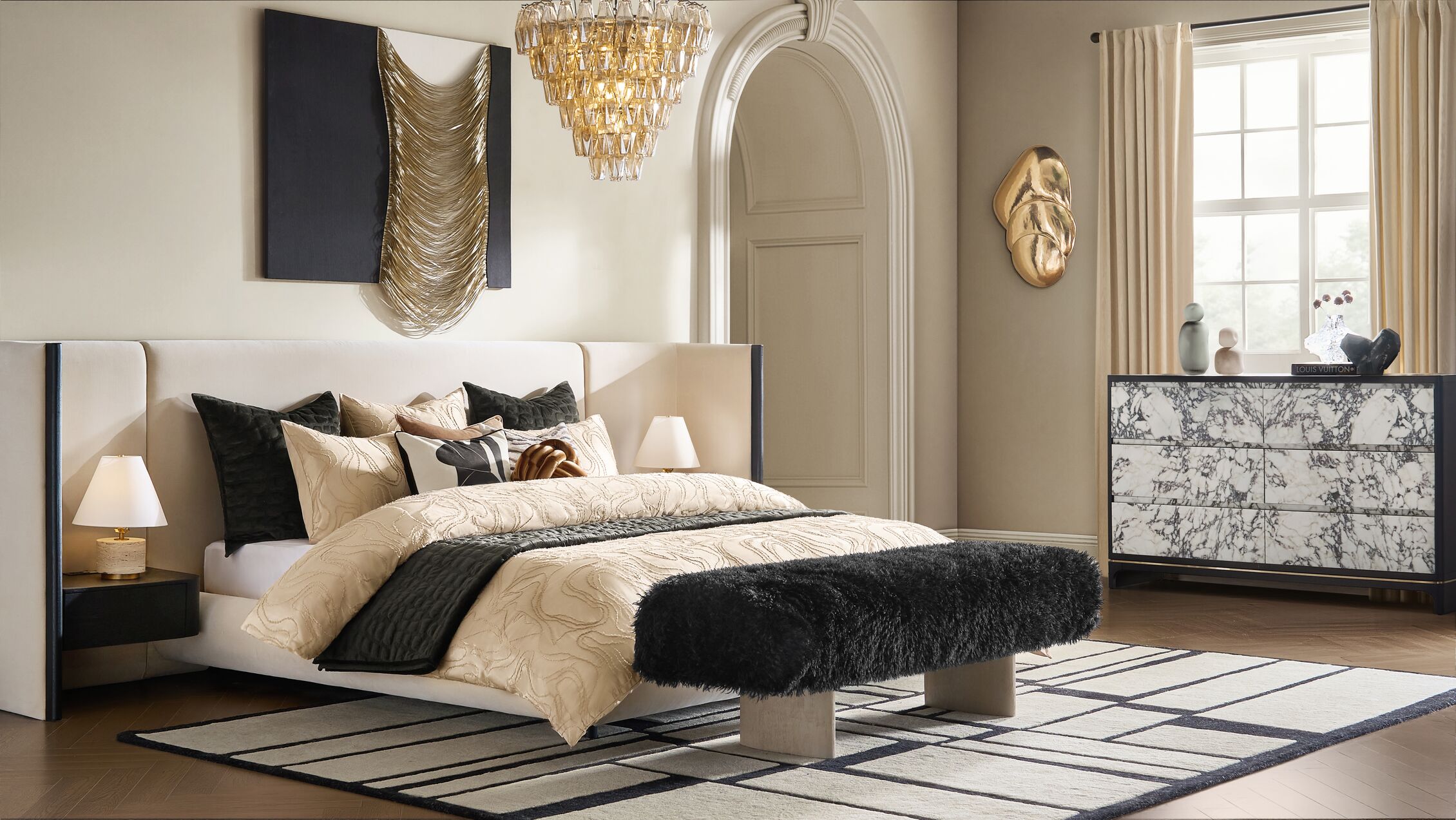
The difference is in the edit, one structured layer, one accent shape, and one tactile finish at the foot of the bed.
For a complete room story, support the bed with accessories that repeat its material language, such as smoked glass, dark wood, polished metal, or sculptural ceramics.
The Art of A Glamorous Bedroom
Frequently Asked Questions
How do I choose luxury bedding for a bedroom that already has bold furniture?
Start with a quieter bedding palette in tonal neutrals, then add one controlled accent tone. Let texture and silhouette create richness, so the bed complements the furniture instead of competing with it.
What is the best way to layer a bed for an editorial, high-end look?
Begin with sheets, then duvet, then a coverlet or quilt, followed by Euro shams, sleeping pillows, and one to three decorative accents. Keep the palette cohesive and vary texture more than pattern.
What materials make luxury bedding feel elevated but still practical?
A balanced mix works best: cotton percale or sateen sheets, a linen or cotton duvet cover, a quilted layer for structure, and a textured throw for finish. This combination gives comfort, visual depth, and versatility.
How many pillows should I use for a luxury bedding setup without overstyling the bed?
Scale matters more than count. A common approach is Euros, sleeping pillows, and one focal accent, often a lumbar. Remove extra small pillows if the bed starts to hide the duvet shape.
Can luxury bedding work in a small bedroom or apartment?
Yes. Use a restrained color palette, fewer layers, and stronger silhouette. A tailored coverlet, well-scaled pillows, and one accent texture can create a polished look without making the room feel crowded.
What is the difference between luxury bedding and luxury bedding sets?
Luxury bedding refers to the overall quality and styling of the bed, including materials, layering, and finish. Luxury bedding sets are coordinated groupings that help create a cohesive look more quickly.
The Last Layer
The most memorable bedrooms are not the most decorated, they are the most composed. Luxury bedding does that quietly, through fabric, proportion, and the confidence to edit. Begin with the foundation, layer with intention, and let the room settle into its own rhythm.
Discover the finishing touches.