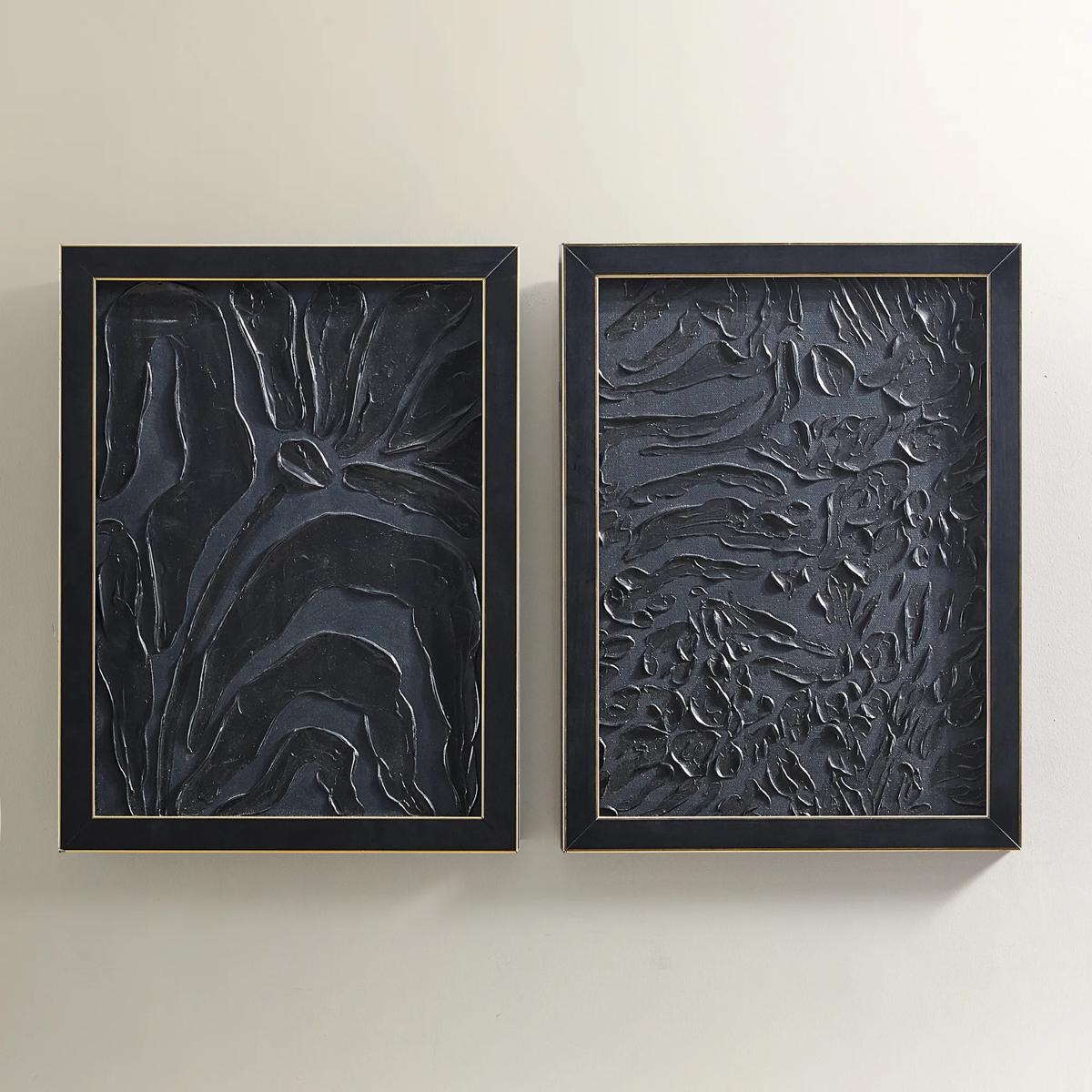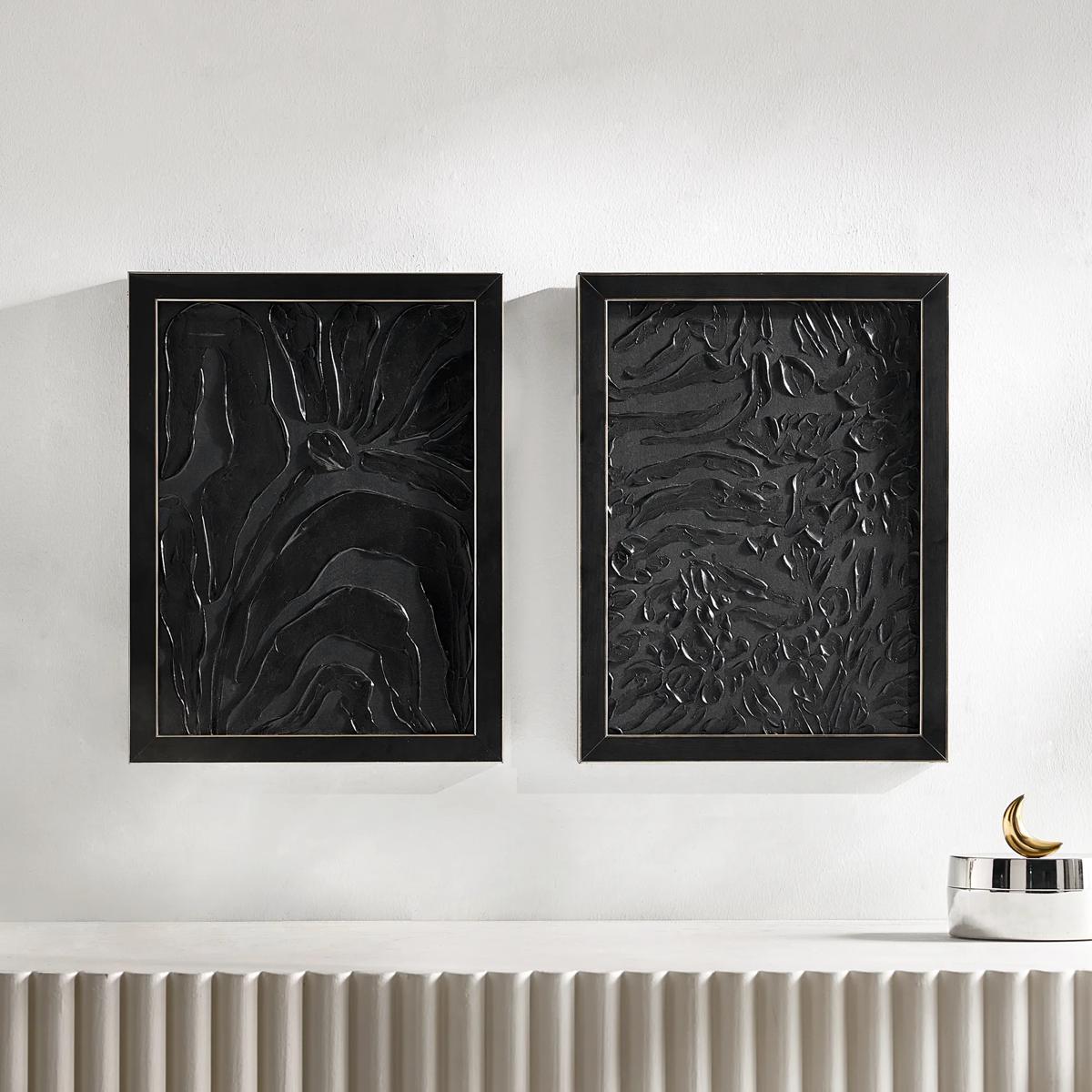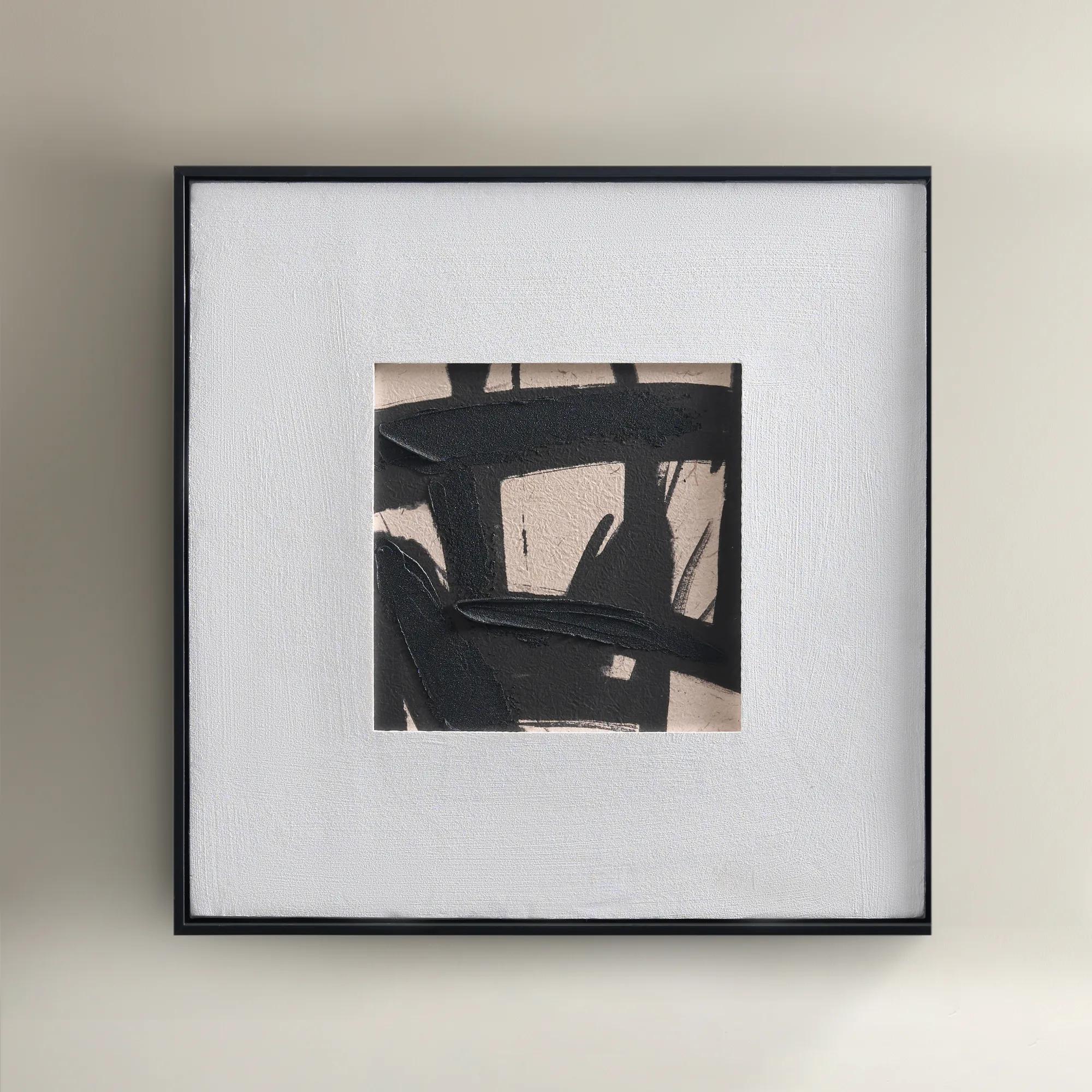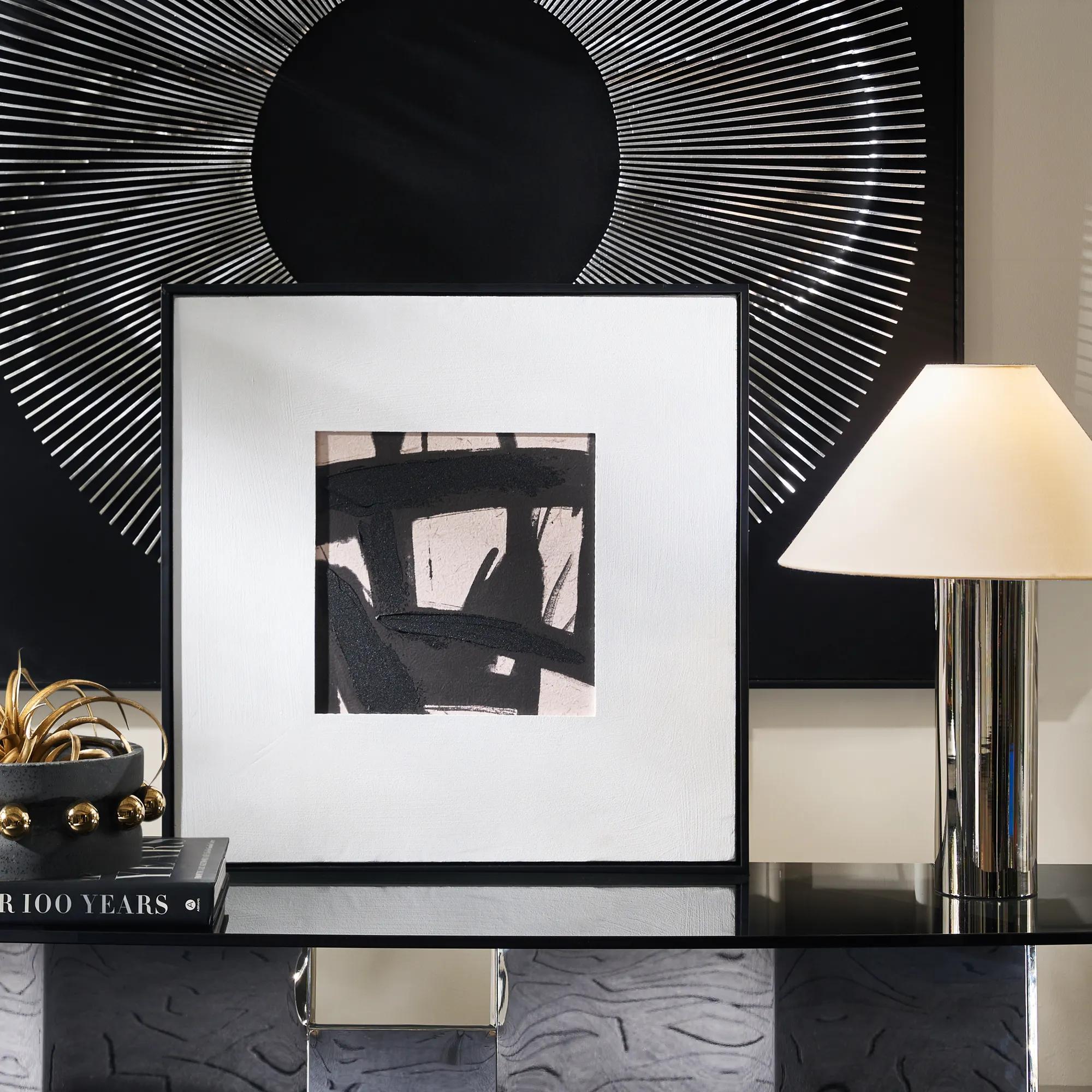

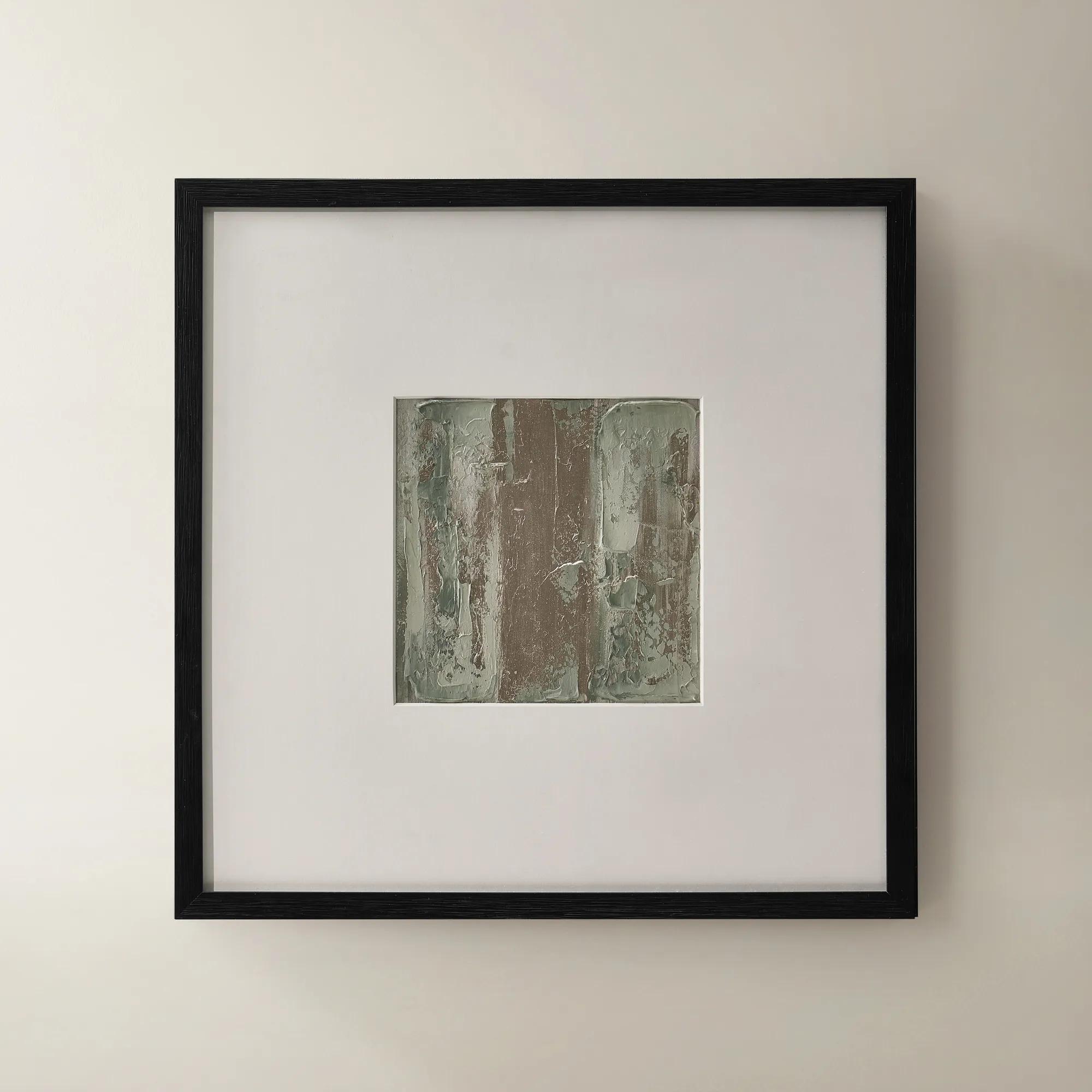
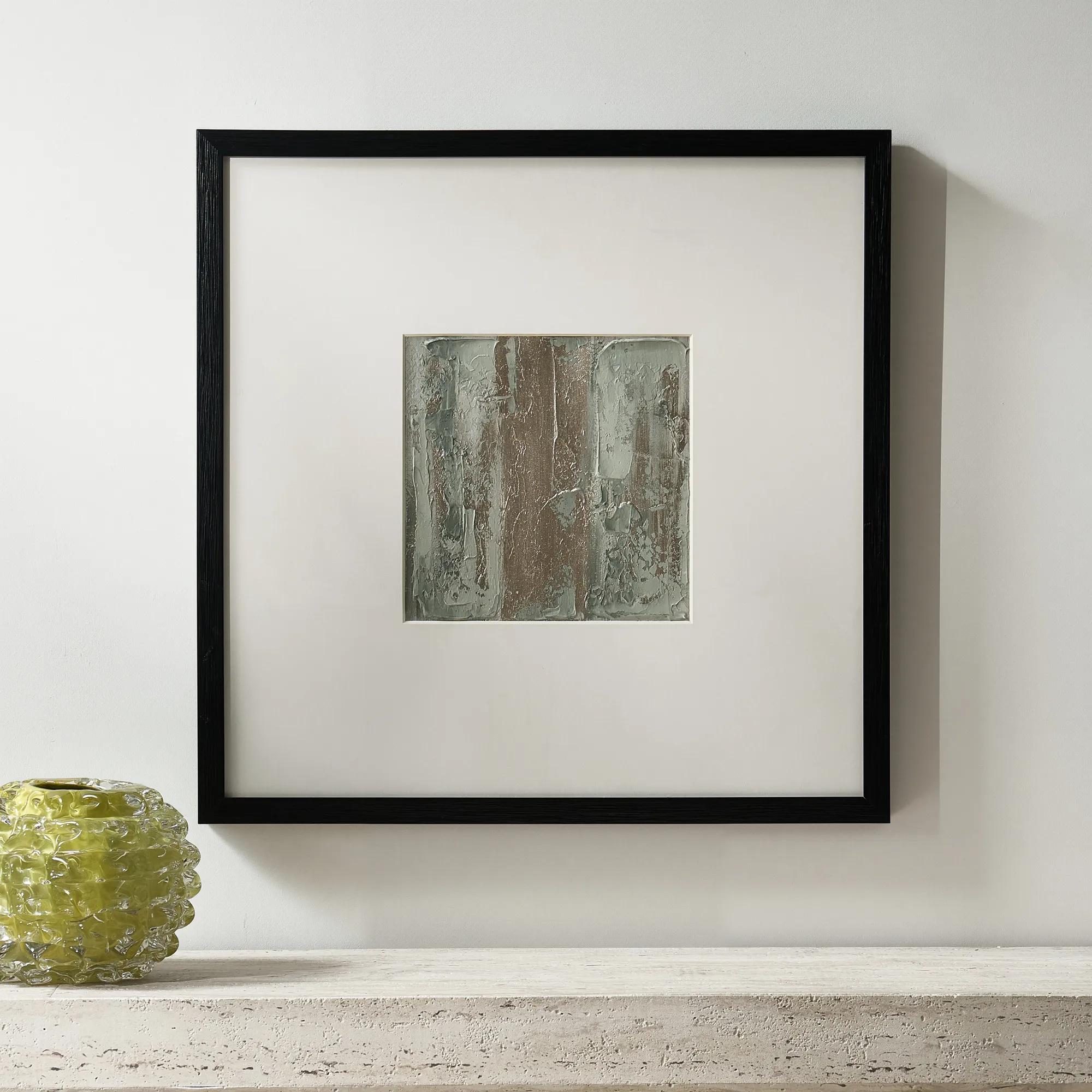
Z Gallerie small-scale art covers the most layered, gallery-friendly end of the wall art collection. Pieces measure under 24 inches in their longest dimension, perfectly sized for layered arrangements, gallery walls, smaller intimate moments above furniture, and tight architectural spaces where larger art wouldn't fit.
Small-scale art works in groupings rather than alone. Cluster three to five pieces in a gallery arrangement, line several along a hallway, or layer small framed works on bookshelves. The scale rewards repetition, where multiple small pieces together create the kind of curated wall a single piece can't match.
Frequently Asked Questions
How big is small-scale art?▼
Small-scale art measures under 24 inches in its longest dimension. This includes small framed prints, mini canvases, and detail-focused pieces. The scale is meant for grouping and layering rather than standalone focal points.
Can small-scale art work as the only piece on a wall?▼
Generally no, small art on a large wall reads as underscaled and lost. Small-scale pieces work best in groupings, lined arrangements, or on smaller walls (above a small console, in a powder room, or in a tight architectural niche).
How do I build a gallery wall with small-scale art?▼
Lay 4 to 8 pieces on the floor first to test the arrangement. Mix sizes, orientations, and frame styles within a consistent thread (color palette, finish family, or subject). Space pieces 2 to 4 inches apart, and hang the central piece at eye level (57 to 60 inches from the floor).
What rooms suit small-scale art?▼
Hallways, stairwells, bathrooms, powder rooms, bookshelves, and any space where multiple pieces can layer together. Small art also works on either side of larger focal pieces, adding texture and depth to a single wall.
How do I make small-scale art look intentional?▼
Group multiple small pieces rather than scattering them randomly. Keep frame finishes, matting, or color palettes loosely consistent across the grouping so the wall reads as one composition. Avoid mixing too many subjects or styles unless you have a strong unifying thread.