In the debut episode of Live Boldly, Sabra Johnson reflects on joy, personal style, and the quiet power of becoming more fully yourself.
There are people who decorate a room. And then there are people who give it a pulse.
Sabra Johnson is the latter.
In the first episode of Live Boldly, Z Gallerie’s new podcast series, Sabra joins Tiphany Kane for a conversation that moves with ease between fashion, interiors, identity, and instinct. A maximalist, stylist, designer, and sommelier, she brings more than a point of view to the episode—she brings a philosophy. One rooted in beauty, yes, but also in courage. In intuition. In the decision to stop editing oneself down.
For Sabra, living boldly is not about spectacle. It is not about being seen for the sake of being seen. It is about honoring what feels most true.
“It really means just doing what you want to do,” she says. “For me, it’s really about joy.”
That line becomes the soul of the episode. In Sabra’s world, joy is not frivolous. It is not an afterthought. It is not something to be justified before it can be embraced. It is a compass. A form of self-trust. A way of moving through the world that values aliveness over approval.
And in a culture that so often rewards restraint, sameness, and self-minimizing, that perspective feels quietly radical.
For more from Sabra Johnson on joy, individuality, and the art of living boldly, listen to the full episode of Live Boldly [here]
Joy, in Full
What makes Sabra so compelling is not simply her aesthetic, though it is unmistakable. It is the conviction behind it. She speaks about style not as adornment, but as expression—as a language through which identity becomes visible.
Her clothes do not just dress her. They declare her. Her accessories do not merely complete a look. They tell a story.
“Accessories tell people a story about you,” she says. “I can take any pant and shirt and make it something with the story of my accessories.”
It is a deeply editorial idea: that what we choose to wear, and what we choose to live with, can function as autobiography. A metallic object. A dramatic chair. A crystal taper holder. A plush faux fur pillow. A perfume bottle with sculptural presence. None of it is accidental. Each piece says something. Each choice reveals a preference, a mood, a memory, a sense of self.
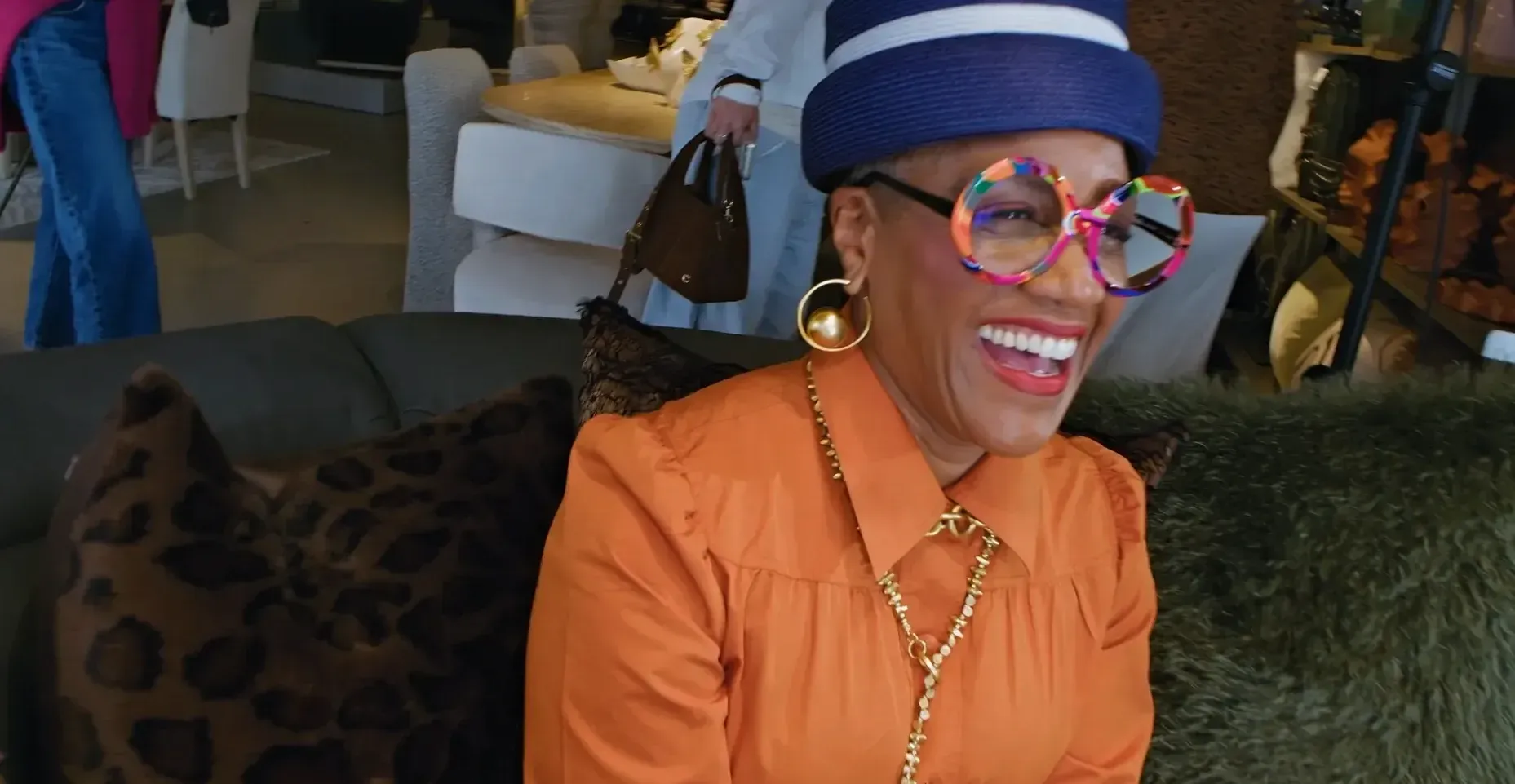
For Sabra, joy lives in those details. In texture. In shine. In visual wit. In the beautiful excess of choosing what delights you and allowing that delight to take up space.
The Language of Style
Throughout the conversation, Sabra blurs the boundaries between fashion and interiors in a way that feels entirely natural. Clothing, décor, accessories, entertaining—they are all part of the same expressive vocabulary. The same instinct at work. The same desire to create feeling.
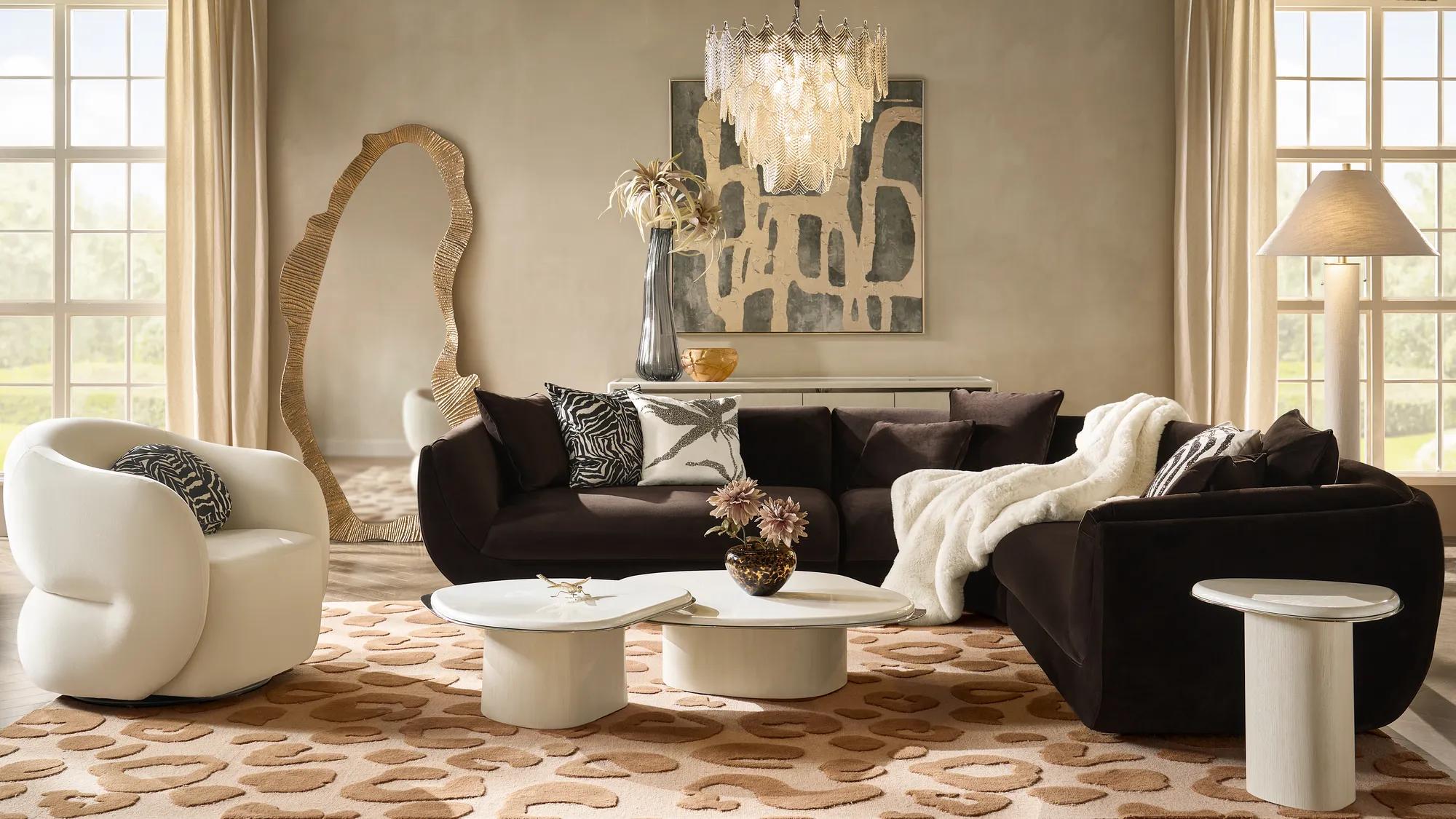
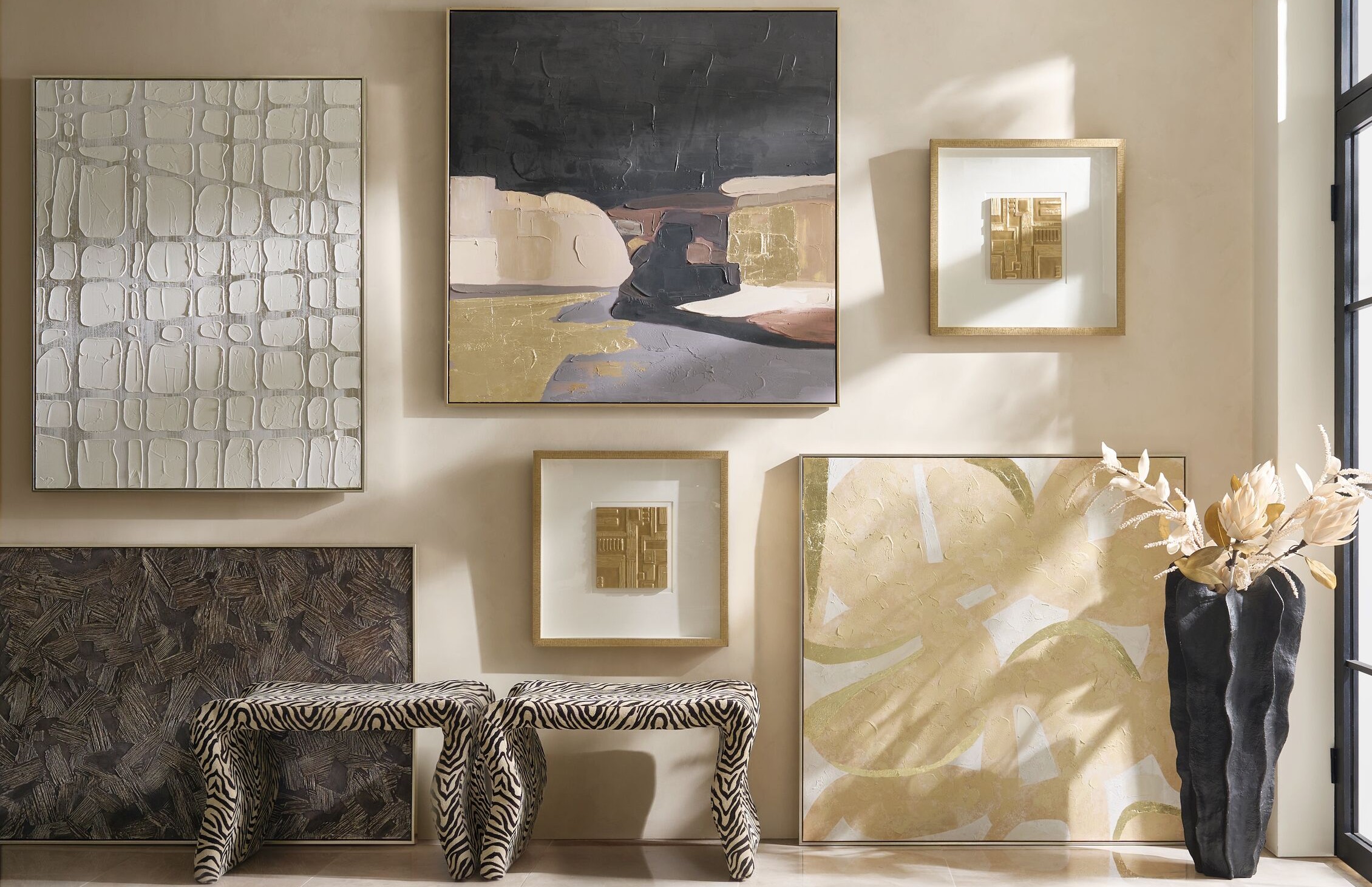
This is where her point of view aligns so seamlessly with Z Gallerie. The most memorable spaces are not the most perfect ones. They are the most personal. The rooms that stay with you are rarely the most restrained; they are the ones with atmosphere. With point of view. With objects that seem to hold a story, even before anyone tells it.
Sabra’s eye is drawn to pieces that create that charge. Metallic finishes that catch the light with intention. Crystal and chrome that sharpen a room’s glamour. Faux fur and richly layered textiles that soften and seduce. Animal print that adds confidence and edge. Decorative objects that feel almost like punctuation marks—small but decisive.
In her hands, a room becomes more than beautiful. It becomes legible. It tells you who she is.
That is the real elegance of personal style, whether in fashion or in the home. It does not simply impress. It communicates.
Rooms with Presence
As Sabra curates the podcast set, the space takes on the same qualities that define her personal style: richness, boldness, sensuality, humor, individuality. It feels layered rather than decorated. Lived-in rather than staged. Confident without ever feeling rigid.
That distinction matters.
There is a difference between a room that follows a trend and a room that has presence. One feels assembled. The other feels authored.
Sabra understands instinctively that the objects we live with are never just objects. They create atmosphere. They influence mood. They shape the emotional texture of a room. A leopard-print chair can bring attitude. A bronze pillow can add warmth and drama. A bubble-textured chrome tray can feel playful and polished at once. A crystal taper holder can transform a surface with a little glint of ceremony.
In other words, style is not only visual. It is emotional.
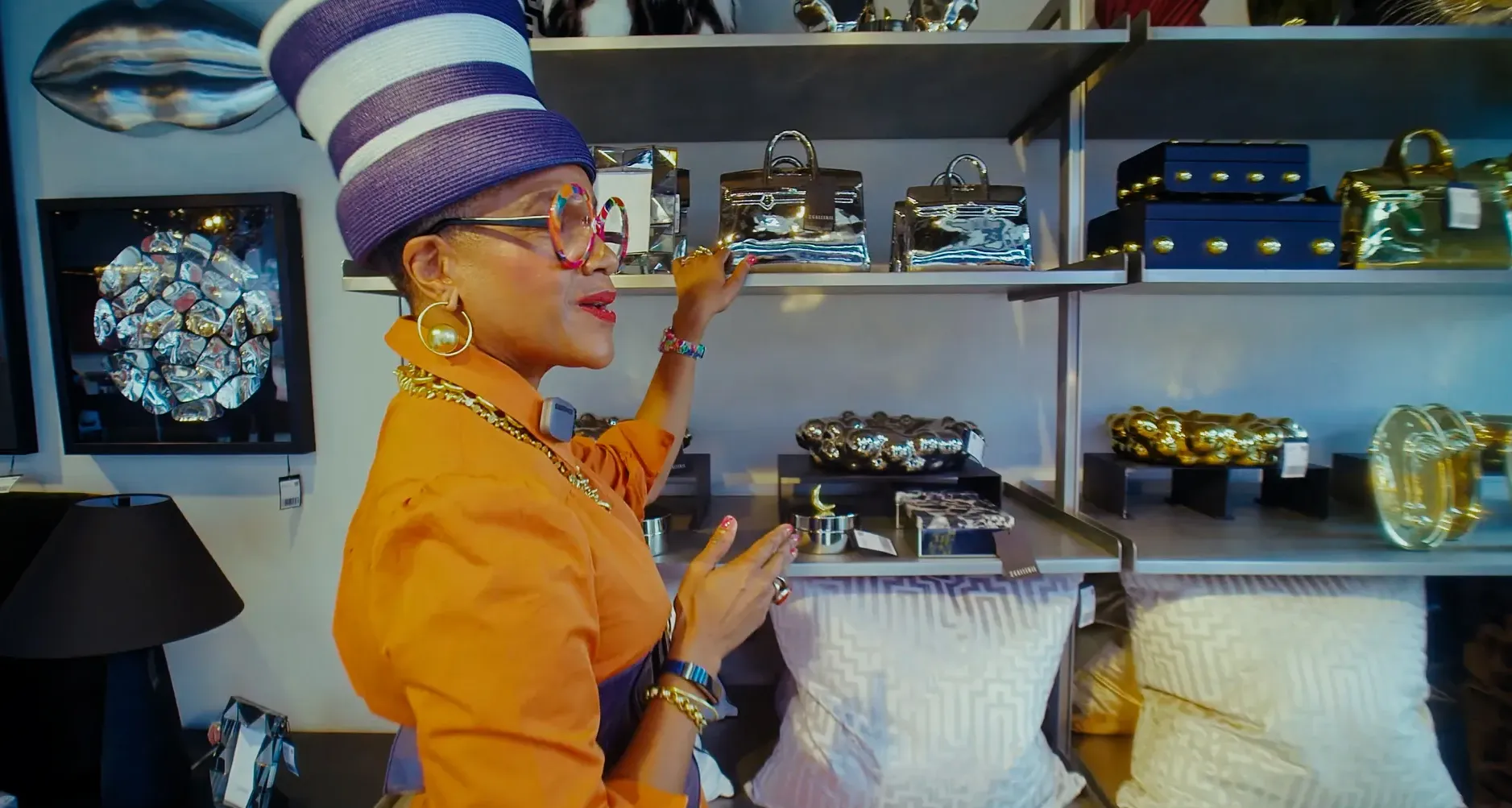
And in this episode, that emotional intelligence runs beneath every aesthetic choice. The set does not simply reflect Sabra’s taste. It reflects her willingness to be fully herself.
The Art of Being Seen
One of the most affecting threads in the episode is Sabra’s honesty about the tension between self-expression and conformity. She speaks candidly about what it means to move through a world that often asks women to soften themselves—to be polished, but not too striking; expressive, but not too much; memorable, but never disruptive.
It is a tension many women know intimately. The pressure to make oneself more acceptable. More digestible. Less vivid.
Sabra does not romanticize that reality. But she refuses to surrender to it.
One of the clearest influences on that refusal came early, in the encouragement of her father, who taught her not to follow the crowd, but to trust what made her distinct.
“You be a trendsetter. Do not follow trends.”
It is the kind of advice that stays with a person because it reaches beyond style. It becomes a principle. A worldview. A permission slip to believe that individuality is not something to tone down, but something to refine and inhabit more fully.
“You’re not like anyone else. So why should you show up looking like anyone else?”
It is a beautiful question, and one that expands well beyond clothing. Why should anyone arrange a life around someone else’s comfort? Why should beauty be limited by consensus? Why should self-expression require apology?
Sabra’s answer is clear: it should not.
On the Beauty of More
What gives Sabra’s perspective such resonance is that she does not frame confidence as something fixed or effortless. She frames it as something that can be practiced.
“You can practice confidence. You start at home.”
There is so much generosity in that idea. Confidence does not have to arrive all at once, in public, fully formed. Sometimes it begins in private. In trying on the thing you love before wearing it out. In choosing the bolder color for your home. In allowing your space to reflect your actual taste instead of a safer, quieter version of it. In learning how it feels to inhabit beauty that mirrors your own inner life.
This is what makes home so powerful. Our spaces are often the first places where we rehearse becoming ourselves. Before the world sees us clearly, we can begin by seeing ourselves clearly there.
Sabra’s maximalism, then, is not just an aesthetic preference. It is a refusal to shrink. A refusal to believe that less is always more, especially when more feels more honest. More texture. More color. More feeling. More selfhood.
And when the opinions of others inevitably appear, Sabra returns to the principle that anchors everything she does:
“I focus on my joy. I prioritize that feeling over their opinions.”
There is something deeply liberating in that. Not because judgment disappears, but because it loses its authority.
A Life, Authored Boldly
As the episode draws toward its close, Sabra speaks about what comes next: stepping away from her day job, embracing entrepreneurship, and helping other women find joy in their own expression. It feels less like a pivot than a natural continuation of everything she represents.
Her story is not compelling because it offers a formula. It is compelling because it offers permission.
Permission to wear the statement piece.
Permission to choose the vivid color.
Permission to create a home with a point of view.
Permission to stop waiting for consensus before becoming more fully visible.
That may be the deepest truth at the heart of Live Boldly. Boldness is not performance. It is not noise. It is not an act staged for approval. It is a deeply personal decision to align the outer life with the inner one.
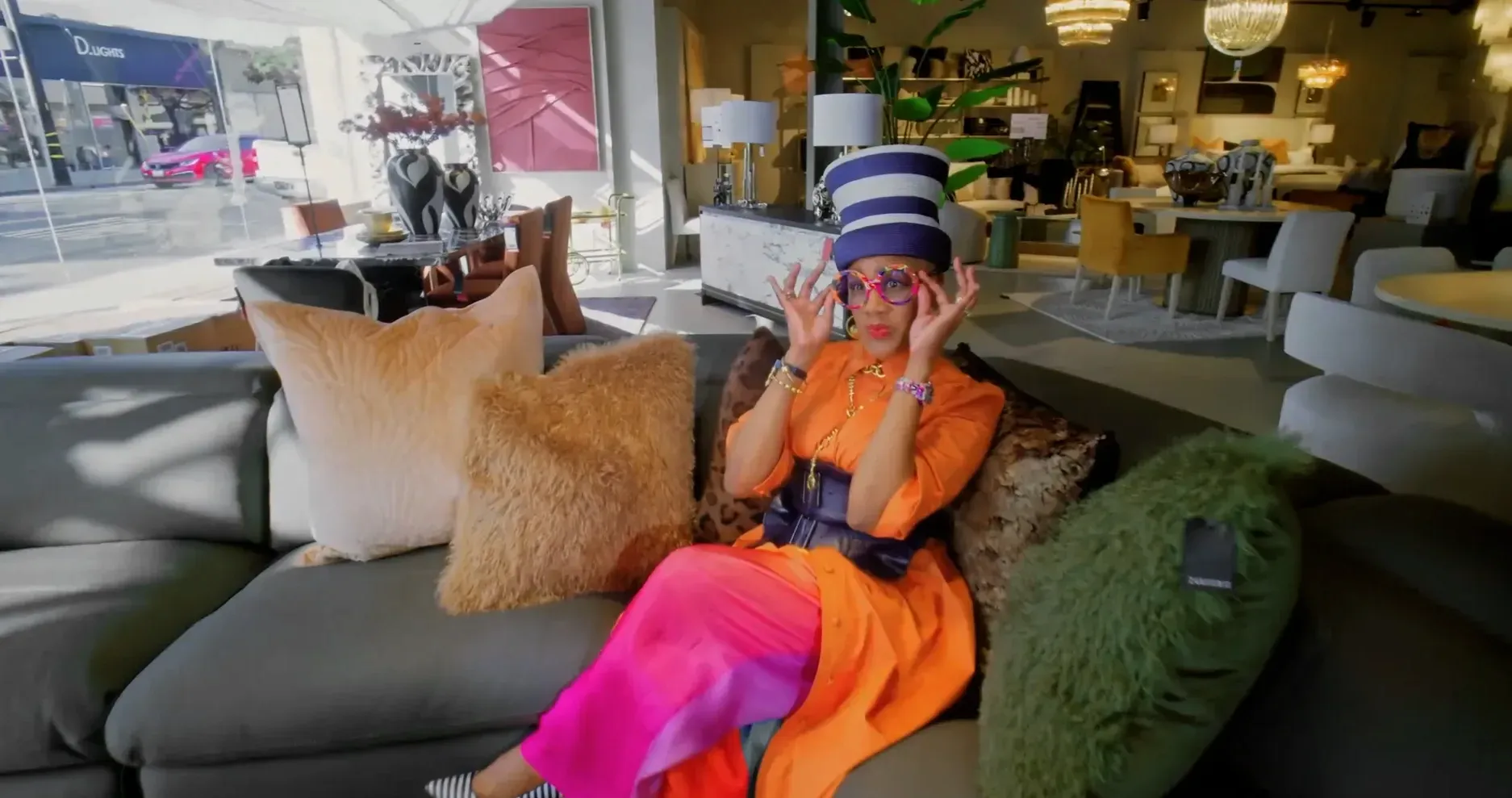
“We are the authors of our own story,” Sabra says. “So why would you let someone else hold your pen?”
It is the perfect line to open the series. A reminder that the most magnetic lives are rarely the safest ones. They are the ones shaped by instinct, individuality, and the courage to choose joy without apology.
Joy. Period.
Step inside the full conversation with Sabra Johnson in Episode One of Live Boldly [here]