.png?h=2000&q=90&w=2000)
In the world of interiors, few pieces serve as beautifully and as functionally as statement mirrors. Beyond their obvious utility, they have the rare ability to transform a space. They stretch its perceived dimensions, cast ambient light, and create a sense of airiness where none existed. When chosen thoughtfully, a statement mirror becomes more than a functional object — it becomes a sculptural centerpiece, a spatial enhancer, and an extension of your design story.
Whether you’re styling a compact apartment or a grand open-concept living area, here’s how to use statement mirrors with purpose, polish, and presence.
Lighten the Mood: Reflect Natural and Ambient Light
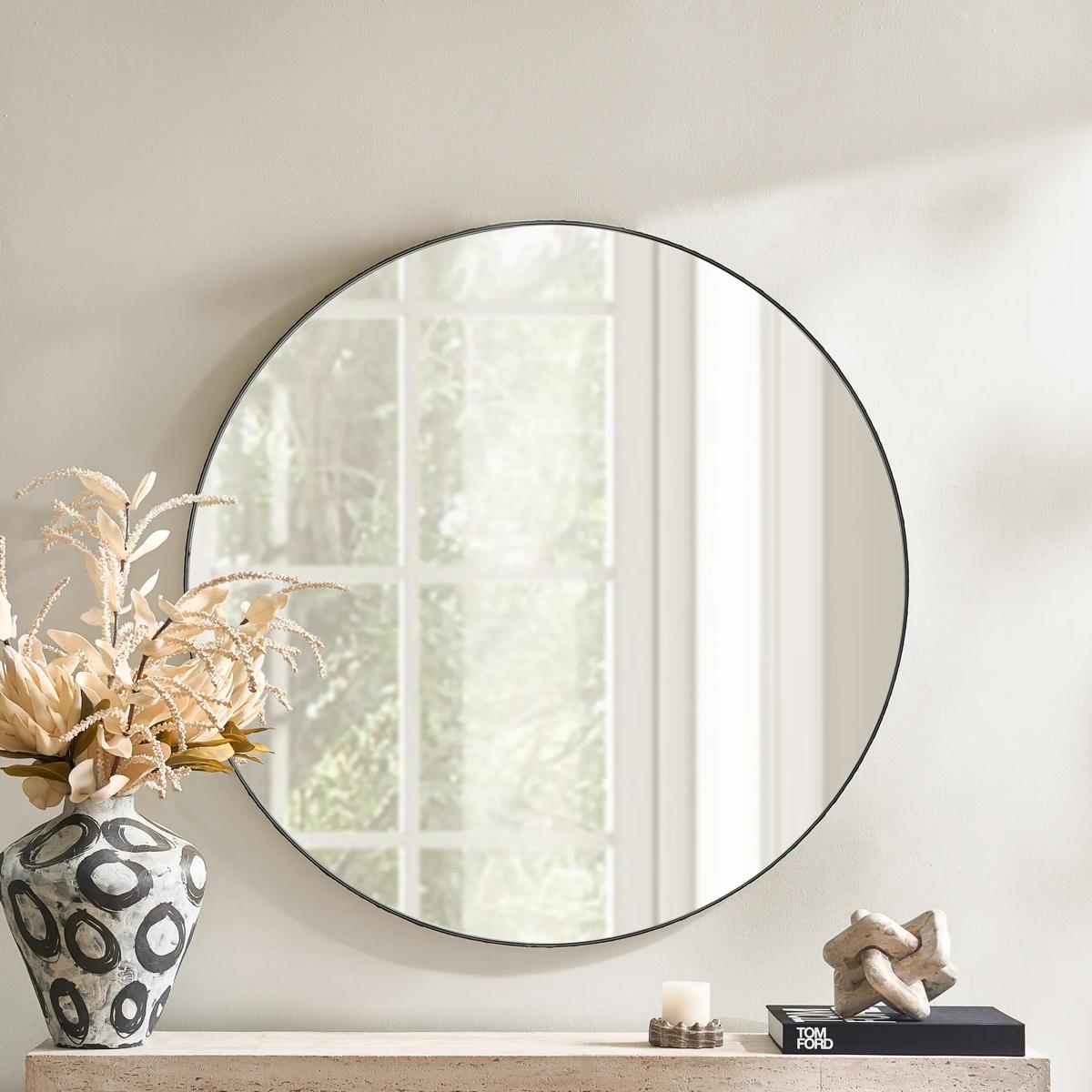
One of the simplest and most effective ways to breathe life into a room is by enhancing its light. Statement mirrors, when placed with intention, have the remarkable ability to amplify both natural and artificial sources of illumination. This creates an atmosphere that feels brighter, more open, and more inviting—without the need for structural changes or added fixtures.
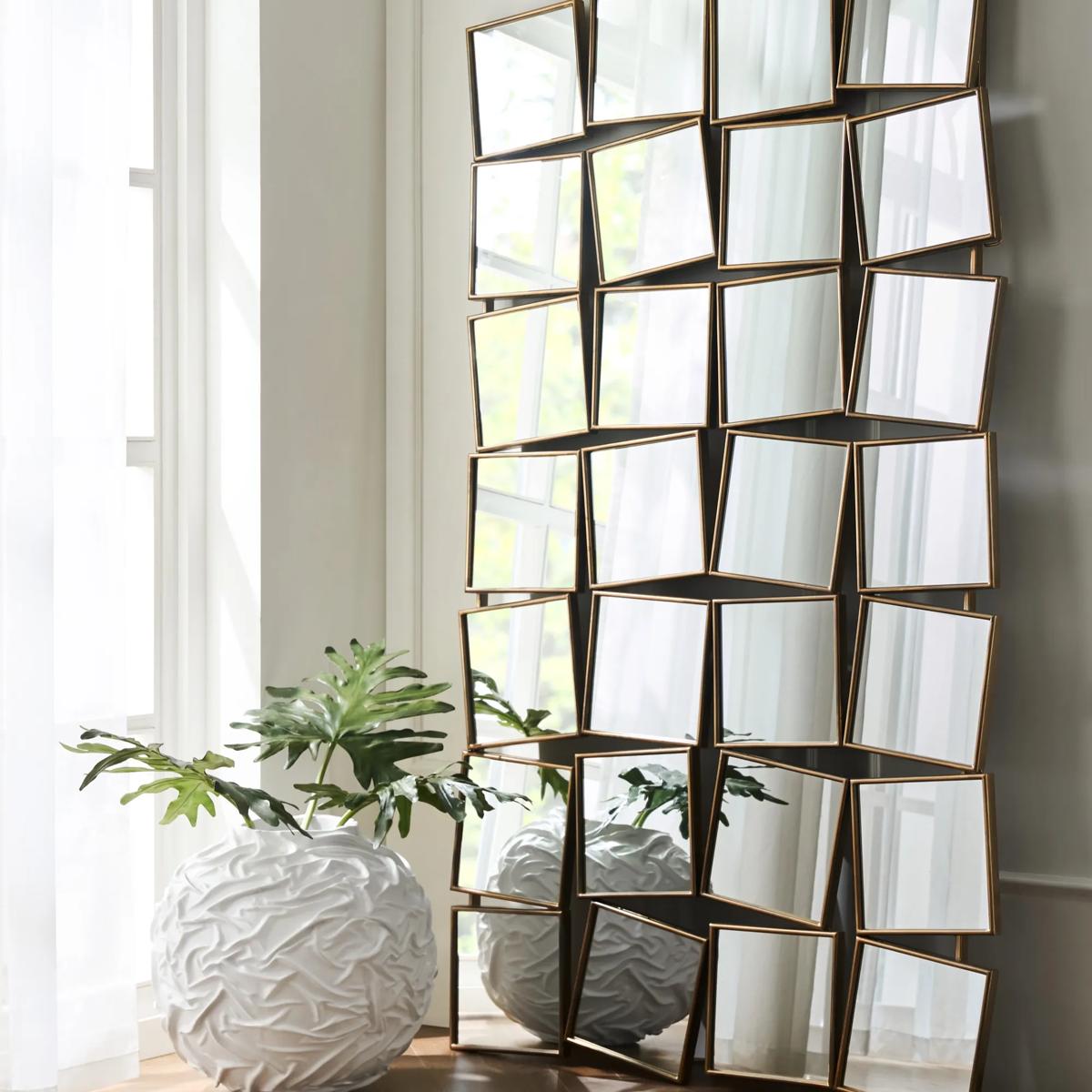
The effect is especially powerful in spaces with small windows or limited access to sunlight. By positioning a mirror to reflect daylight from a window, you can extend the reach of natural light deeper into the room. Even in the evening, mirrors placed near lamps or sconces help diffuse light throughout the space, softening shadows and creating a warm, ambient glow.
Whether you’re brightening a narrow hallway, a dim corner of the living room, or a cozy bedroom retreat, a strategically placed mirror can make the space feel lighter, more expansive, and full of energy.
ZG Pro Designer Tip: Position a large mirror opposite or beside a window to reflect daylight deeper into the room. If your space lacks natural light, try placing mirrors behind lamps or sconces to reflect a soft, inviting glow.
Expand the View: Create the Illusion of More Space
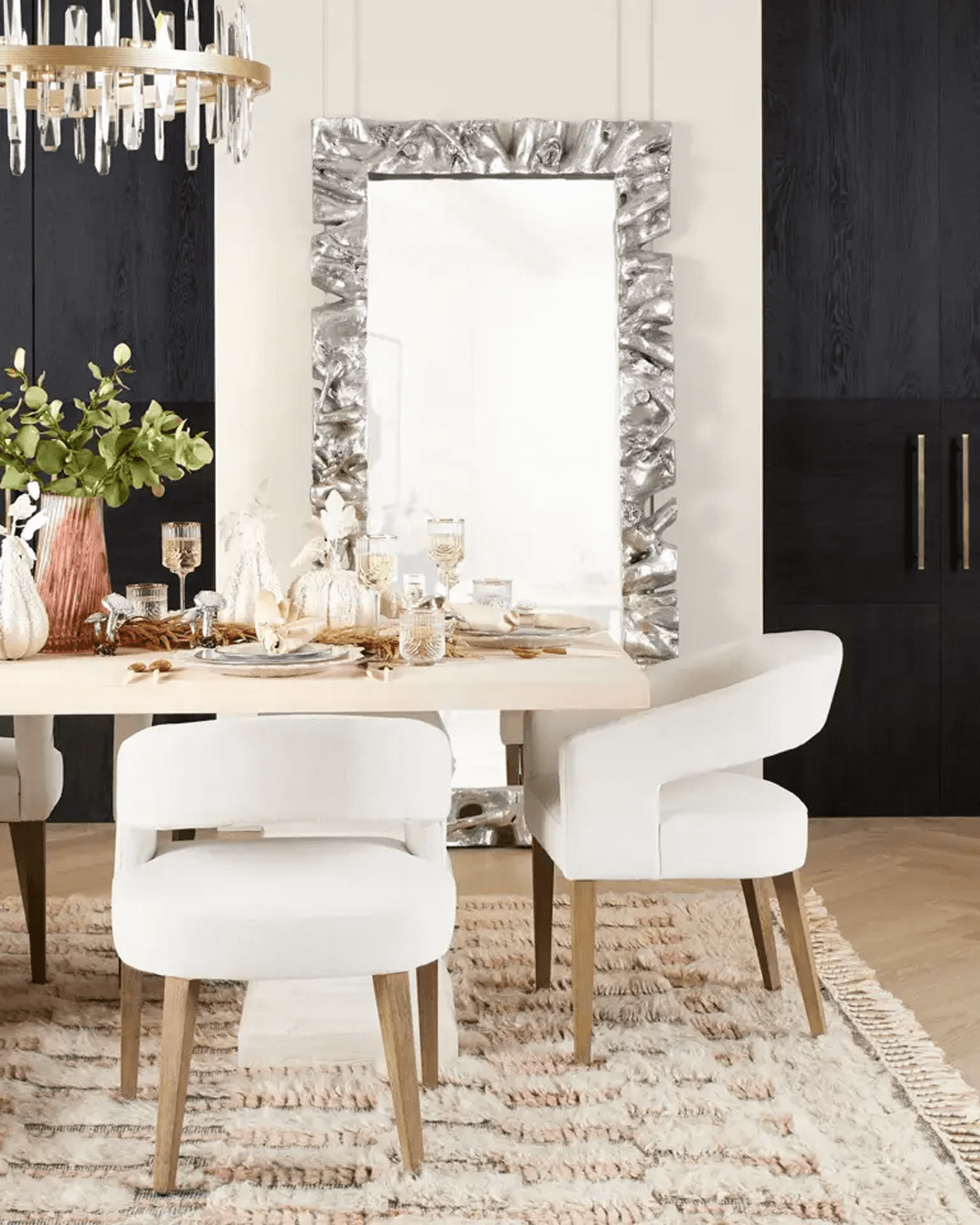
Mirrors are the secret to making small spaces feel larger. By visually doubling what they reflect, they can make narrow hallways seem wider, cozy bedrooms feel taller, and modest living rooms appear more expansive. Scale and placement are key.
In entryways or corridors, place one at the end of the hall to add depth. In compact living areas, use an oversized floor mirror to create the illusion of extra square footage. In bedrooms, a tall piece behind a nightstand or mounted vertically can draw the eye upward and enhance the room’s verticality.
Oversized and floor-length options are perfect for creating these illusions. They combine scale with style to maximize impact.
Let the Mirror Be the Moment
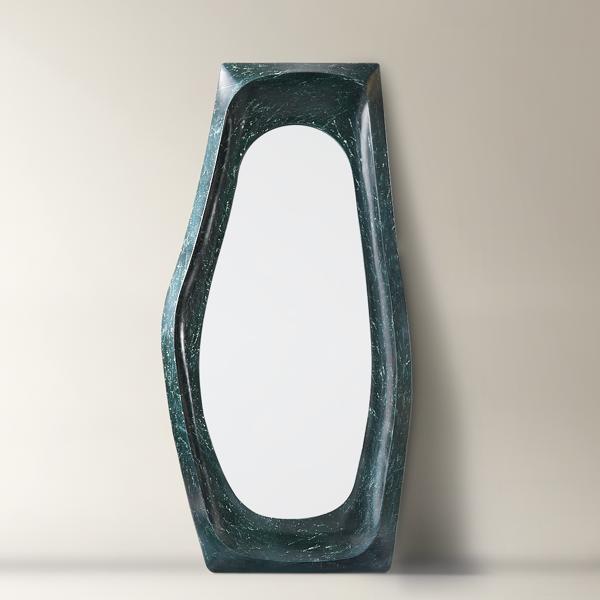
A mirror can be so much more than functional. With sculptural forms, rich textures, and bold frames, they can become the statement piece in a room. They can anchor a space and even replace traditional artwork.
Style Ideas:
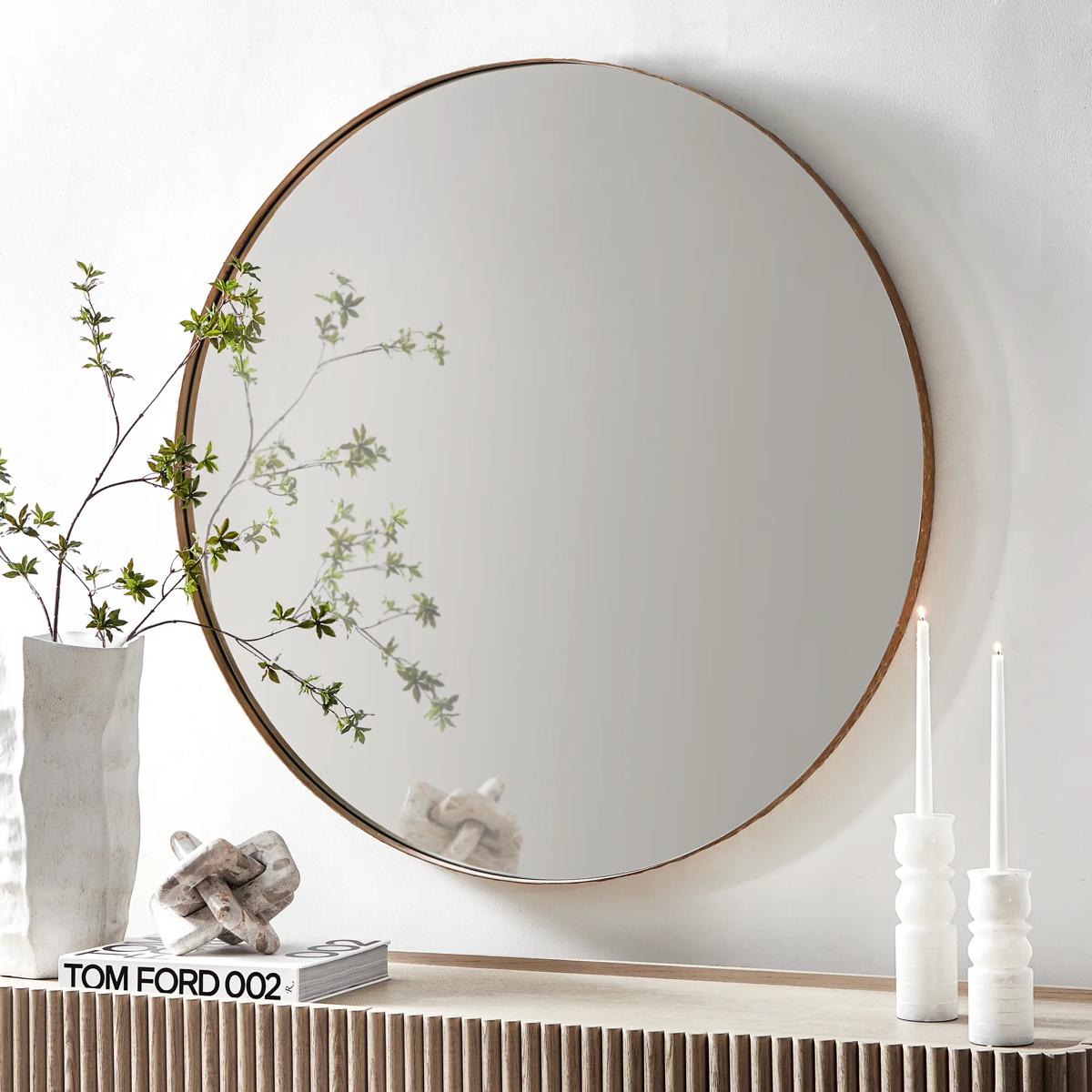
Hang a bold, metallic mirror above your console table to anchor your entryway.
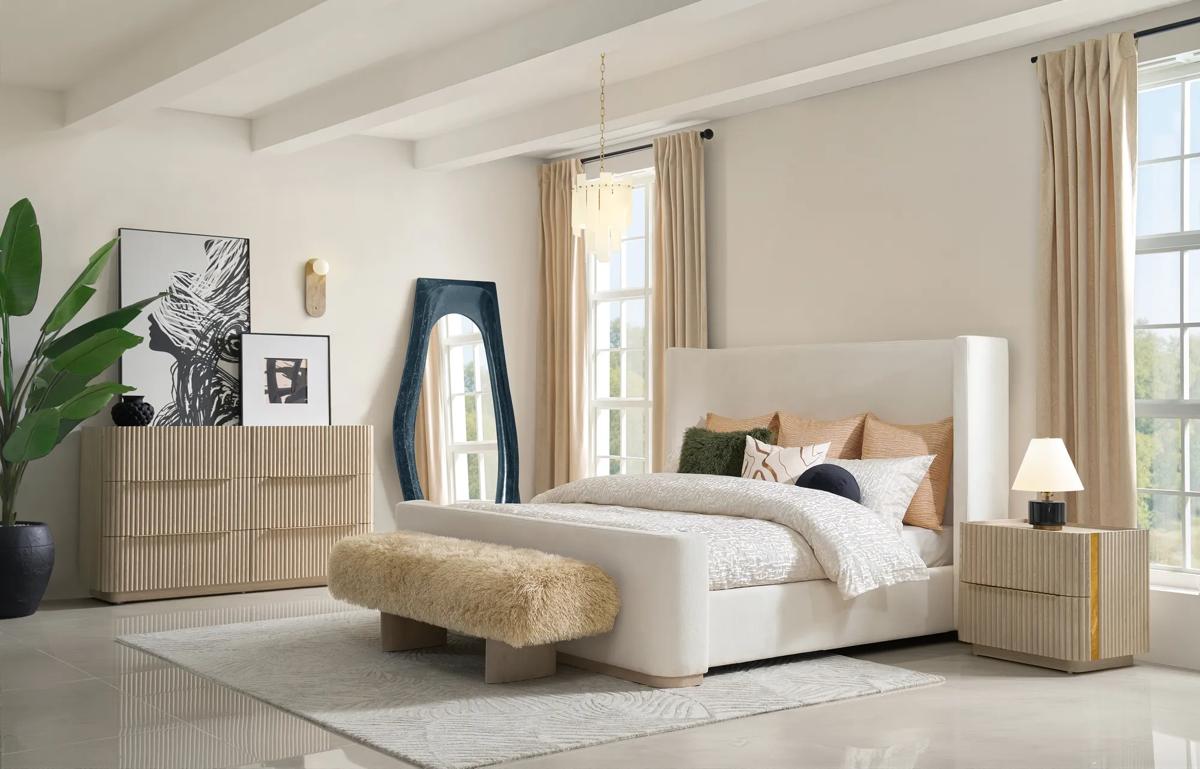
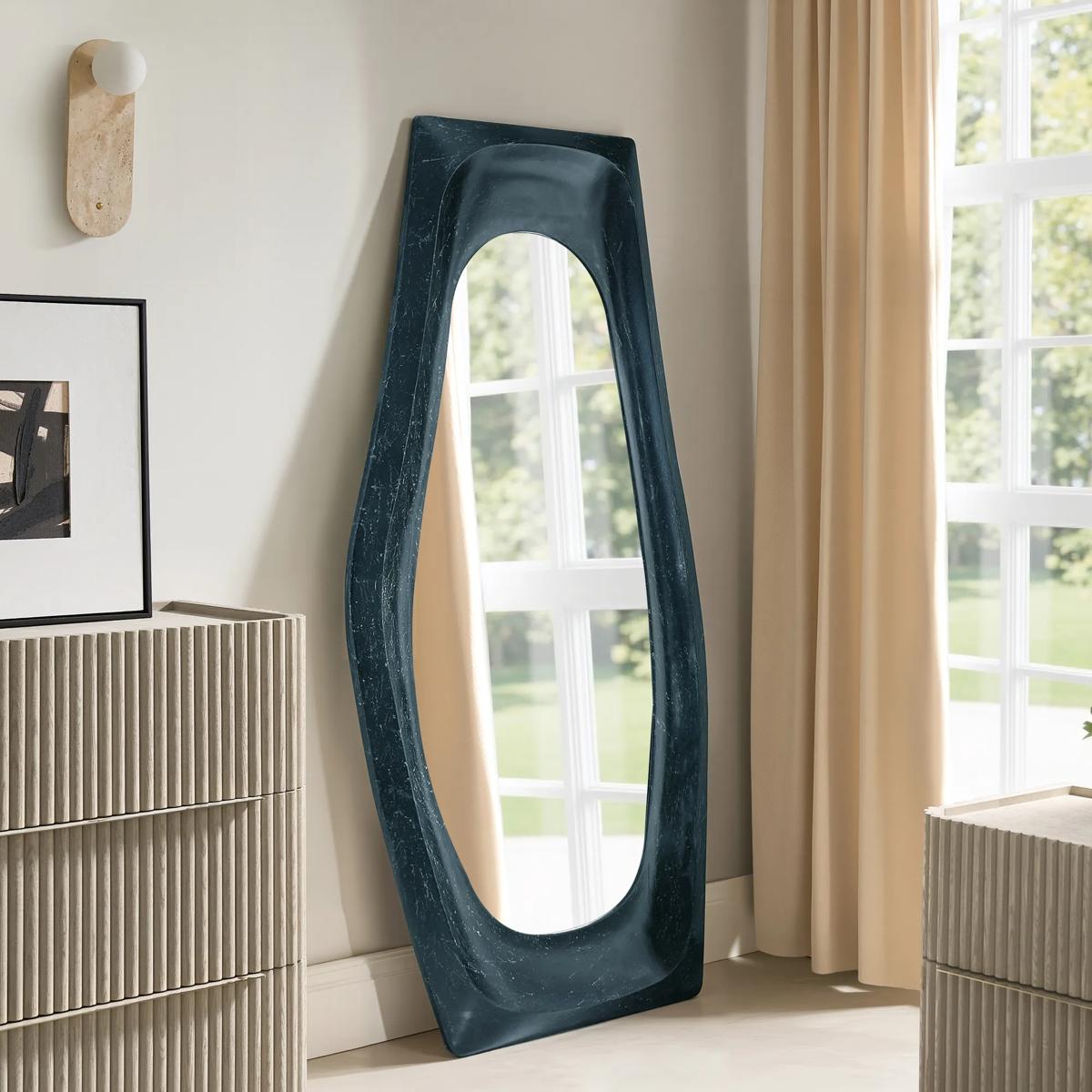
Lean a tall, sculptural floor mirror beside the bed to add height, light, and a modern focal point.
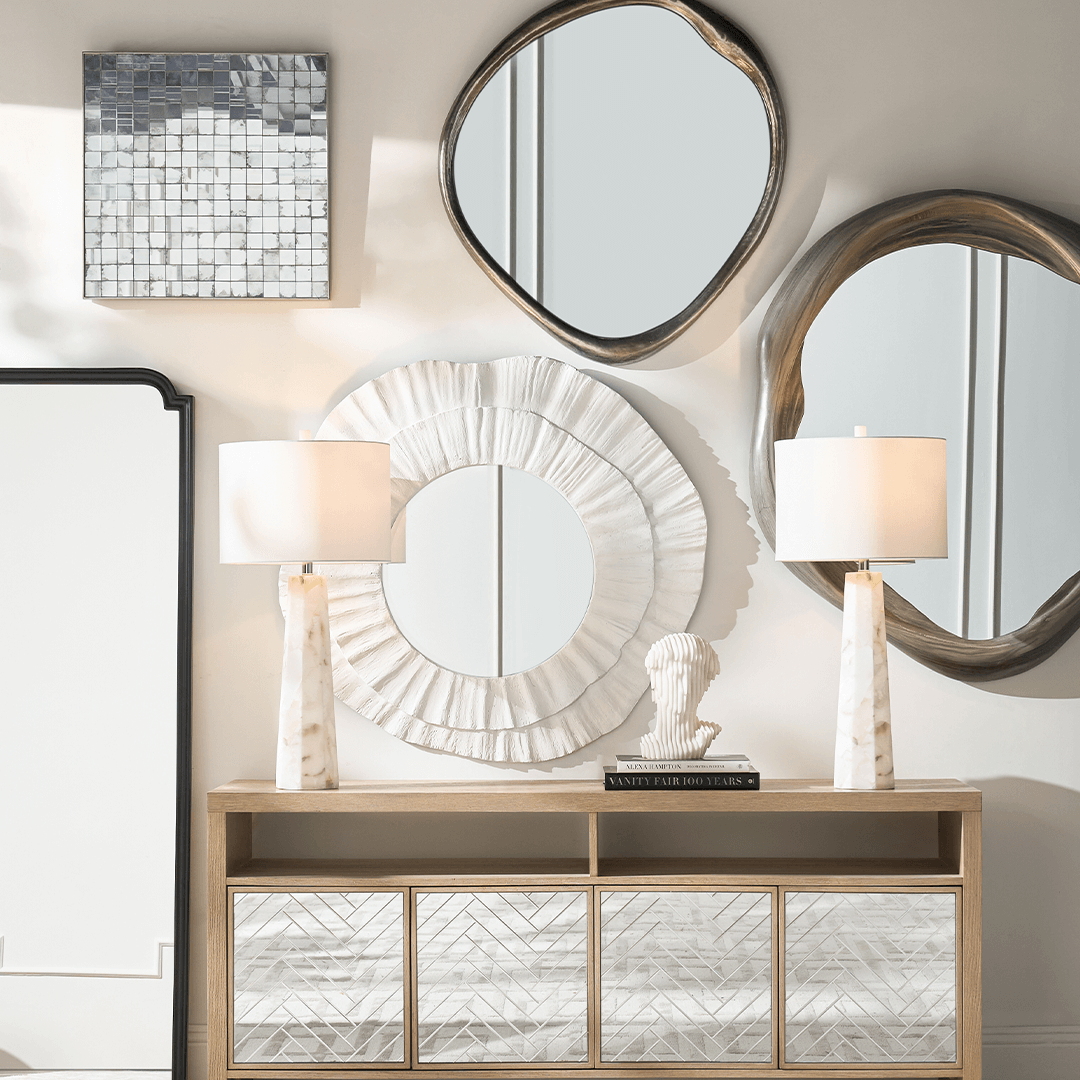
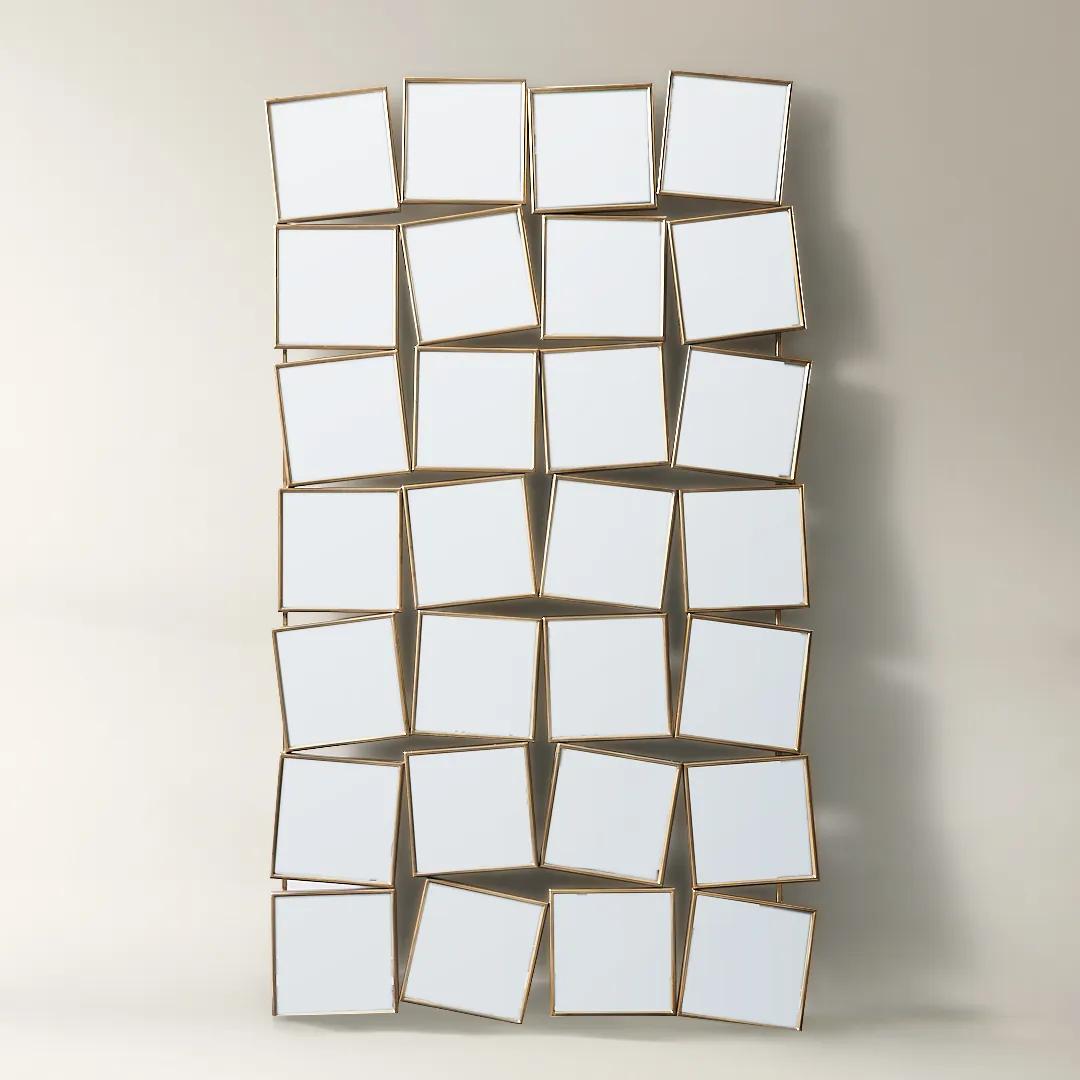
Create a gallery wall using a collection of decorative mirrors in varied shapes and finishes.
Enhance Architectural Details
Mirrors can elevate existing architectural features or create the illusion of more. Whether inside an alcove, above a mantel, or within a paneled wall, they add dimension and help draw attention to the structure of the room.
Try accenting a fireplace with a mirror that mirrors the shape of the hearth. Use arched mirrors to reflect and echo curved windows or doorways. In dining rooms, a horizontal mirror above a sideboard adds balance and helps reflect soft light in the evening.
Choose frame materials and shapes that complement the surrounding architecture. The mirror should enhance, not compete with, its setting.
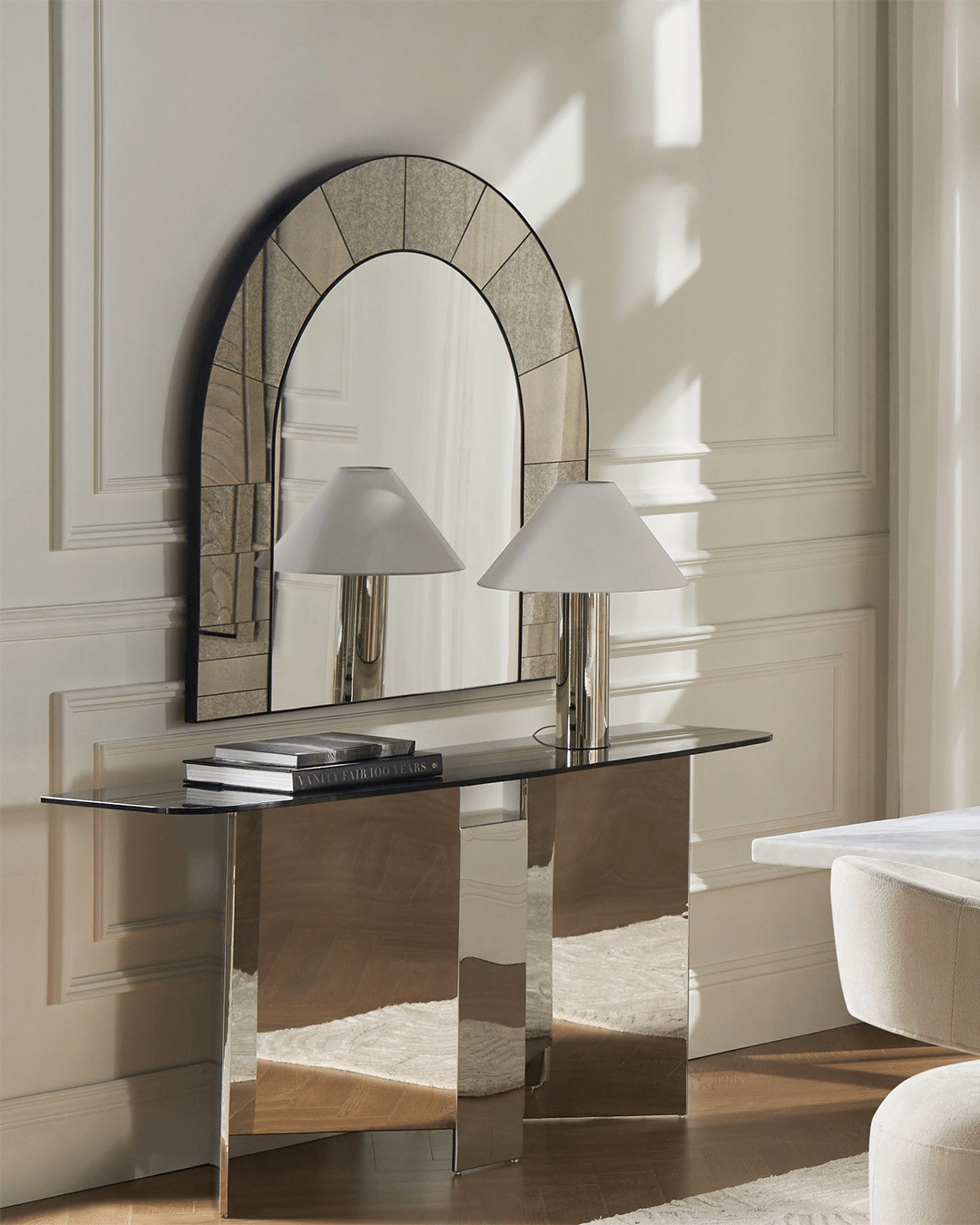
Style with Purpose: Beauty and Function in One
Full-length mirrors are a staple in bedrooms, closets, and dressing areas, offering both practical function and visual appeal. At their most basic, they provide a convenient way to check your outfit or adjust your look before stepping out the door. But beyond utility, they also serve as powerful design elements that can enhance the overall feel of a space.
A tall mirror naturally draws the eye upward, creating the illusion of added height and helping the room feel more open and expansive. This vertical emphasis is especially useful in spaces with lower ceilings or limited square footage, where every visual cue matters.
Placement plays a crucial role in the overall effect. Leaning a full-length mirror casually against a wall introduces a sense of ease and approachability, while still feeling sophisticated and considered. Mounting it upright creates a more tailored and intentional look, perfect for formal dressing rooms or highly styled spaces.
ZG Pro Designer Tip: Instead of mounting your mirror, lean it against the wall for a relaxed, modern look. Pair it with a sculptural bench, a stool, or a pair of sleek sconces to create a styled, intentional vignette.
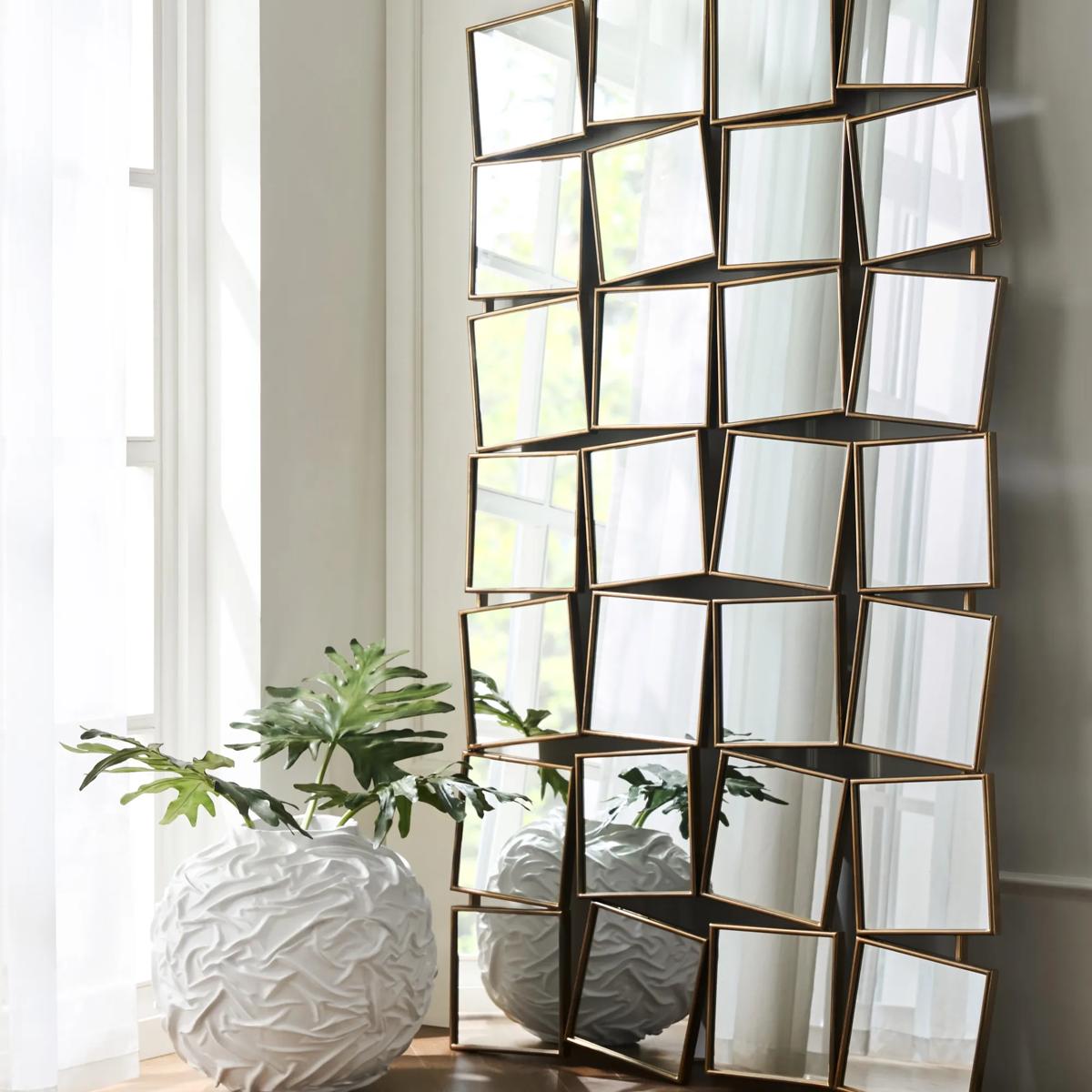
Highlight What You Love
Use mirrors to amplify the beauty of the design elements you love most. A well-placed mirror can reflect a dramatic light fixture, a cherished piece of art, or a scenic window view, allowing you to experience these features from new angles and perspectives. Instead of competing for attention, it becomes a silent partner in the composition of the room, subtly reinforcing the style and focal points you’ve chosen.
This approach adds visual depth and balance, especially in spaces where natural symmetry is limited. For example, placing one opposite a statement chandelier not only doubles its impact but also enhances the ambient light in the room. Similarly, reflecting a work of art allows it to be appreciated from different vantage points, making the space feel more layered and considered.
The key is to align your mirror with what you want to emphasize. Let it echo the beauty that’s already there and invite the eye to travel, drawing attention to the most intentional parts of your design.
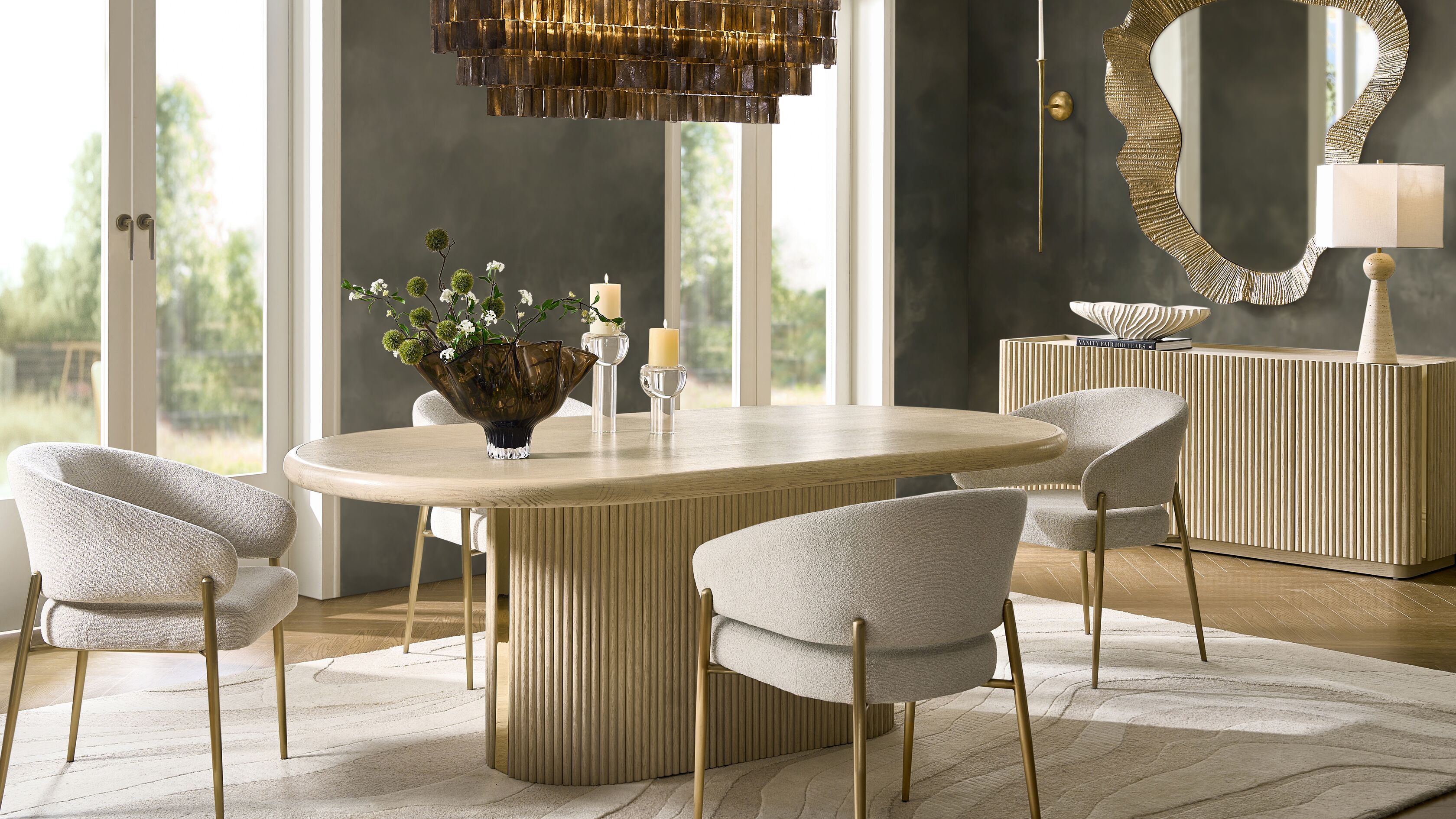
ZG Pro Designer Tip: Position a mirror across from your focal point. Reflecting a bold chandelier or colorful artwork increases its presence and helps draw the eye across the room. Choose a piece with a metallic or textured frame to add even more visual interest.
Choose Shape and Texture with Intention
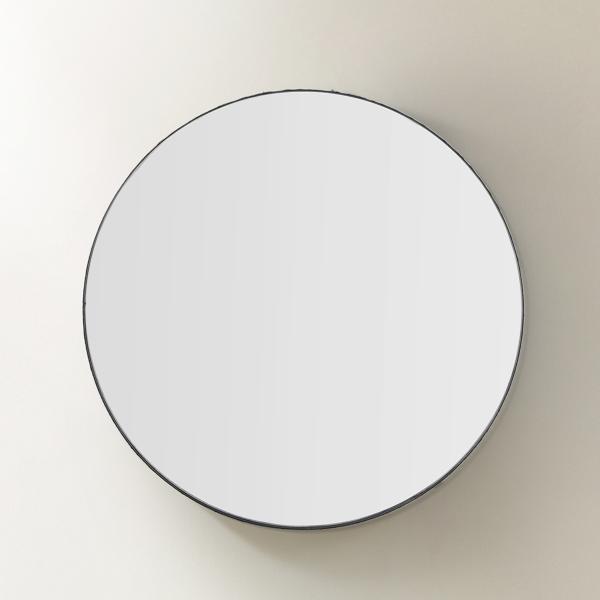
The shape and finish of a mirror do more than define its look. They influence the entire mood of a room. A round or oval mirror introduces softness and flow, helping to counterbalance sharp corners, linear furniture, or boxy architecture. These curved silhouettes are especially effective in creating a sense of calm and cohesion, making them ideal for bedrooms, entryways, and spaces where ease is the goal.
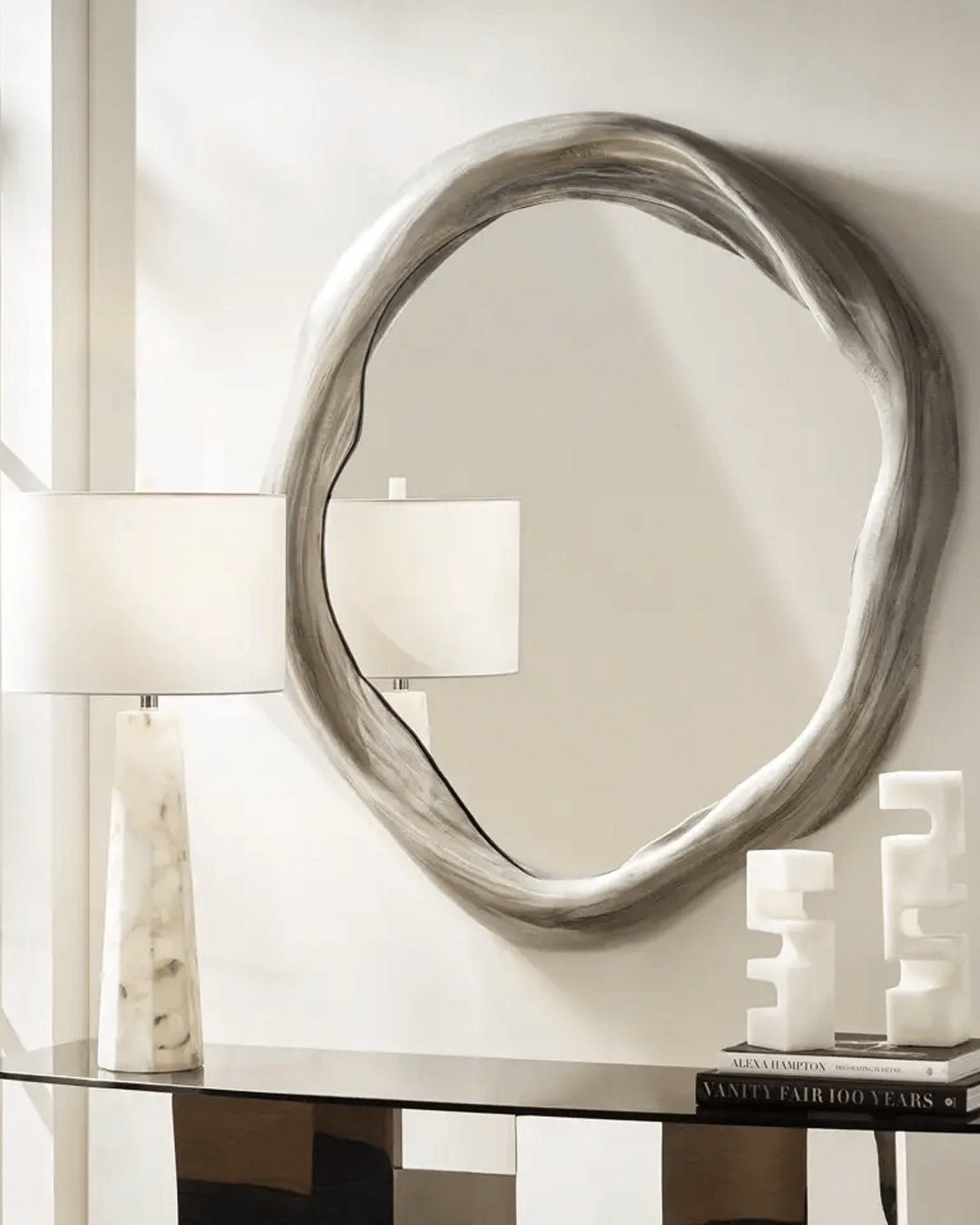
In contrast, angular or geometric mirrors bring a sense of precision and clarity. A rectangular mirror can reinforce symmetry and structure, particularly in more formal settings like dining rooms or above a mantel. Bold, asymmetrical shapes add energy and contemporary edge, turning a functional piece into a sculptural focal point.
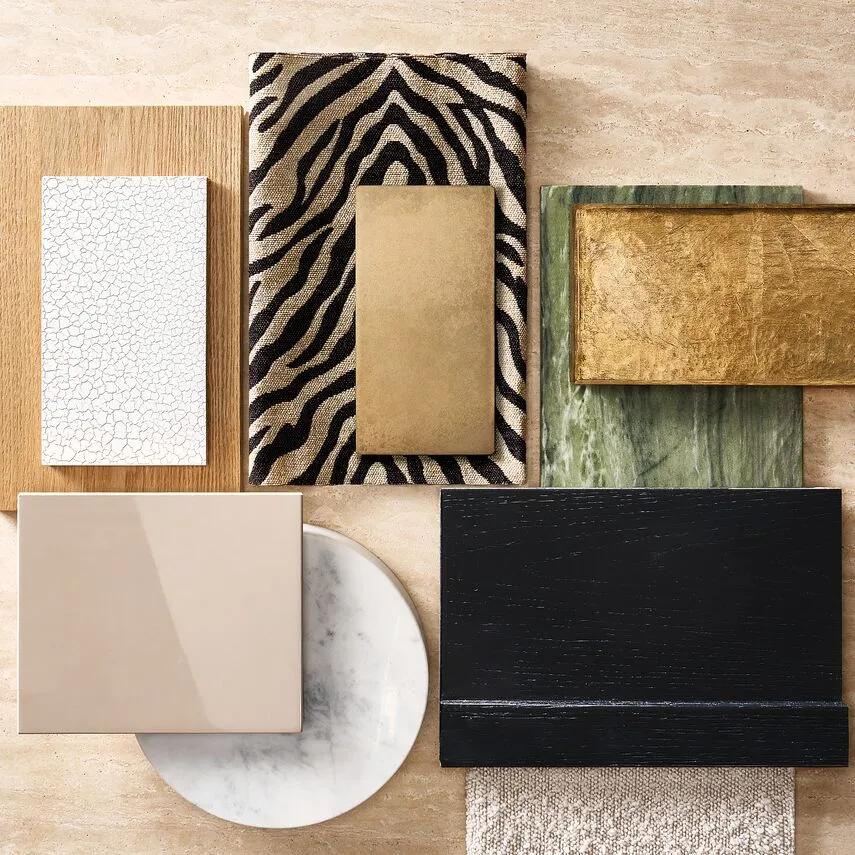
Finish is just as important as form. A matte black frame adds graphic contrast. Brushed gold introduces warmth. A mirrored edge creates a touch of subtle shine. The material you choose should reflect the surrounding palette and the overall feeling you want the space to evoke.
Shape and finish are more than stylistic details. They are design tools that help express your vision and bring depth to your space.
Style Ideas:
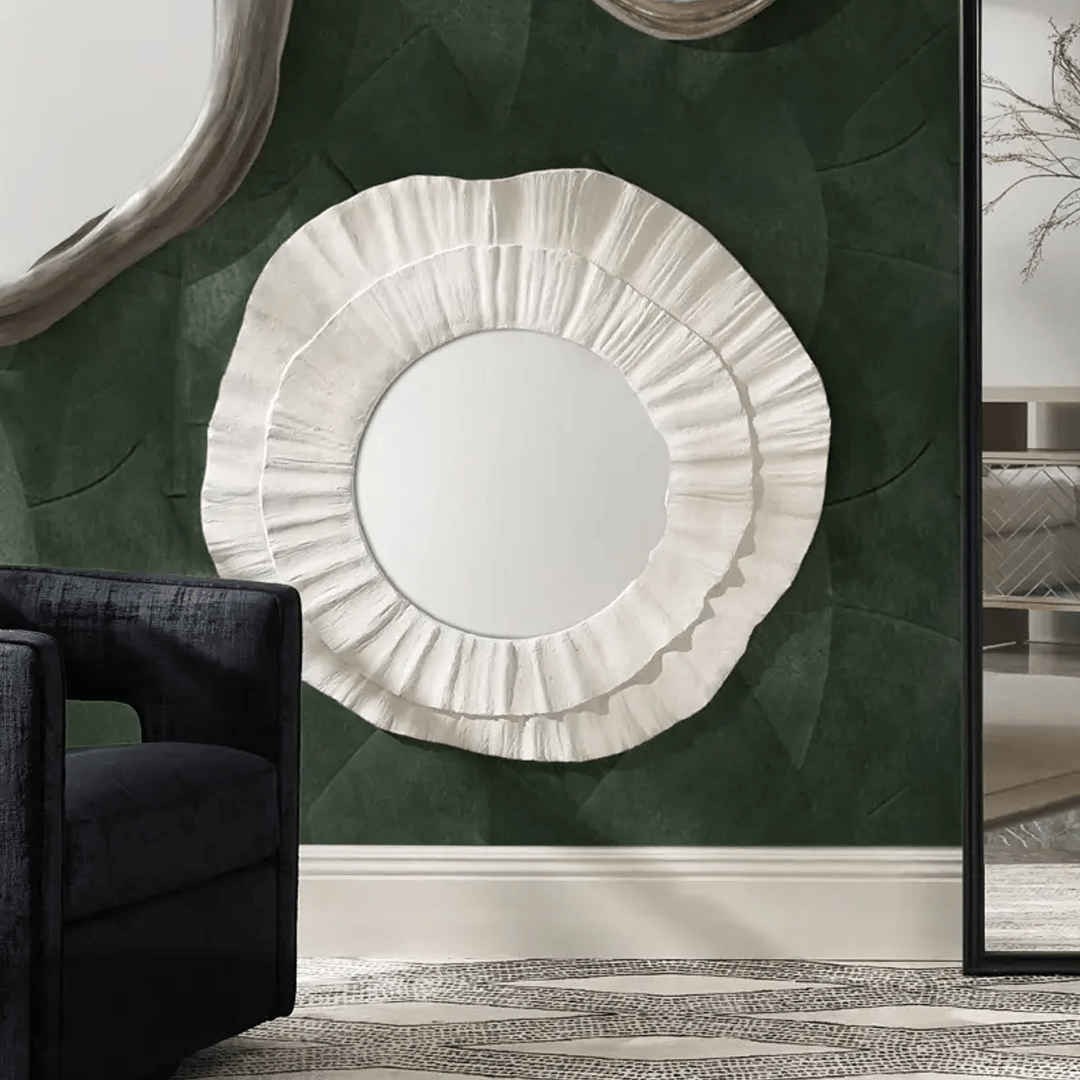
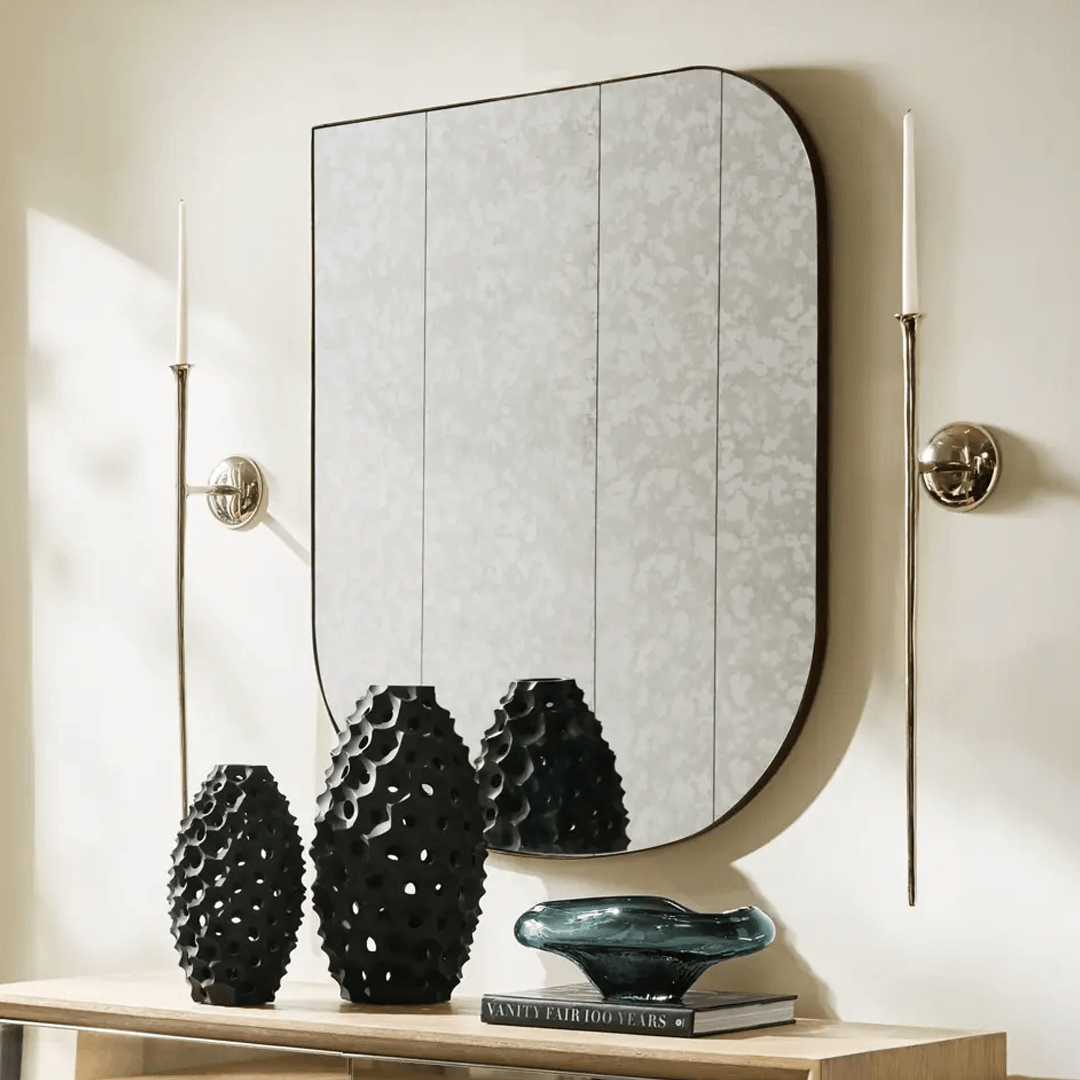
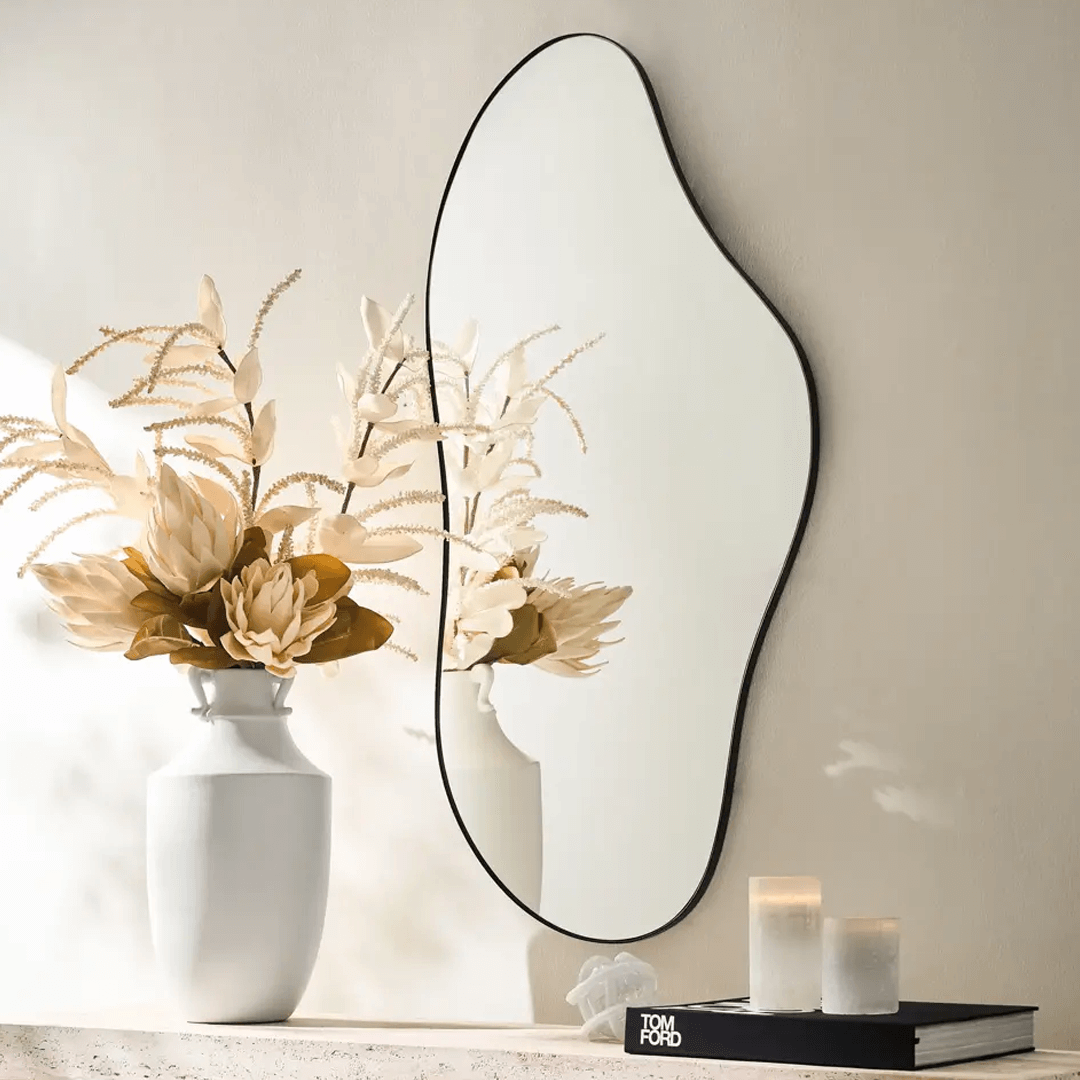
Coordinate your mirror’s finish with the room. Try polished chrome with crisp neutrals or glossy black with bold, saturated walls.
Final Reflections
Mirrors brighten, expand, balance, and beautify. Most importantly, they reflect your style and the atmosphere you want to create. From tall mirrors in bedrooms to sculptural pieces above the fireplace, the right mirror doesn’t just complete a room. It transforms it.
Explore the curated collection of statement mirrors by Z Gallerie. Each one is designed to help you style with intention and live boldly in every reflection.
.jpeg?w=1080&h=1080)
.png?w=2000&h=2000)